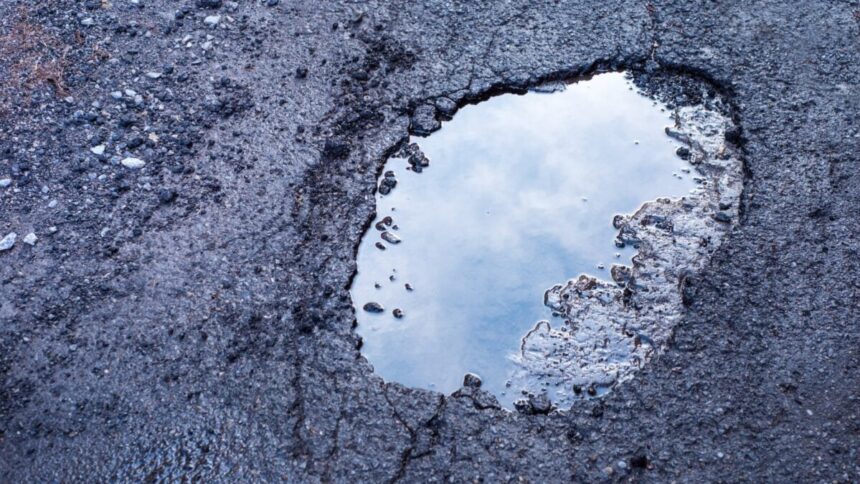
Modern cars are already equipped with various cameras and sensors monitoring other vehicles, cyclists and pedestrians to minimize or prevent collisions with them, and there’s more of that technology coming rapidly, especially with autonomous taxis. But what if that existing technology could report bad potholes or even deficient lane markings and signage? Honda found out.
With an extensive manufacturing and development hub in Ohio, Honda partnered with the DriveOhio division of the Ohio Department of Transportation for a two-year study that evaluated whether vehicle-generated data would be effective to report roads in need of repair or deficient signage and directions to the transportation agency. The two-year pilot program, also in partnership with the University of Cincinnati, Parsons Corporation and i-Probe Inc, involved Ohio DOT workers driving Hondas equipped with various cameras and Lidar to cover about 3,000 miles of roads in the state.
Honda started a prototype Proactive Roadway Maintenance System in 2021, with that program set up to detect problems including poor road quality for any vehicle type, damaged guardrails or road barriers, steep or deteriorating shoulder drops, and even insufficient or missing road striping and damaged or worn signage.
“Production vehicle sensors are designed primarily for driving and safety – not for asset monitoring – but their ability to collect data continuously during daily driving creates unique value at scale,” Daisuke Oshima, president and CEO of i-Probe, said Thursday in a statement. “Unlocking that value requires analytics specifically designed to account for these characteristics, and this project shows how vehicle sensor data can complement existing inspection programs and support more proactive asset management.”
Human employees verified what the cameras picked up and reported to the transportation department using Parsons’ technology and i-Robot verified the data and more subjective critiques of road roughness and quality of the lane markings and signage. Ultimately, the program proved successful 99% of the time for finding damaged or hidden signs, 93% for damaged guardrails and 89% for potholes, according to Honda.
“By using real-time vehicle data to detect road hazards and infrastructure issues, Honda, ODOT and our project partners are demonstrating how smarter, adaptive solutions can enhance safety, reduce costs and enhance safety for everyone sharing the road,” Sue Bai, chief engineer, Sustainability and Business Development at American Honda, said in a statement Thursday.
Honda said that Ohio’s DOT could save $4.5 million in road-related maintenance costs with the system because of a reduction in time spent on manual inspections, better repair scheduling and better planning for preventative maintenance. The automaker says it wants the next phase of testing to find ways for its drivers to anonymously share data with the correct agency and report problems with roads traveled, or to find areas that could need repair in the future.
Read the full article here