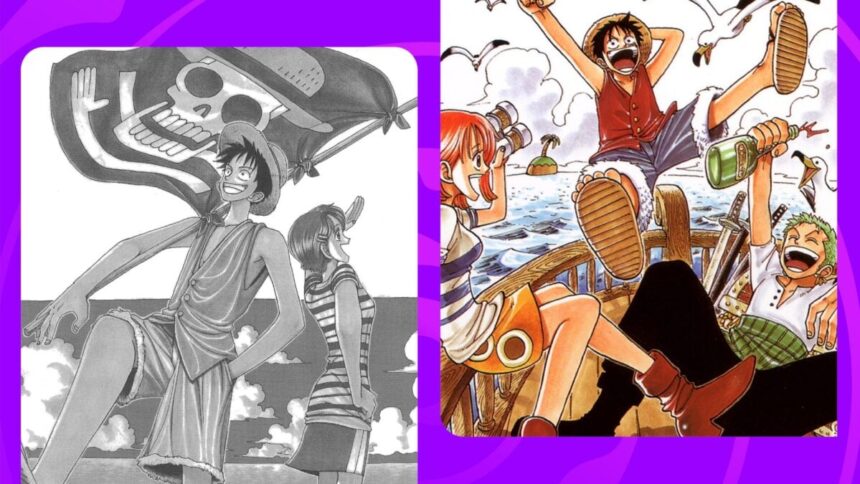
One Piece has never been bigger than it is right now. It’s done the impossible, as the two seasons of its Netflix live-action series are doing gangbusters; its long-running anime continues to sail toward its next arc; its manga is still going strong; and it’s got a new, leaner anime remake on the way by Wit Studio. And with Eiichiro Oda recently hinting the remake will hew closer to the stripped-down version of the story that the original anime didn’t, now feels as good a time as any for longtime fans and fence-sitters to read how Oda first conceived One Piece before it became a global phenomenon.
One-shots are to manga what short stories are to novels. Some one-shots act as creative avenues for established mangaka like Tatsuki Fujimoto to craft when they aren’t working on their long-running series, as he did with Look Back, Goodbye, Eri, and Just Listen to the Song. They can also serve as a special series of chapters that put a bow on a series’ ending as much as they add confusing cliffhanger questions.
But for a mangaka starting out, including “the big three,” one-shots can also serve as a Hail Mary first draft that’ll become the building blocks for their series getting picked up.
Masashi Kishimoto wrote one for Naruto, Tite Kubo wrote one for Bleach, and Oda wrote one for One Piece. Wanted: Eiichiro Oda Before One Piece, published in 2024, features a compilation of short stories, including Monster, which Netflix adapted into an anime, before Oda became a household name. But what we’re here for is Romance Dawn, the one-shot that would serve as the basis for One Piece‘s story.
Typically, when fans think of One Piece before One Piece, the image of Nami’s original character design, where she’s wielding a giant axe, comes to mind. It goes hard, and it’s a crying shame it never manifested in the series proper. It’s also a great consolation prize that its tapped-in Netflix adaptation, which already references the manga color spread of the Straw Hat crew in the show, also referenced her OG fit from season one.
Aside from design changes, there hasn’t been much discussion about the original pilot itself, what was cut, and what made it into the series, other than its title being the name of the manga’s first volume. So I decided to read it and find out for myself.
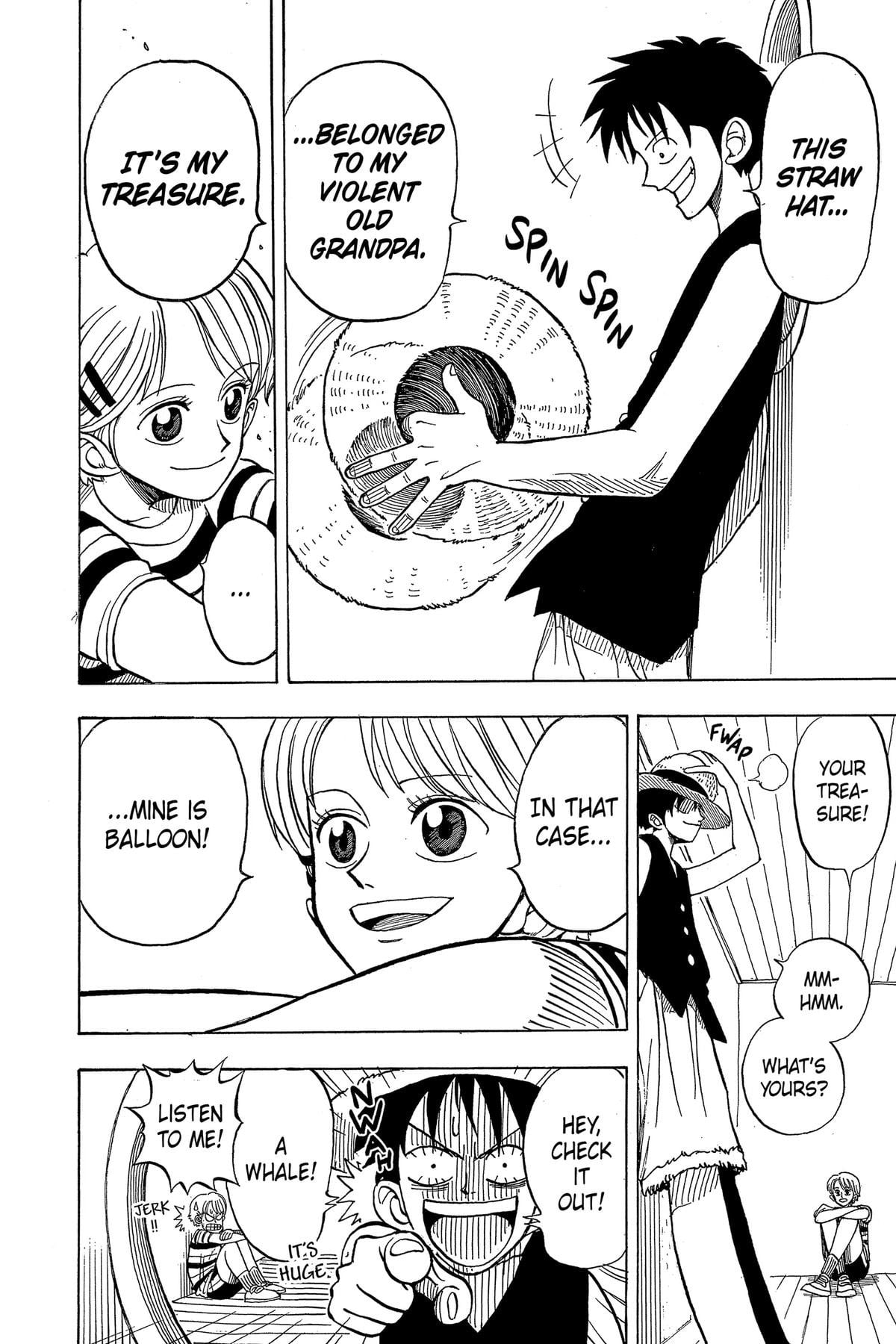
So what’s the same about it? Luffy is still Luffy in that he’s goofy. Gum Gum fruit is still a thing, and his dream is to be a pirate. But first, the ripples in how Oda told the story are very different from what fans got when the series launched in 1997. For starters, instead of Shanks gifting Luffy his straw hat, it’s his grandpa, Garp, who looks like a chibi version of the absolute unit of his final iteration. More interestingly, though, is that its titular treasure isn’t the focal point of the one-shot. In its place is a wrinkle in the type of heroism Luffy engaged in the official series as a freedom fighter.
Luffy’s dream is less about being a pirate and more about being a “Peacemain.” Peacemains, as one-shot Luffy explains, are a type of pirate who go on adventures, preying on “Morganeers”—the kind of pirates who pillage and cause chaos. This concept carries over in the ongoing series’ good politics, with the Straw Hats acting as freedom fighters, island-hopping, and freeing people from oppressive governments, the military, and superpowered oligarchs. You can see the strength of this idea resonate as an early spark in the one-shot that became the series today, in the Straw Hat flag itself, which has become a real-world symbol of resistance in Gen Z political protests.
Granted, the one-shot’s oversimplified version of good and bad piracy as proper nouns was best left on the cutting-room floor. After all, the series’ moral gray area between pirates and marines is one of its strongest points. No need to put a load-bearing lore term on it. Still, it’s impressive to see that Oda had early ideas about the heroism his crew would embody over more than 1,100+ chapters/30 years later.
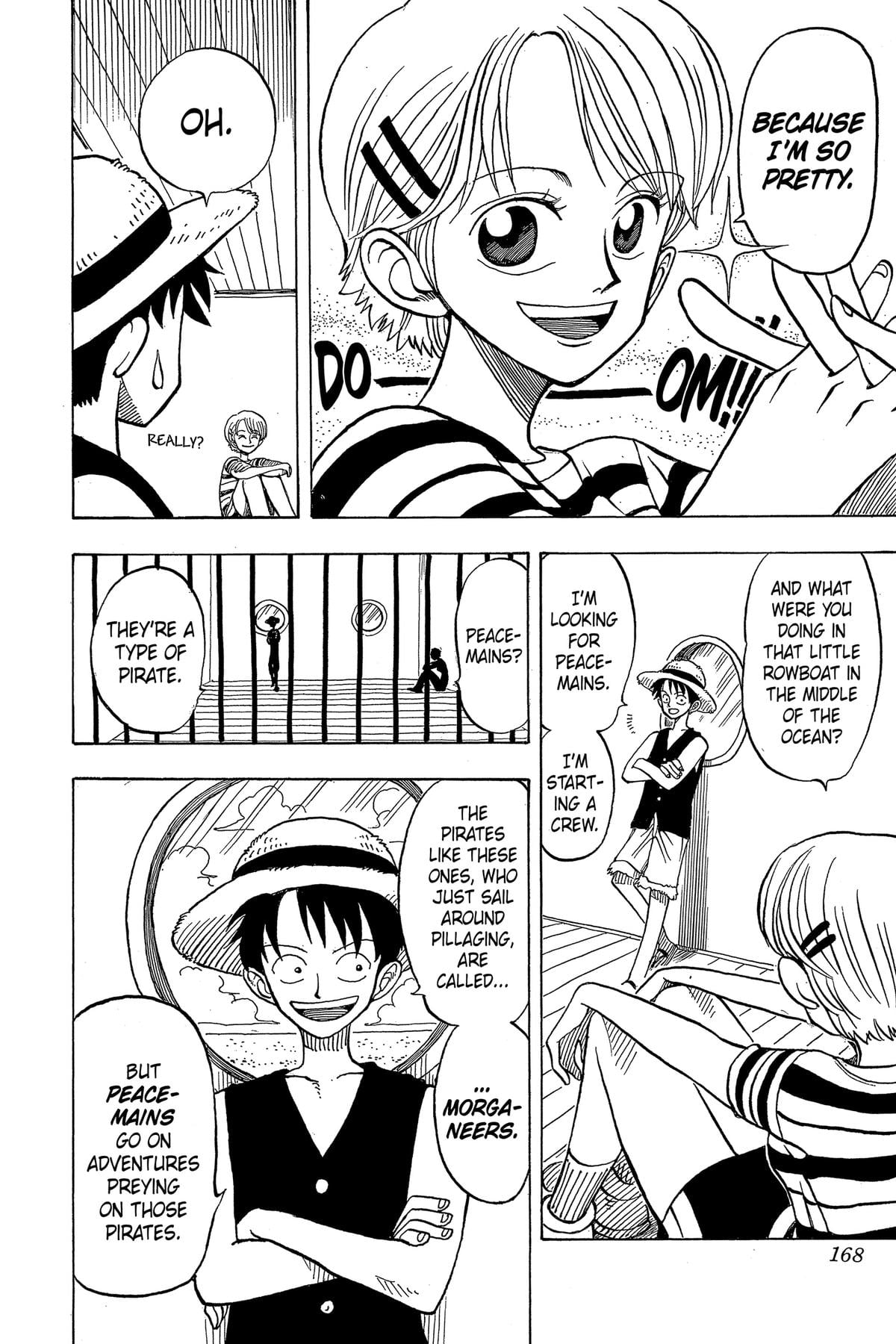
What follows is pretty much how the original series started out, with some neat little remixes. Luffy arrives on a villainous pirate’s boat and befriends one of the ship’s captives; instead of that being Kolby, Luffy meets Nami off rip. Or more specifically, he meets Ann. While Ann is the spitting image of Nami, her character feels like a mix with Nefertari Viv—a fact that’s charming in retrospect since the two are a popular pairing across all its versions. That comes in a parcel with Ann’s whole deal being that she has a pet companion, a giant bird named Balloon. Balloon is pretty much an early iteration of Vivi’s pet duck, Karoo.
Instead of having Nami’s heartwrenching backstory, the one-shot sees Luffy help Nami save Balloon from a nefarious pirate named Spiel the Hexagon, whom we can safely assume is an early iteration of Buggy the Clown. Spiel’s evil plot is to use Balloon’s blood because it’s tied to a similar “sorcery” that the devil fruits give off.
The series ends with Luffy punching out his adversary with his stretchy fist as he and Ann sail off on an adventure where his name rises in prominence. On a less fun note, the one-shot also concludes with a small aside from Oda about how he came up with the idea for the series, which includes a mention of how he owes much of that to quitting his job as a manga assistant to Rurouni Kenshin‘s Nobuhiro Watsuki—a common path for aspiring mangaka, sure, but that is a bit of an ick to be reminded of One Piece‘s inception also owing a lot to his disgraced mangaka colleague.
All that said, it’s neat to see how One Piece started out. Hyperbolically, it’s kind of like watching the Mona Lisa be painted. But less exaggeratedly, it’s like looking at the key art of an anime before all the compositing and animation wizardry turns it into the work fans know and love worldwide. It’s also cool to see the spirit of remixing ideas carry on, not just from Romance Dawn to One Piece but in Netflix’s live-action treatment of the series.
So if this has added further ammo to born-again One Piece fans, they can look forward to seeing the anime version of the chapter in its 907th episode. A daunting task, yeah, but as long as you tackle it slowly, like eating an elephant—gradually—you’ll probably get to it by the time the actual manga ends.
Want more io9 news? Check out when to expect the latest Marvel, Star Wars, and Star Trek releases, what’s next for the DC Universe on film and TV, and everything you need to know about the future of Doctor Who.
Read the full article here