Washington is divided on AI, yet again.
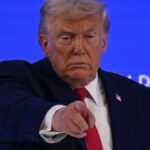
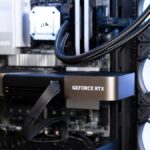
At the center of the clash is AI chip exports. Last month, Trump finally allowed Nvidia to sell its H200 chips to China. The chips are less advanced than Nvidia’s latest American offerings, but they are still advanced enough to be used in American industry and are certainly more advanced than the previously allowed China-special H20 chips, which Beijing was not happy about.
The move was considered a win-win by some. The U.S. government would take 25% of Nvidia’s China sales, Chinese AI companies would get access to even better chips than they used to, and Nvidia could finally start to see sales rise in one of its biggest markets.
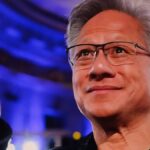
Nvidia CEO Jensen Huang spent the majority of his public-facing time the past few months trying to convince government officials to get behind this deal. While some in D.C. were worried that sending Nvidia chips to power Chinese AI innovations would not only cause the U.S. to lose the AI race but would also jeopardize national security, Huang argued the opposite. He has claimed that as long as the Chinese AI industry stays dependent on Nvidia’s infrastructure, the U.S. will continue to have the upper hand.
Although he may have convinced some, like Trump and his AI Czar David Sacks, it seems Congress is not entirely on board. And they are demanding to be heard.
“Should Congress have oversight when selling missiles to other countries? Yes, the same should be said for chips,” Republican Florida Rep. Brian Mast said in a House Foreign Affairs Committee hearing last week.
“Nvidia has made such good chips that if they were sold freely to the CCP, the CCP would likely overtake us in the AI arms race,” Mast, who is also the Chairman of the committee, said. “These chips, they’re not just kids playing video games on an Xbox, playing war games. They affect real wars, real weapons, real war power, and they will be a part of bringing about real casualties.”
Last month, following Trump’s H200 announcement, Mast introduced the AI Overwatch Act, a bill that gives both the House Foreign Affairs Committee and the Senate Banking Committee the authority to block AI chips export licenses to China and other countries that are deemed to be adversaries.
On Wednesday, the House Foreign Affairs Committee voted to advance the bill, and it now faces a full House vote. Although the bill got overwhelming support in the Committee, it’s unclear if it will pass Congress. Similar bills trying to restrict chip exports have failed, like the GAIN AI Act, which also drew considerable ire from Nvidia.
The bill is proving to be polarizing not just in Washington politics but also within MAGA itself. Despite Mast also being staunchly aligned with Trump, the bill has gotten quite a rise out of other prominent MAGA figures, chief among them being Trump’s AI czar, David Sacks.
Last week, Sacks confirmed a post on X claiming that the AI Overwatch Act’s aim was to “take away President Trump’s authority as Commander in Chief and undermine his America First strategy.” The post also claimed that the bill was secretly orchestrated by “Never Trumpers and Obama/Biden former staffers” and Anthropic CEO Dario Amodei.
MAGA influencer Laura Loomer also took to X to rage against the bill, calling it “pro-China sabotage disguised as oversight.” Mast, in return, accused Loomer of repeating “NVIDIA’s lobbying talking points to sell chips to China.”
Anthropic CEO Amodei, for his part, is openly at odds with his company’s strategic partner Nvidia, and thinks allowing Nvidia chips to enter China is “crazy” and “a mistake.”
“It’s a bit like selling nuclear weapons to North Korea and [bragging that] Boeing made the casings,” Amodei told the World Economic Forum in Davos on Tuesday, per TechCrunch.
Amodei’s words must not have angered Huang that much, as he took the stage in Davos on Wednesday and spoke very highly of Anthropic’s AI assistant Claude.
Read the full article here