
By using this site, you agree to the Privacy Policy and Terms of Use.
Accept
Tech Consumer JournalTech Consumer JournalTech Consumer Journal
  • News
  • Phones
  • Tablets
  • Wearable
  • Home Tech
  • Streaming
  • More Articles
Reading: Vets Traced a Lemur’s Fatal Herpes Infection Back to a Yoga Class
Share
Sign In
Notification Show More
Font ResizerAa
Tech Consumer JournalTech Consumer Journal
Font ResizerAa
  • News
  • Phones
  • Tablets
  • Wearable
  • Home Tech
  • Streaming
  • More Articles
Search
  • News
  • Phones
  • Tablets
  • Wearable
  • Home Tech
  • Streaming
  • More Articles
Have an existing account? Sign In
Follow US
  • Contact
  • Blog
  • Complaint
  • Advertise
© 2022 Foxiz News Network. Ruby Design Company. All Rights Reserved.
Tech Consumer Journal > News > Vets Traced a Lemur’s Fatal Herpes Infection Back to a Yoga Class
News

Vets Traced a Lemur’s Fatal Herpes Infection Back to a Yoga Class

News Room
Last updated: August 5, 2026 9:39 pm
News Room
Share
SHARE

One human’s harmless virus can be another animal’s worst nightmare, as a recent report well illustrates.

Veterinary researchers at the University of Florida have confirmed the first cases of herpes simplex virus type 1 (HSV-1) in lemurs, one of which may have been infected via a shared yoga class. Though the virus typically only causes mild cold sores in people, it proved fatal for all of the lemurs they tried to treat. The findings highlight the importance of being careful in how people interact with wildlife, the researchers say, especially animals that aren’t naturally immune to the viruses we carry.

“We should recognize that we can be dangerous,” senior study author Jim Wellehan, a professor at the University of Florida’s College of Veterinary Medicine, told Gizmodo.

Deadly lemur herpes

HSV-1 (also formally known as Human alphaherpesvirus 1) has been bumming a ride on humans for quite some time. Research has suggested that it first started infecting our direct ancestors about six million years ago. Today, about two-thirds of people under 50 worldwide are thought to carry HSV-1. And though it can be a life-threatening infection for certain groups, like infants, or an unseemly issue when it causes genital herpes, most people infected with HSV-1 will never experience anything more serious than cold sores.

Herpesviruses tend to be very specifically adapted to their hosts. HSV-1 has reached a sort of equilibrium with humanity, one that allows it to live in our bodies for decades without typically causing much trouble, but the same isn’t true when it ends up in some of our primate cousins, particularly primates that are less closely related to us. Studies have shown HSV-1 can be highly fatal in white-handed gibbons, common marmosets, and white-faced saki monkeys, to name a few. There have been reports of suspected HSV-1 in lemurs as well, but according to the researchers, this is the first time that veterinarians have confirmed lemur HSV-1 infections through molecular testing.

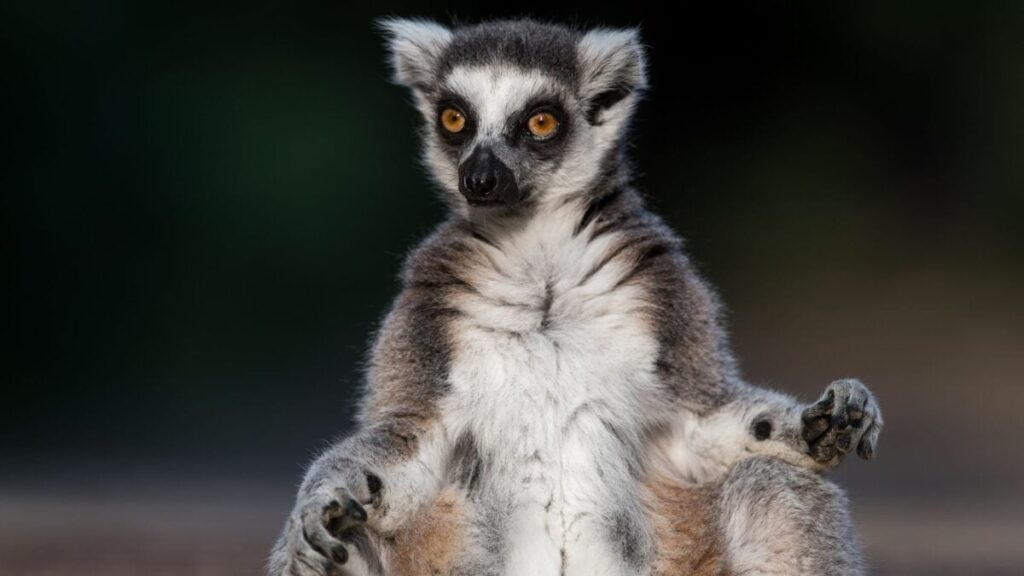
The report details four cases, all of which were privately owned and were either brought to the university’s Zoological Medicine Service for care or had a necropsy (the animal equivalent of an autopsy) performed by UF vets. Two cases involved ring-tailed lemurs (Lemur catta), one involved a black-and-white ruffed lemur (Varecia variegata), and another involved a Varecia hybrid lemur (Varecia variegata x Varecia rubra).

The sickened lemurs experienced neurological symptoms like seizures, and all had developed encephalitis, or an inflammation of the brain; some also developed ulcers along their throats. Tests found signs of the virus in all of the primates’ brains. Despite numerous treatments, including a common antiviral used for HSV-1 in people, none survived their ordeal.

The team’s findings were published last month in the Journal of Zoo and Wildlife Medicine.

Lessons to be learned

Human herpes infections do seem to be rare in lemurs, thankfully. And there are ways to further reduce this risk. The authors note that no suspected HSV-1 cases in lemurs have been documented at an accredited zoo for decades, thanks likely to the precautions that staff and researchers take when interacting with these animals, such as masking.

“I generally make it clear to our students that the main risk when working with these sorts of primates is not the primate to us, it’s us to the primate,” Wellehan said. “We need to recognize that we can carry scary stuff that can wipe out populations that are naïve to these things.”

Unfortunately, there are places where that risk might not be as recognized as it ought to be. The researchers wrote that one case involved an animal used in “lemur yoga classes for the public, which can reasonably be expected to have a high occurrence of human contact.” And this isn’t just a Florida thing either; similar programs can be found in other parts of the world.

The researchers say vets who treat human-owned lemurs should have HSV-1 on their radar, especially when the animals develop encephalitis or ulcers around their mouth and throat. And in general, “appropriate biosecurity measures and education of caretakers” who interact with lemurs should be implemented to minimize the risk of infection.

These cases might also highlight the role that viruses like HSV-1 play in the evolution of their hosts, the authors argue. Pigeons, for instance, carry a different herpesvirus that’s largely harmless to them but fatal to some of the birds-of-prey that feed on them. This reality may have helped the birds spread their wings far across the world, and it’s even possible a similar thing happened when humans and their HSV-1 started migrating out of Africa, the researchers speculate.

According to Wellehan, the mostly peaceful relationship we’ve formed with HSV-1 shows that survival-of-the-fittest often isn’t about being the faster or stronger animal around—sometimes it’s just about having the right immune response to a microbe.

Read the full article here

You Might Also Like

Edgerunners’ Creator’s New Manga Series Is a Love Letter to ‘Inception’ and Soulsborne Games

Google DeepMind Boss Demis Hassabis Steps Down From CEO Role

Out of the Further’ Trailer Brings Demons Into the Real World

‘The Apothecary Diaries’ Stars Break Down the Mystery, Romance, and Frog Between Jinshi and Maomao

Disney Says ‘The Mandalorian and Grogu’ and ‘Moana’ Were Hits, Actually

Share This Article
Facebook Twitter Copy Link Print
Previous Article Google DeepMind Boss Demis Hassabis Steps Down From CEO Role
Next Article Edgerunners’ Creator’s New Manga Series Is a Love Letter to ‘Inception’ and Soulsborne Games
Leave a comment

Leave a Reply Cancel reply

Your email address will not be published. Required fields are marked *

Stay Connected

248.1kLike
69.1kFollow
134kPin
54.3kFollow

Latest News

The Weirdest Theory Yet for Why Life on Earth Suddenly Exploded
News
The Viral Smart Glasses-Sniffing App Is Informative, but Anticlimactic
News
A University Used AI to Police Its Entrance Exam. Now 58,000 Students Need a Do-Over
News
Global Warming Has Kicked Into Overdrive, Scientists Warn
News
‘The Blair Witch Project’ Is Getting a Snazzy New Blu-Ray and VHS Release
News
Brand New Day’ Has So Many Easter Eggs in Its Graphics
News
OpenAI Is Trying to Shame Apple Into Backing Down From Its Lawsuit
News
Trump Is Desecrating a New Kind of National Monument
News

You Might also Like

News

Eric Adams Goes to Wisconsin to Pitch Data Centers, Gets Booed

News Room News Room 4 Min Read
News

FBI Agent Accused of Stealing $1 Million in Crypto Apparently Missed the Corruption Tutorial

News Room News Room 3 Min Read
News

This Plant Has Been Hiding a Killer Secret. Darwin Called It 150 Years Ago

News Room News Room 4 Min Read
Tech Consumer JournalTech Consumer Journal
Follow US
2024 © Prices.com LLC. All Rights Reserved.
  • Privacy Policy
  • Terms of use
  • For Advertisers
  • Contact
Welcome Back!

Sign in to your account

Username or Email Address
Password

Lost your password?