It’s official: The Trump Administration has killed the legal and scientific basis for U.S. action on greenhouse gas emissions.
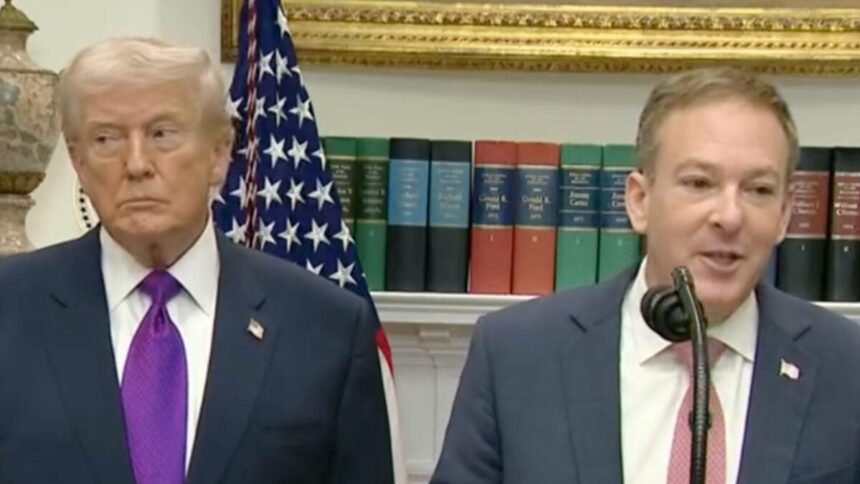
During a Thursday press briefing, President Trump and Environmental Protection Agency (EPA) Administrator Lee Zeldin announced the repeal of the agency’s “endangerment finding,” which ruled in 2009 that planet-warming gases such as carbon dioxide are dangerous to human health and welfare. This landmark determination has empowered the U.S. to regulate greenhouse gas emissions for nearly two decades.
Basically, if American climate policy was a house of cards, the Trump administration just pulled the card keeping the whole thing standing.
Environmentalists have been bracing for this for months. Zeldin first announced the EPA’s bid to repeal the finding while speaking at an Indiana auto dealership in July. In its proposal, the agency argued that the move would save Americans $54 billion annually through the elimination of all greenhouse gas standards for motor vehicles and engines, including Biden’s electric vehicle mandate.
Of course, that rationale was the central focus of the Thursday briefing. Trump called the move “the single largest deregulatory action in American history” and admonished the endangerment finding as “a disastrous Obama-era policy that severely damaged the American auto industry and massively drove up prices for American consumers.”
“This is a big deal,” Zeldin said. “This action will save American taxpayers over $1.3 trillion.” Yet the EPA’s own draft impact analysis estimated that repealing the endangerment finding could cost consumers more, not less—potentially up to $350 billion in added fuel costs per year. And that’s excluding the costs of public health consequences and environmental damages from greenhouse gas pollution.
Why this matters
The Clean Air Act requires the EPA to regulate any air pollutant that endangers public health or welfare. In 2007, the Supreme Court ruled that greenhouse gases are subject to this mandate. Two years later, the endangerment finding determined that current and projected atmospheric concentrations of six key greenhouse gases “threaten the public health and welfare of current and future generations.”
The simultaneously issued “cause or contribute finding” pointed to motor vehicles and engines as major sources of hazardous greenhouse gas emissions. These determinations serve as the legal basis for the EPA to regulate planet-warming pollution, and over the years, the scientific evidence to support them has only grown.
For the past seven months, scientists, climate advocates, environmental policy experts, and former EPA leaders have warned that the repeal would have severe consequences for American health, well-being, and the climate. While the EPA’s proposal directly addressed vehicle emissions, the agency is also poised to roll back regulations for new and existing fossil fuel-fired power plants and oil and gas facilities. According to Harvard Law, rescinding the endangerment finding will almost certainly galvanize those efforts.
The Trump administration rescinded the endangerment finding based on the rationale that it does not have legal authority under the Clean Air Act to regulate greenhouse gas emissions. If courts endorse that view going forward, future administrations will also be prevented from regulating planet-warming pollution under the Act, Harvard Law states.
“Abandoning all efforts to address climate change is not in the best interest of anyone but the fossil fuel industry, which has made trillions of dollars over the last 50 years and has shown that if unchecked, it will pursue profits at any cost, even if that destroys the American way of life,” Shannon Baker-Branstetter, senior director of domestic climate at the Center for American Progress, said in a statement following Zeldin’s announcement in July.
The repeal is expected to face legal backlash from environmental organizations and coalitions of Democratic-led states. “This cynical and devastating action by the Trump EPA will not go forward without a fight,” Manish Bapna, president and CEO of the Natural Resources Defense Council, said in a statement following Thursday’s announcement. “We will see them in court—and we will win.”
Read the full article here