

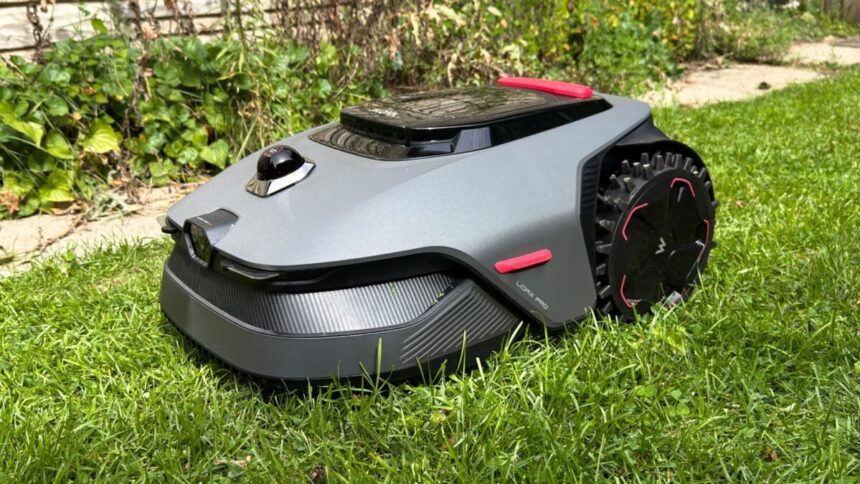
After getting familiar with the world of robomowers this summer for Gizmodo, I’m convinced of a couple of things. One is that these devices are still pricey for what you get, and the other is that rear-wheel-drive (RWD) models are only worth it if you have the most basic lawn possible. But above all, they’re cool and fun to watch, the way robot vacuums were back when they were new. As long as they don’t try to make mincemeat of you, that is.
I’m generally good with the limitations of RWD robotic mowers. It’s not their fault that my backyard is lumpy and full of uneven pavers; the onus for that is on tree roots and my disinterest in maintaining the stone-covered patio my house came with. Maybe this means they aren’t for me, but if such limitations bring the price down from the thousands of dollars robot mowers have cost until pretty recently (many RWD models can now be had for under $1,000), then great.
What I can’t abide is a robomower that will try to mow over my feet and legs. That’s the main problem I encountered with the LiDAX Pro 800, an RWD, LiDAR-navigating robomower from Dreame’s sub-brand Mova that’s made for smaller yards. The product could be a solid deal—except that unfortunately, its object recognition and ability to respond to its environment are so bad that I simply can’t recommend it to anyone.
Mova LiDAX Pro 800
A decent, nearly affordable lawn bot with a fatal object avoidance problem.
- Solid, wire-free navigation
- No satellite coverage needed
- Leaves an even cut
- Security patrol feature
- Tried to run me over
- Inconsistent small object detection
- If there’s a bump sensor, it doesn’t seem to work
- Struggles on uneven terrain and pavers
Not-quite-worry-free mowing
Mova’s product page for the LiDAX Pro 800 says the robot, “powered by 3D point cloud data and advanced AI vision,” can detect and avoid over 300 types of obstacles, ranging from small objects to furniture. That text is superimposed on an image of a person sitting in the middle of the yard with a dog—you know, as you do while mowing is happening—and blue beams of light emanating from the LiDAX Pro 800 to illustrate its detection capability.
The makers of every robomower I’ve tested have made claims like those above, and my testing hasn’t given me much reason to doubt them before. That’s good, because the lives of small animals and the limbs of children and adults alike are on the line. While I’d never let a very young child play in a yard with an actively working robomower, it’s good to know that if the unexpected happens, it probably won’t maul anyone. And I assume that’s a big priority for the manufacturers of these things.
So I was surprised when, on my second day of testing the LiDAX Pro 800, it tried to mow me. I always step in front of these robots to see how they react, and most just hesitate before driving around me or, at worst, bump my leg and stop immediately, as the Roborock RockNeo Q110H did a few times. The LiDAX Pro 800 didn’t do that; instead, it pushed into my leg, hard enough that I could see it easily knocking over a toddler.
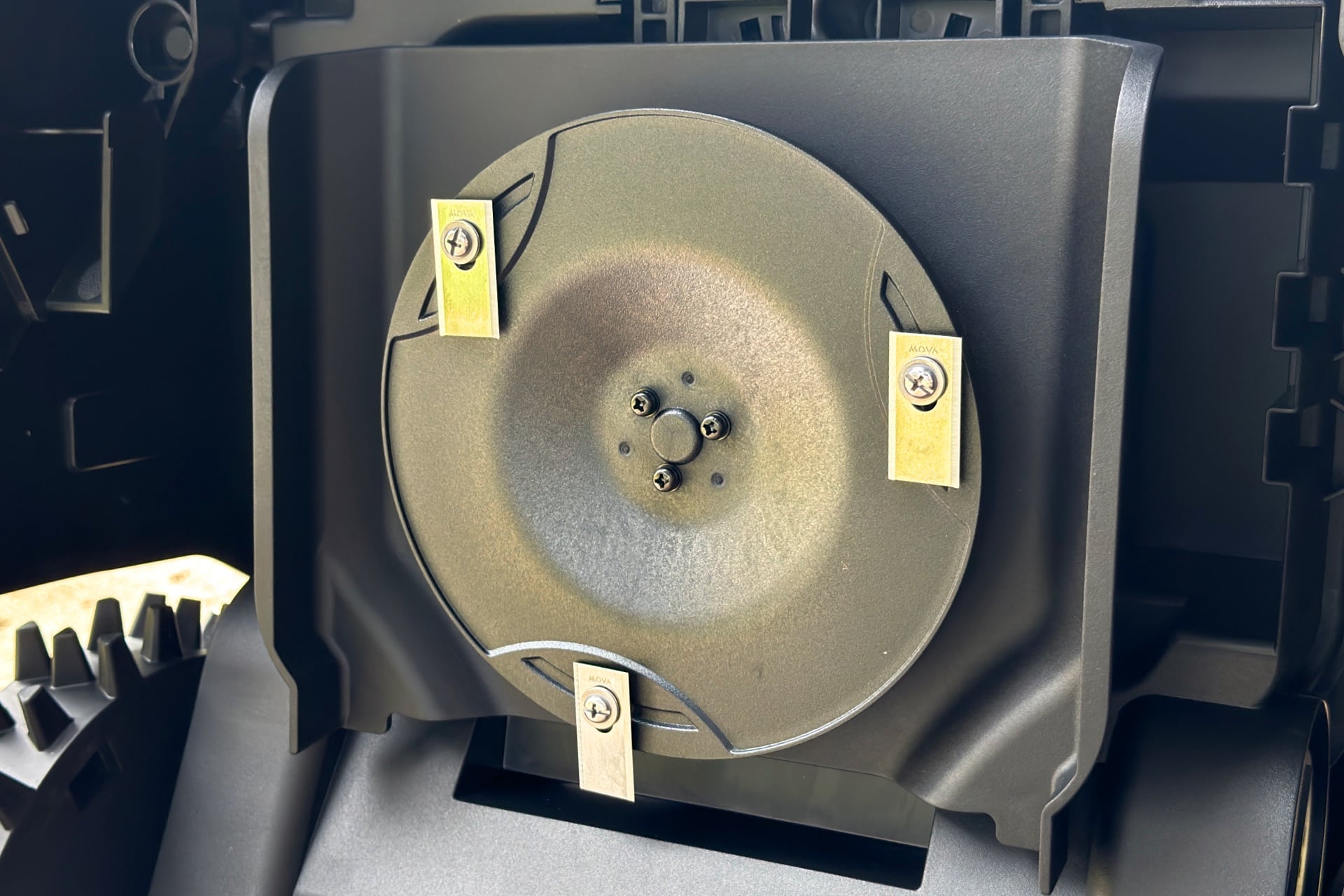
Curious about what would actually happen if it toppled a child, I quickly placed a roughly human-leg-sized log directly in the robot’s path. The LiDAX Pro 800 drove up the log, then quickly deactivated its mowing blade after its lift sensor was triggered. That’s a good sign, but this was a rough simulation, using a hard wooden log about twice the size of a child’s leg—it definitely didn’t convince me that the robot would lift and stop its blades if a two-year-old’s squishy foot ended up beneath it. (Obviously, you should never let a child roam freely in a yard where a robotic mower is at work, but unexpected things happen when very young kids are involved.)
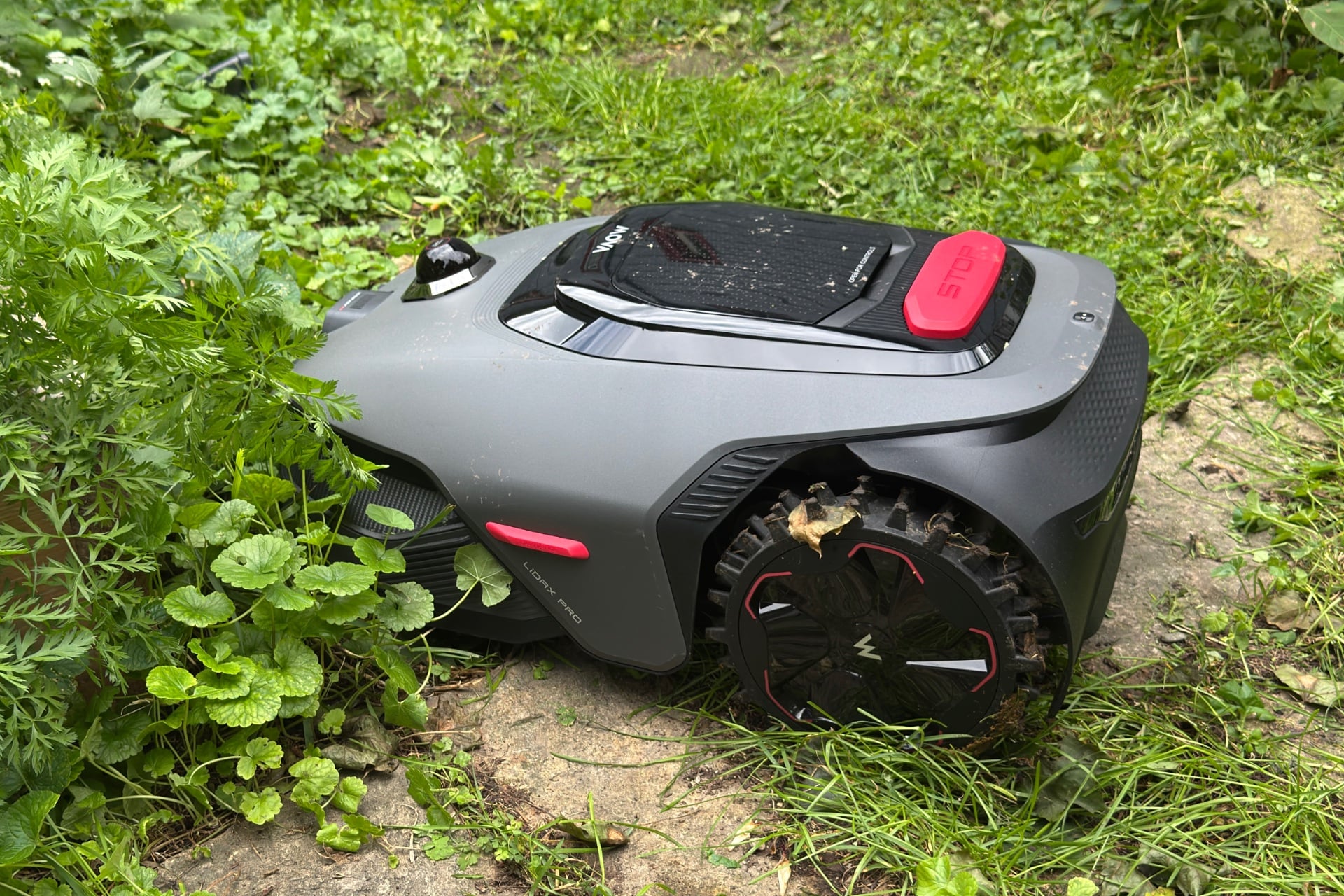
Mova tells me that the LiDAX Pro 800 should “stop moving forward right away” and back up when its bump sensor is triggered—that is, when it runs into objects—but the company needs to dial up its sensitivity quite a bit, based on my testing. Besides putting myself in its path while it worked to see what would happen, I also tested Mova’s bot with object detection completely turned off. Other devices I’ve done that with still immediately stop if something compresses their bumper, but the LiDAX Pro 800 doesn’t. I watched it repeatedly ram into a raised garden bed, plowing through the tall, late-season viney plants that were tumbling out of it. It only stopped when a vine wrapped around its rear wheel and literally lifted said wheel off the ground.
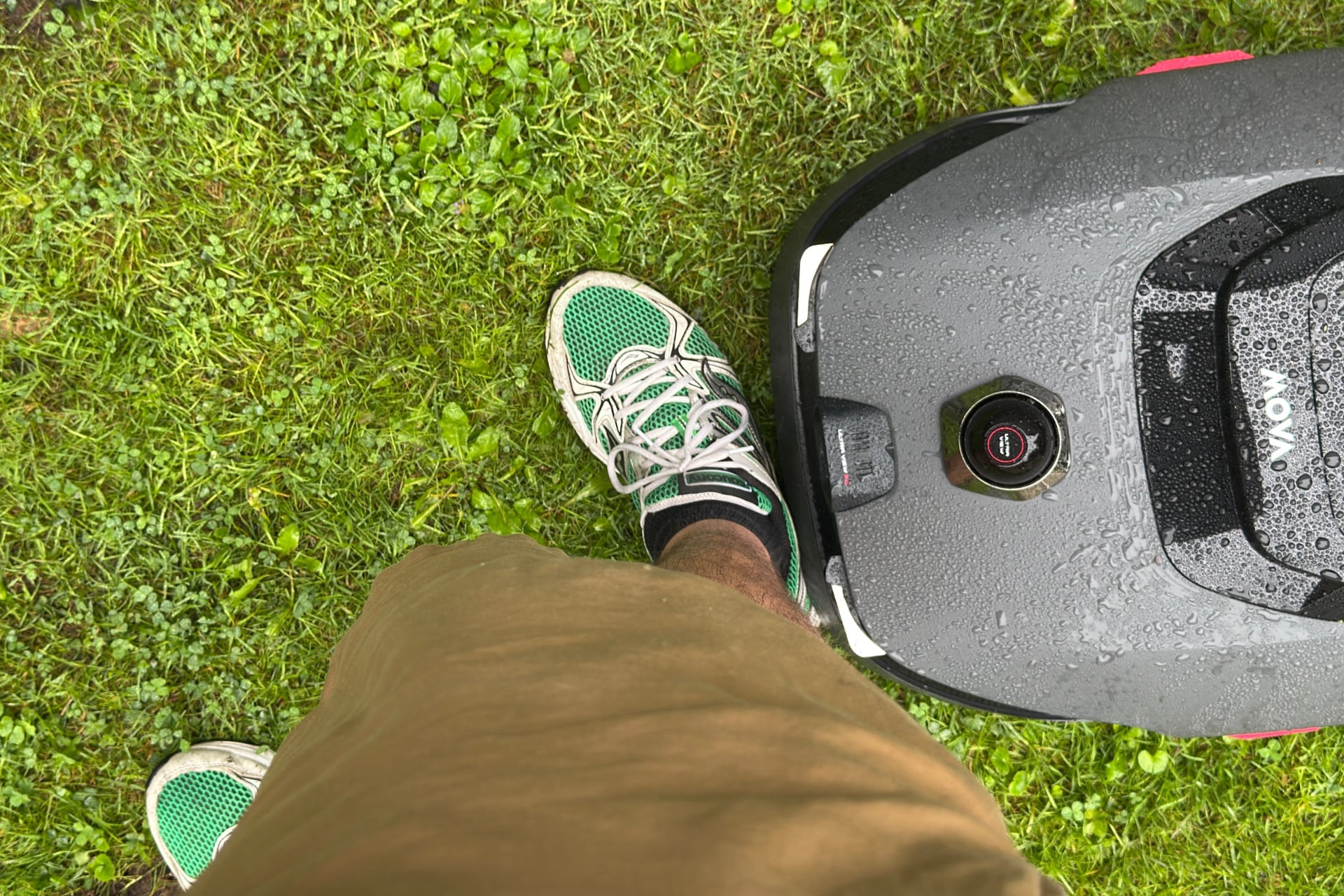
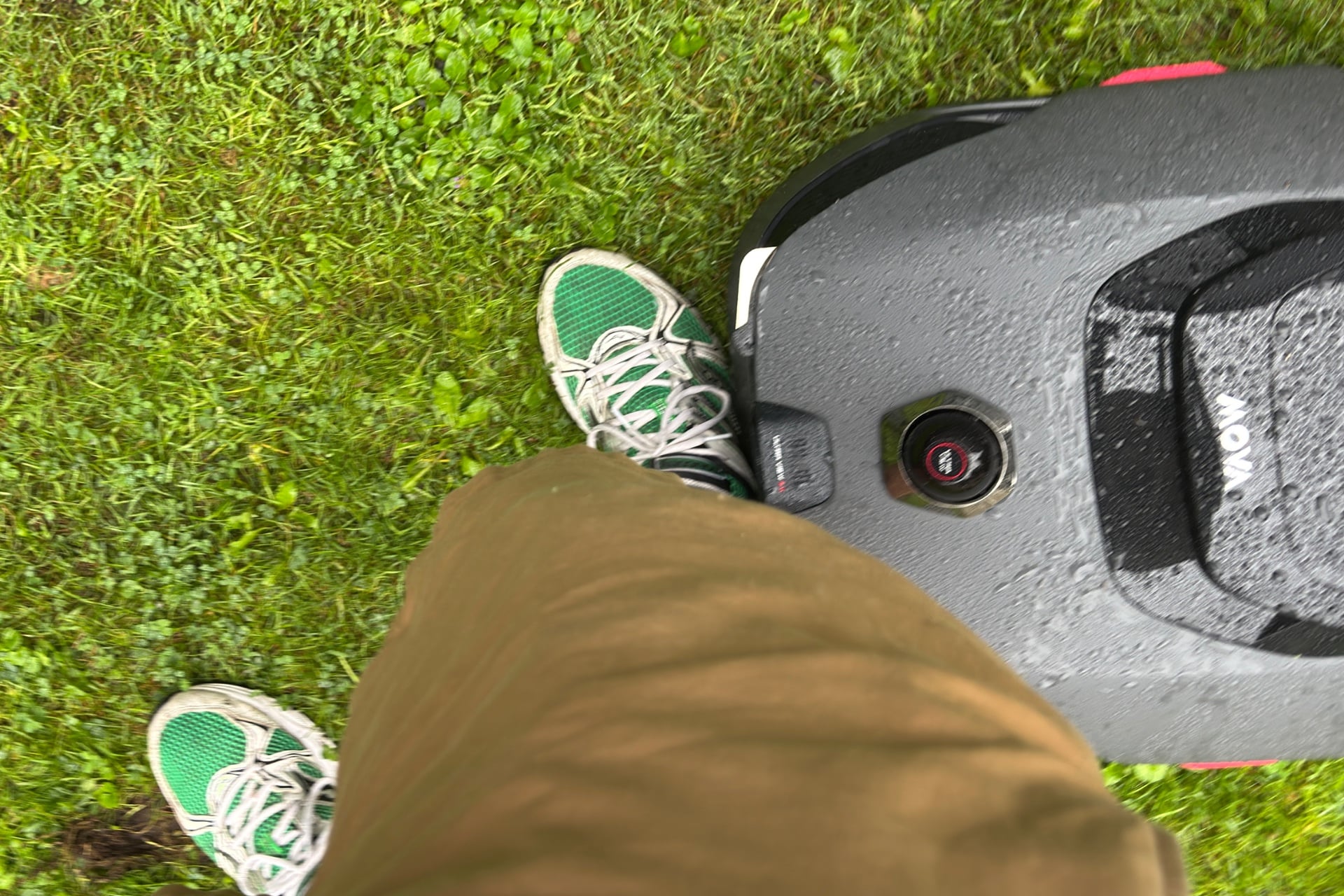
Left: The moment just before impact. Right: The mower’s bumper flaring out as it presses into my ankle.
On another occasion—this time with object recognition turned on—the LiDAX Pro 800 knocked over a somewhat small ceramic pot I’d placed in the middle of the stone patio, then ran into it again a few seconds later. The second time, the pot’s taper acted like a ramp, briefly lifting the mower. The device’s onboard speaker informed me that this had occurred, but as soon as the chassis hit the ground again, the robot resumed mowing. At least it consistently avoided a Bluey bouncy ball I put in the same area.
“The LiDAX Pro 800 uses several layers of obstacle protection,” a Mova PR rep told me in an email when I asked about these issues, “including AI vision avoidance, LiDAR-based avoidance, and a bumper sensor.” The representative added that these aren’t issues Mova “has experienced on a widespread basis” and said the company is investigating my review unit to determine what might’ve happened. When Mova shares its findings, I’ll update this story.
Mova says it plans to release an October update that will improve its mower’s object detection. But, as ever, my obligation is to review what’s in front of me, not what’s promised; and what’s in front of me now feels like a deeply unsafe robomower.
Otherwise okay, for a murderbot
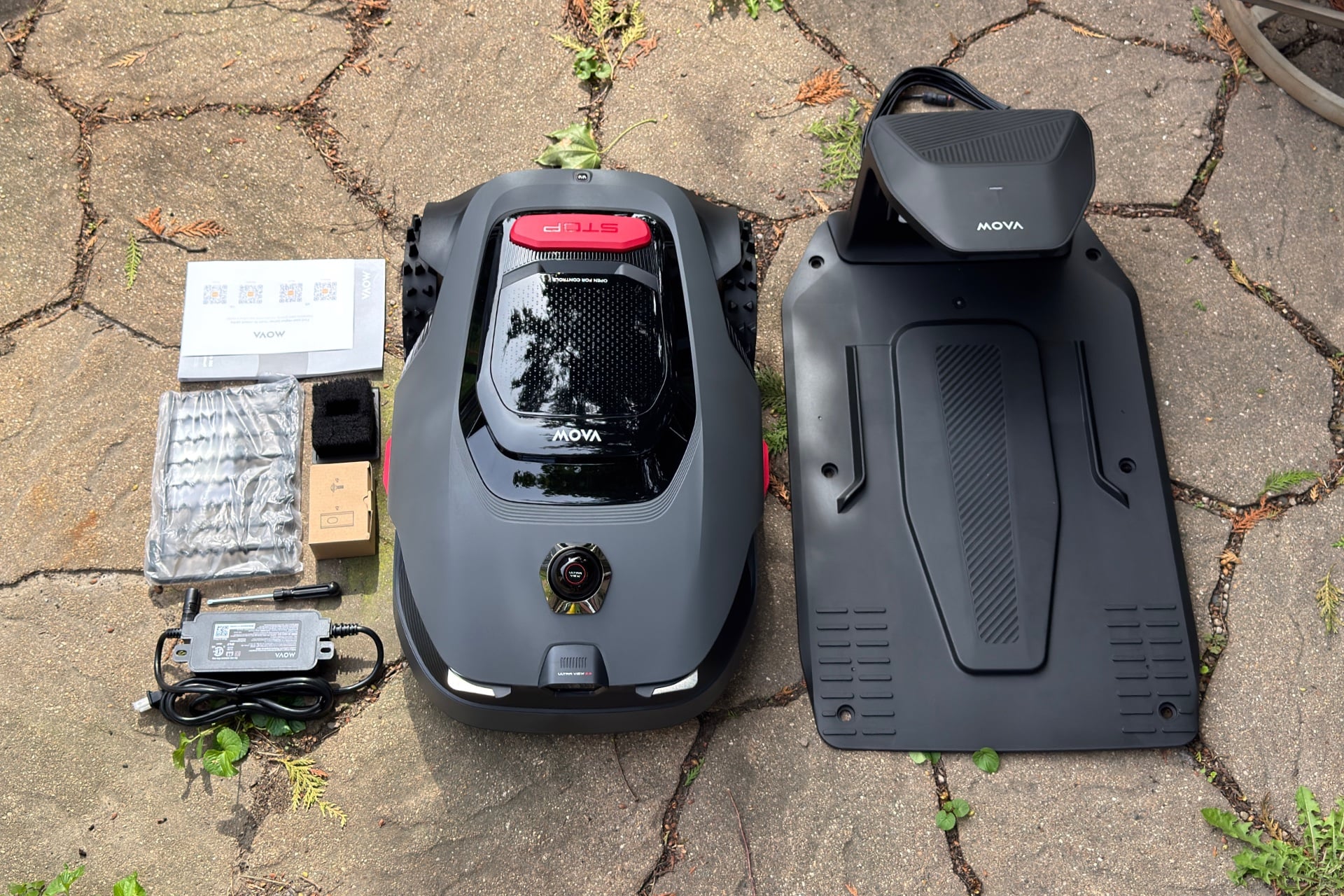
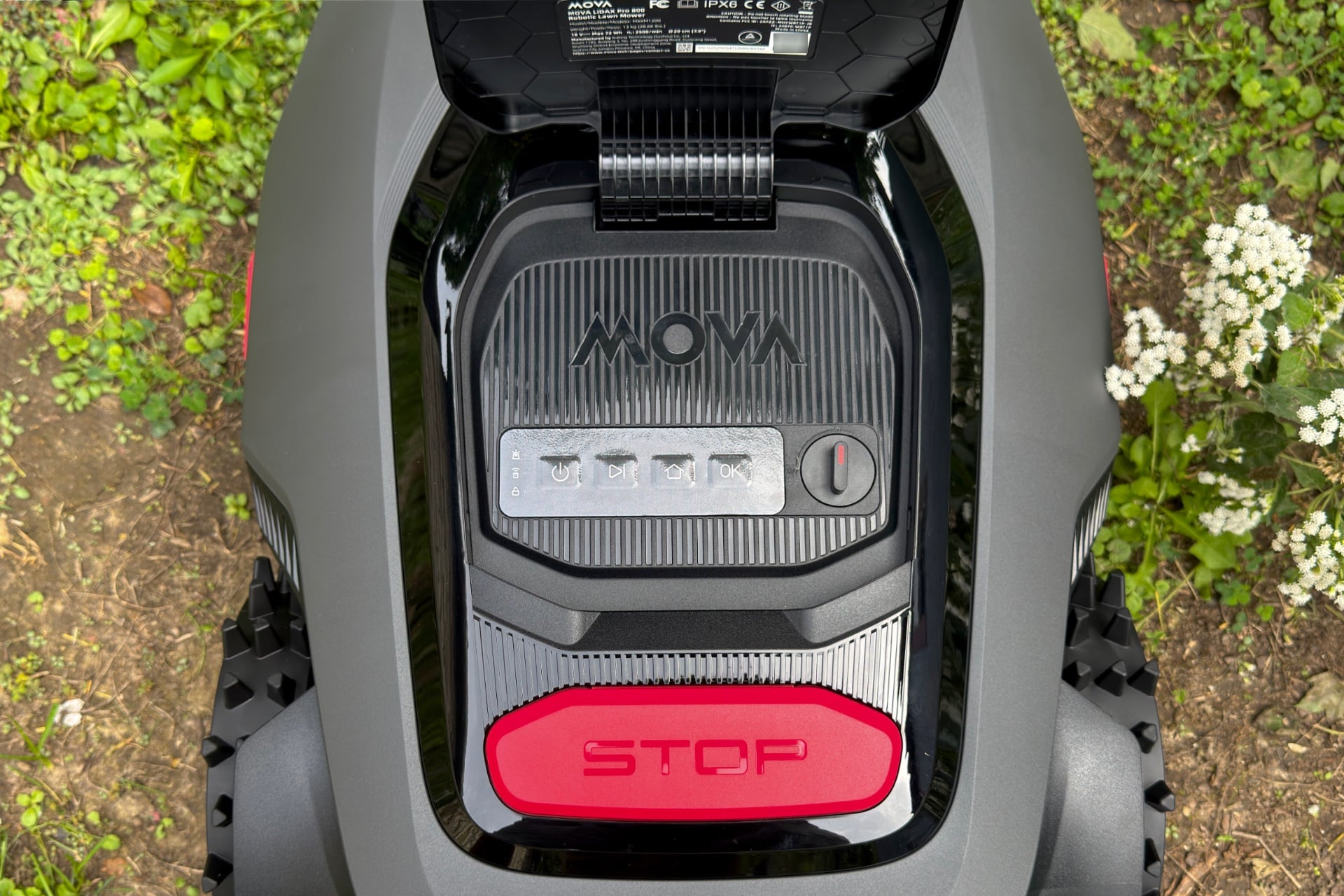
When the LiDAX Pro 800 wasn’t ramming into me, trying to destroy a garden bed, or knocking over ceramic plant pots, it was a decent RWD automower. Setup is quick and easy: once you’ve plugged in its dock, which you stake down with several long plastic screws that come with it, you’ll raise a plastic cover on top, turn a security key dial underneath to the on position, press the mower’s nearby power button, and scan a QR code under the cover to add the device to the MovaHome app. Being a lower-tier mower, the LiDAX has no onboard display.
There’s also no automatic mapping here; you’ll handle that manually by walking behind the LiDAX Pro 800, using digital controls in the MovaHome app to drive it around the perimeter of each area you want it to mow. That’s fine, because the only device I’ve tested that’s come close to successfully mapping on its own has been the Dreame A3 AWD Pro. I found during this process (and, later, while mowing via the app’s remote controls) that the LiDAX Pro 800’s Bluetooth signal reaches much farther than that of its beefy Dreame cousin. Altogether, setup and mapping took me about an hour, but I was also taking notes and shooting pictures—I could have knocked everything out in about 30 minutes otherwise.
In testing, LiDAR navigation kept the LiDAX Pro 800 on-task in the areas I’d assigned, and it gave my side yard a pleasantly even trim throughout. You can set the device’s mowing height at somewhere between 1.2 inches and 3.9 inches using the MovaHome app—other low-cost automowers, like the RockNeo Q110H, require you to turn a dial on the chassis itself to do this—and adjust things like which direction it mows in and whether it detects obstacles on lawn edges. Its blades don’t slide side-to-side like those on more advanced mowers do, so it doesn’t mow quite as close to the edges of structures as, say, the A3 AWD Pro does.
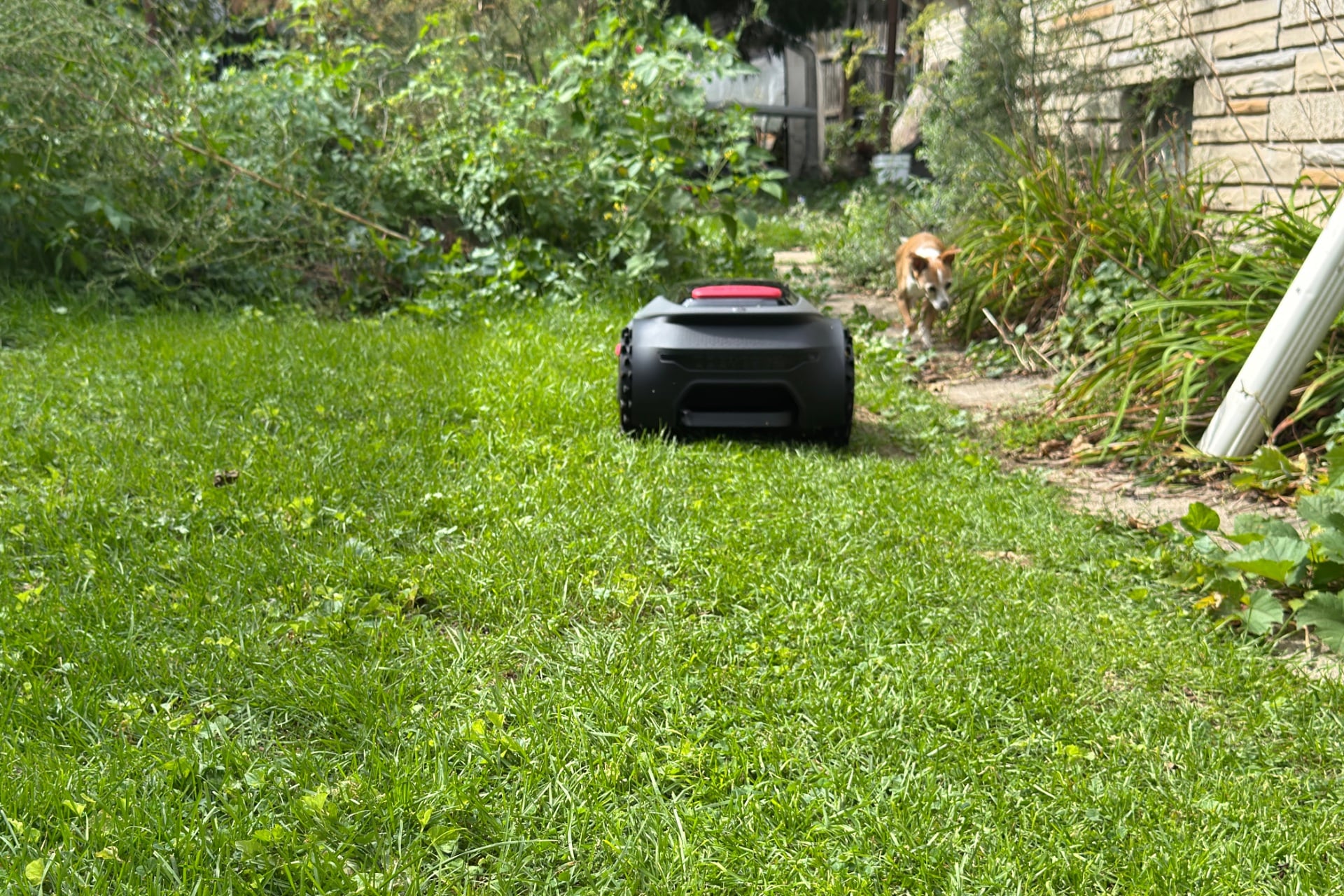
Like other automowers, the LiDAX Pro 800 is best used to regularly shave the tips of your yard’s grass. Instead of mowing once a week or every other week, you might run it every couple of days, ideally on a schedule. Scheduling is straightforward—you can set separate fall/winter and spring/summer schedules, specifying the start times and days of the week you want the mower to run in each season. It’s very quiet, too, so you can run it at night without worrying about bothering neighbors.
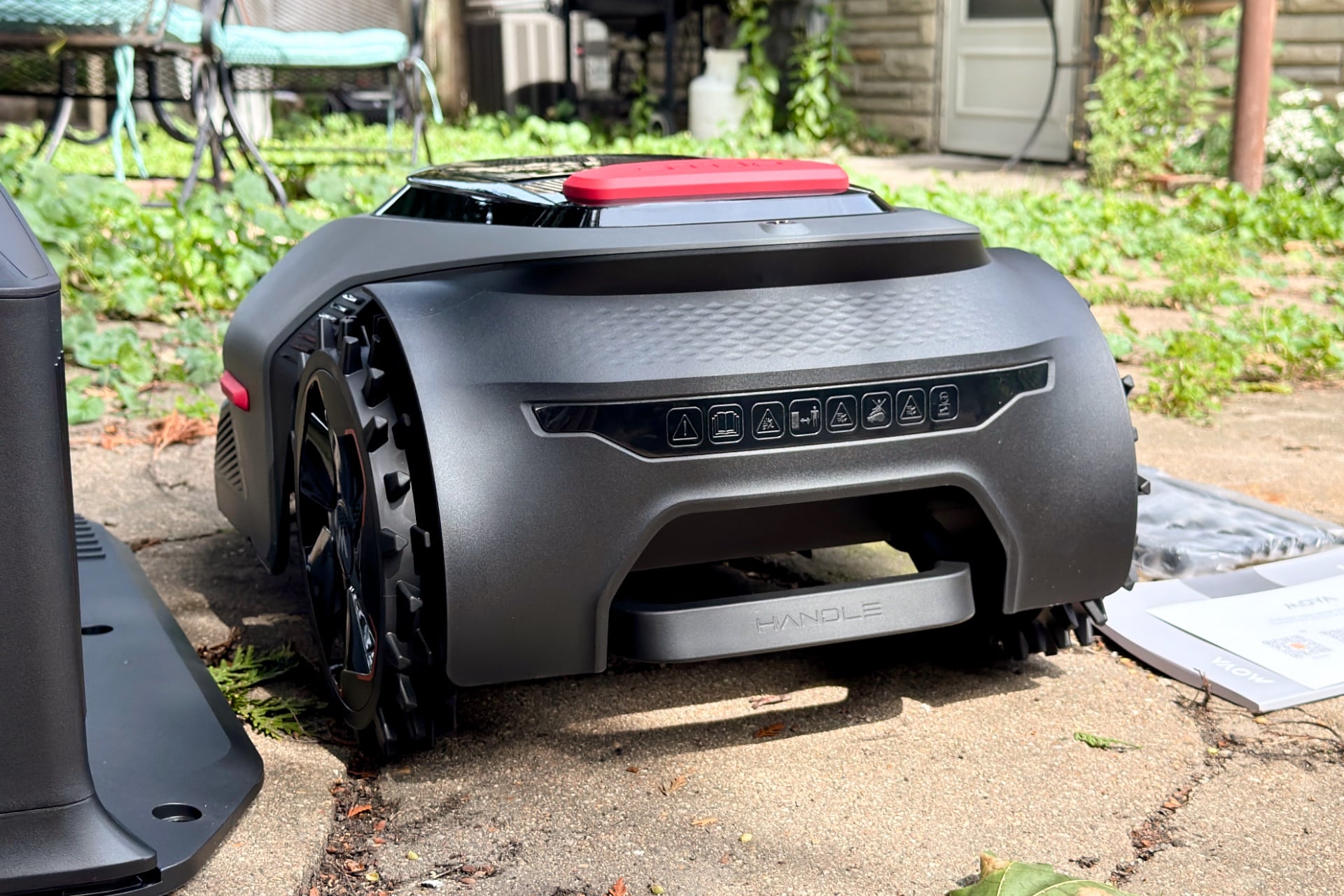
The LiDAX Pro 800 is a fairly compact device that closely resembles the Roborock RockNeo Q110H. It’s also lightweight, clocking in at an easy-to-carry 28.6 pounds. Unfortunately, also like the RockNeo Q110H, it also has simple caster-style wheels on its front, which don’t do it any favors when navigating bumpy yards or climbing onto raised pavers. Its skinny rear wheels are covered in blunt, roughly half-inch-long spikes, which don’t seem to help it keep much traction. The LiDAX Pro 800 got stuck on hard transitions, such as while driving onto the aforementioned pavers, and spun its wheels when turning on uneven ground more often than the RockNeo Q110H did.
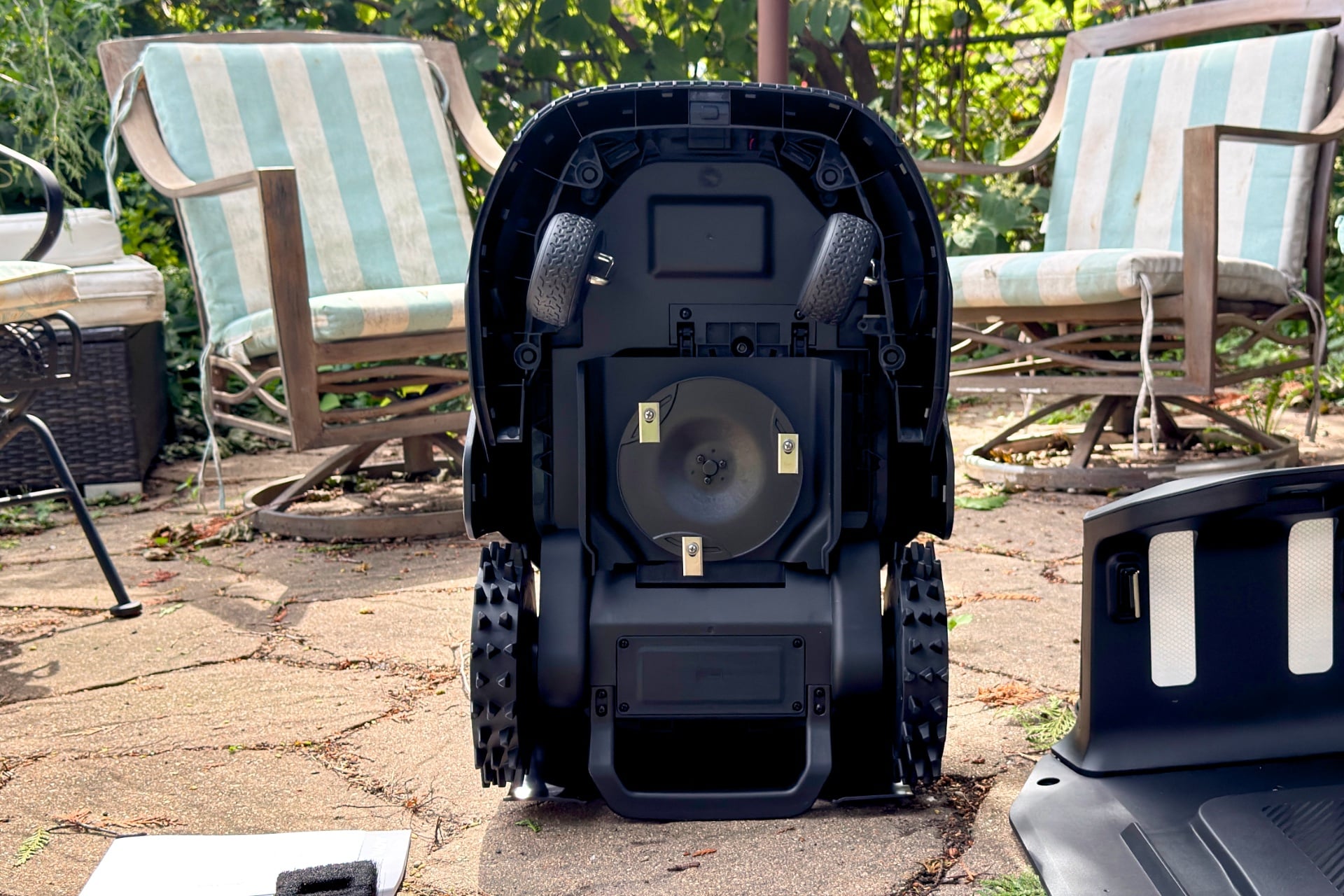
The LiDAX Pro 800 could cover the 1,500-or-so square feet of mowable area behind and to the side of my house in about two hours, ending with about 19% battery remaining. Time-wise, that’s on par with the RockNeo Q110H and the Segway Navimow i2 (which I’ve tested but not reviewed), but battery life was worse than that of the RockNeo, which had 30% of its battery left after cutting not only my backyard but also my 900-square-foot front yard. I didn’t test the LiDAX Pro 800 in my front yard because it clearly wouldn’t be able to handle the short, steep hill there.
On the plus side, the fact that you don’t need to rely on satellite connectivity or bury guide wires makes the LiDAX Pro 800 less of a hassle than some other robots. My current favorite automower, the NRTK-reliant Segway Navimow X430, did a fine job under tree cover in my yard, but when I took it to a friend’s house with poorer satellite visibility, it could only manage a few feet at a time before losing signal and stopping. The RockNeo Q110H, which likewise uses satellite navigation, also did well in my yard, but I’d expect it to struggle anywhere that the X430 might.
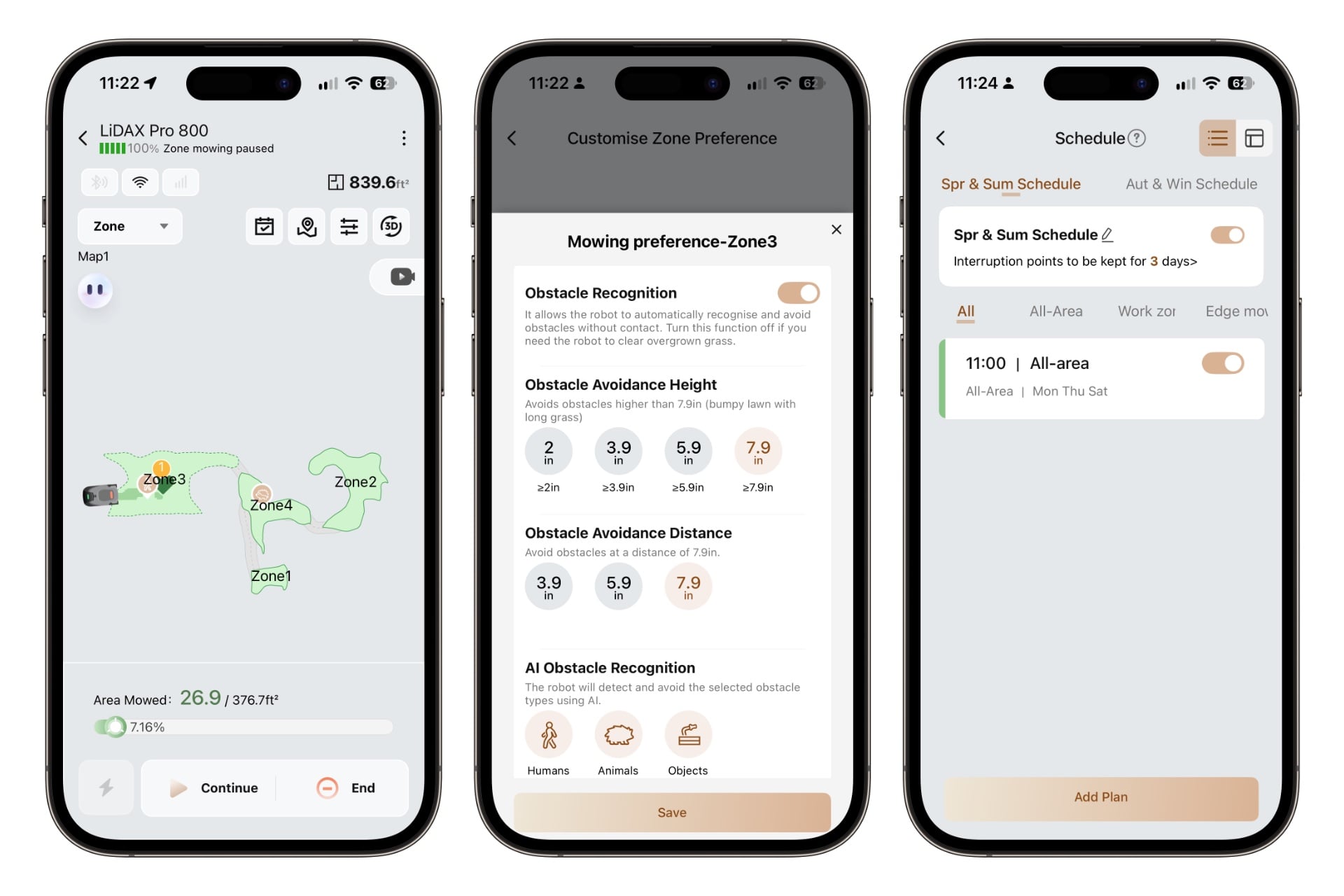
The LiDAX Pro 800’s other features mirror those of the A3 AWD Pro. You can watch its first-person camera view while it mows and send it on edge patrols of your yard, for instance, although it also loses Wi-Fi connectivity, which you need for this feature to work, much more quickly than Dreame’s model does. Mova’s mower can also draw shapes, such as hearts and stars, in your yard by avoiding cutting inside an area you place in the app. And it has the same neat 3D map that shows a point cloud visualization of your yard based on data from its LiDAR sensor.
Of course, none of that matters if the LiDAX Pro 800’s sluggish object recognition and bump-sensor response can’t reliably keep it from mowing your feet, toppling and maiming little kids, or slashing small animals.
A hard pass unless obstacle avoidance improves
Robot mowers and robot vacuums are alike in many ways—they both autonomously cruise around a pre-mapped area, using a combination of software and hardware to ensure they don’t run amok. But a trundling vac-bot with poor object detection is, at worst, an annoying tripping hazard. A robot mower failing to clock a human or animal limb presents greater potential danger. I need to know that a robotic device with spinning razor blades on its underside won’t try to mow down my child or my tiny, old, hearing-impaired dog, and I didn’t get that from the Mova LiDAX Pro 800.
It won’t be enough to improve the LiDAX Pro 800’s object detection to the point that I can step directly in front of it and it will stop; the bump sensor also needs fixing. Again, every time I moved in front of this device and it bumped my leg, it continued pressing into me for multiple seconds, seemingly unaware for those moments that it had hit anything at all. That could cause real injuries.
On paper, if you ignore those issues, the Mova LiDAX Pro 800 has some things going for it. It’s relatively affordable at $1,100, and its floating mow deck left my yard with a nice, even trim. Its LiDAR-based navigation is accurate, making it relatively easy to place, since you don’t need to worry about catching a signal from the sky. It didn’t handle the uneven terrain in parts of my yard all that well, especially where it needed to cross pavers, but that may not matter if you’ve got a flat, simple lawn.
On the other hand, it might literally try to mow you down.
Read the full article here