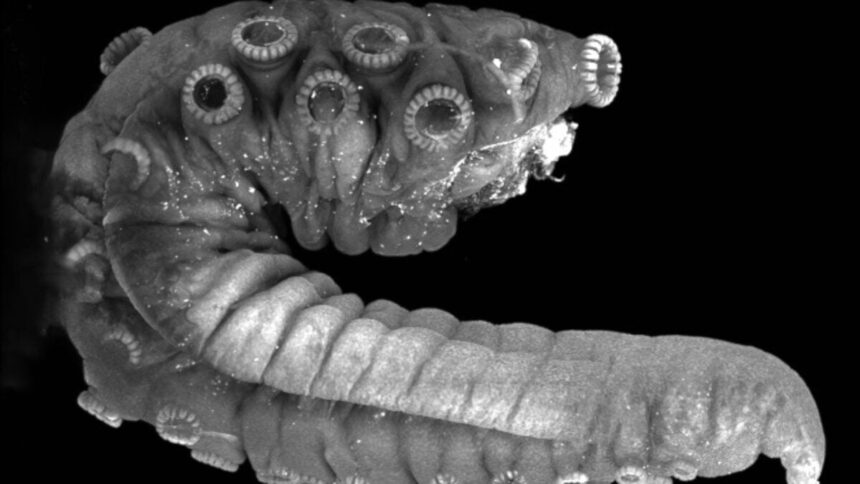
Octopuses are some of the most mysterious animals living in the sea. In research out today, however, scientists have pulled back the curtain on the male octopus’ penis-like arm, formally known as the hectocotylus.
Researchers at Harvard University and elsewhere studied octopus mating across a series of experiments. To their surprise, they discovered the hectocotylus isn’t just used to deliver sperm—it’s also a sensory organ, one that can chemically detect exactly where in the female’s body that sperm has to go. The findings not only illuminate more about these remarkable creatures but also may help explain how they’ve evolved into the hundreds of different species known today, the researchers say.
“Our investigation of octopus mating serendipitously identified and reinforce sensory receptors as molecular hotspots for interrogating reproductive isolation and speciation, central processes underlying the extraordinary diversity of animal life,” senior study author Nicholas Bellono, a professor of molecular and cellular biology at Harvard, told Gizmodo.
The loving, sniffing limb
Scientists have long known that the hectocotylus is crucial to octopus mating, which can be a risky endeavor for males (female octopuses are generally much bigger than males, and many aren’t shy about killing or eating their hook-ups post-coitus). The modified arm is used to deposit the male’s packet of sperm, or spermatophore, inside the female, though only after it navigates its way through the mantle (the main body of an octopus) and into the female’s oviduct. In some species, the hectocotylus will even break off inside the female, letting the male more easily make a safe gateway.
Unfortunately, it’s been historically difficult to study octopus love up close, owing to the solitary and highly territorial nature of these animals (two octopuses kept in the same tank will easily fight or even kill each other). Pablo Villar, one of Bellono’s postdoctoral fellows, had devised a clever and simple system to get around this limitation, though: a temporary barrier that could separate a male and female, allowing them to get used to the other’s presence.
Bellono’s team planned to study mating in a pair of wild-caught California two-spot octopuses (Octopus bimaculoides) once the barrier was lifted, but the lovers had other ideas.
“To our surprise, the male extended his hectocotylus through the holes, located the female, inserted it into her mantle, found the oviduct, and began mating—all through the barrier. These interactions could last for several hours and were repeated over multiple days,” Bellono said. “Even more striking, this behavior occurred with minimal visual input: males readily mated in complete darkness and consistently attempted to mate with females, not other males. Together, these observations pointed strongly to a chemical cue.”
Further experiments confirmed the team’s hunch. The male’s hectocotylus had chemical receptors that could precisely detect progesterone emitted by the female’s oviduct. Progesterone is a steroid hormone commonly produced in large doses by many female animals, humans included.
Though octopuses are already known to use their other arms as a “taste-by-touch” system to feel the world around them, this research shows that the hectocotylus has its own unique sensory tricks. The team’s findings were published Thursday in the journal Science.
The drivers of octopus evolution
This discovery might not only tell us something about octopuses today but also provide hints into their evolutionary past, too.
The researchers eventually identified the progesterone-sniffing receptor as CRT1, a receptor that also seems to help octopuses detect the bacteria found on their prey. They then found evidence that the genetics underlying CRT1 receptors in the hectocotylus have undergone rapid changes in a short amount of time (evolutionarily speaking) and that these receptors can look fairly different across different octopus species.
Octopuses are part of the broad phylum of mollusks. Unlike many other mollusks that can switch between male and female and usually fertilize externally, though, octopuses and other cephalopods evolved to sexually reproduce with clearly defined sexes and through the direct transfer of sperm.
“The evolution of sexual reproduction between distinct male and female imposes selective pressure on precise mate recognition and timing. We think the discovery of a sensory organ and rapidly evolving receptor for sexual reproduction underscores this important transition and how it contributes to diversification,” Bellone explained.
In other words, it’s possible the evolution of the CRT1 receptor in these eight-legged lotharios may have helped cause the branching off of new species from the octopus family tree. Having made this discovery, the researchers are next planning to study exactly how octopuses distinguish between species and whether the variants in the CRT1 receptor play a role in that.
Personally, I’m just wondering if males ever use their hectocotylus to high-eight themselves after a good time mating.
Read the full article here