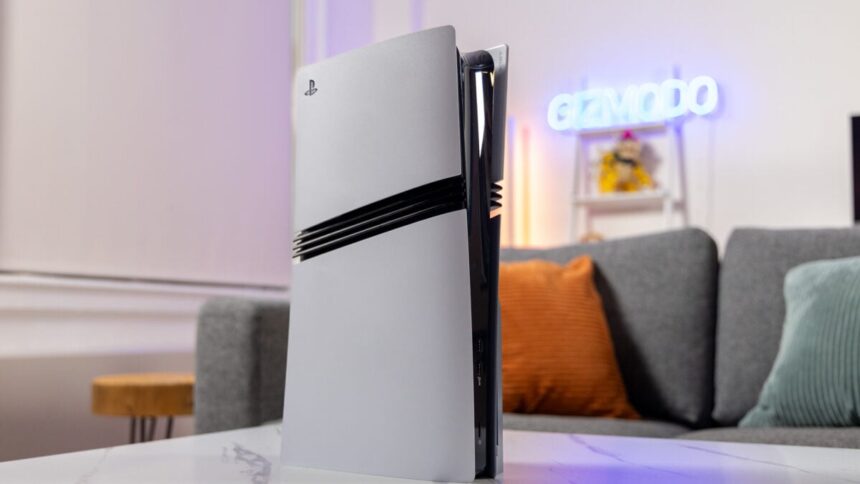
The future of console gaming is going to be beholden to AI. Nowhere will that be more true than on the still-unannounced next-gen PlayStation. To boost graphics performance and frame rates, the supposed PS6 could make use of even more upscaling technology and the dreaded multi-frame generation, sometimes derisively called “fake frames.”
Mark Cerny, PlayStation’s soft-spoken lead hardware architect, talked with Digital Foundry about the PS5 Pro’s latest upscaling update. The “Pro”-level console’s new PlayStation Spectral Super Resolution (PSSR) incorporates some of the same capabilities of AMD’s latest FidelityFX Super Resolution, FSR Redstone. In Gizmodo’s tests, Sony’s upscaler enhances image quality in dramatic fashion for several big games, but it won’t have as big of an impact in titles that weren’t reconfigured for the updated PSSR.
Either way, the PS5 Pro is a showcase of what to expect from a next-gen console—whether it’s a PS6, PlayStation handheld, or whatever Cerny and gang are cooking up. PlayStation partnered with AMD to “co-develop” FSR Redstone. In response to questions about frame generation, Cerny mentioned that Sony is “intimately familiar with it” since it also worked on the latest multi-frame generation model found on AMD’s PC-only technology.
“An equivalent frame generation library should be seen at some point on PlayStation platforms,” Cerny added, practically all but confirming we’ll see the tech on future hardware. “All I can say is that we have no more releases planned for this year. And that I look forward to discussing this more in the future.”
All-in on upscaling
Upscalers like PSSR enable higher resolutions and frame rates by taking a game rendered at a lower resolution and then filling in pixels to make it appear as if it were rendered at a higher resolution. While FSR Redstone (previously FSR 4) is tied to AMD’s latest PC graphics cards, PSSR is using “the same core co-developed algorithm.” Sony had to do extra work to get the model running for PlayStation’s older CPU and GPU architecture.
Frame generation is a whole different beast. This is software that also runs on modern GPUs. AMD’s latest machine learning-based frame generation technology takes AI-generated frames and inserts them between rendered frames. The latest technology can increase frame rates dramatically. For example, a 4x frame generation model can insert three frames in between two rendered frames.
Frame generation, sometimes referred to as frame interpolation, may push your game’s frame rates to match close to a monitor’s total refresh rate. It also results in more graphical artifacts and ghosting, where users see aspects of images that shouldn’t exist in the game rendered completely by the device. Frame generation also increases latency, potentially making games feel floatier. Games need to maintain a frame rate closer to 60 fps before any interpolation if you want smoother gameplay and less artifacting.
Can console gamers accept ‘fake frames?’
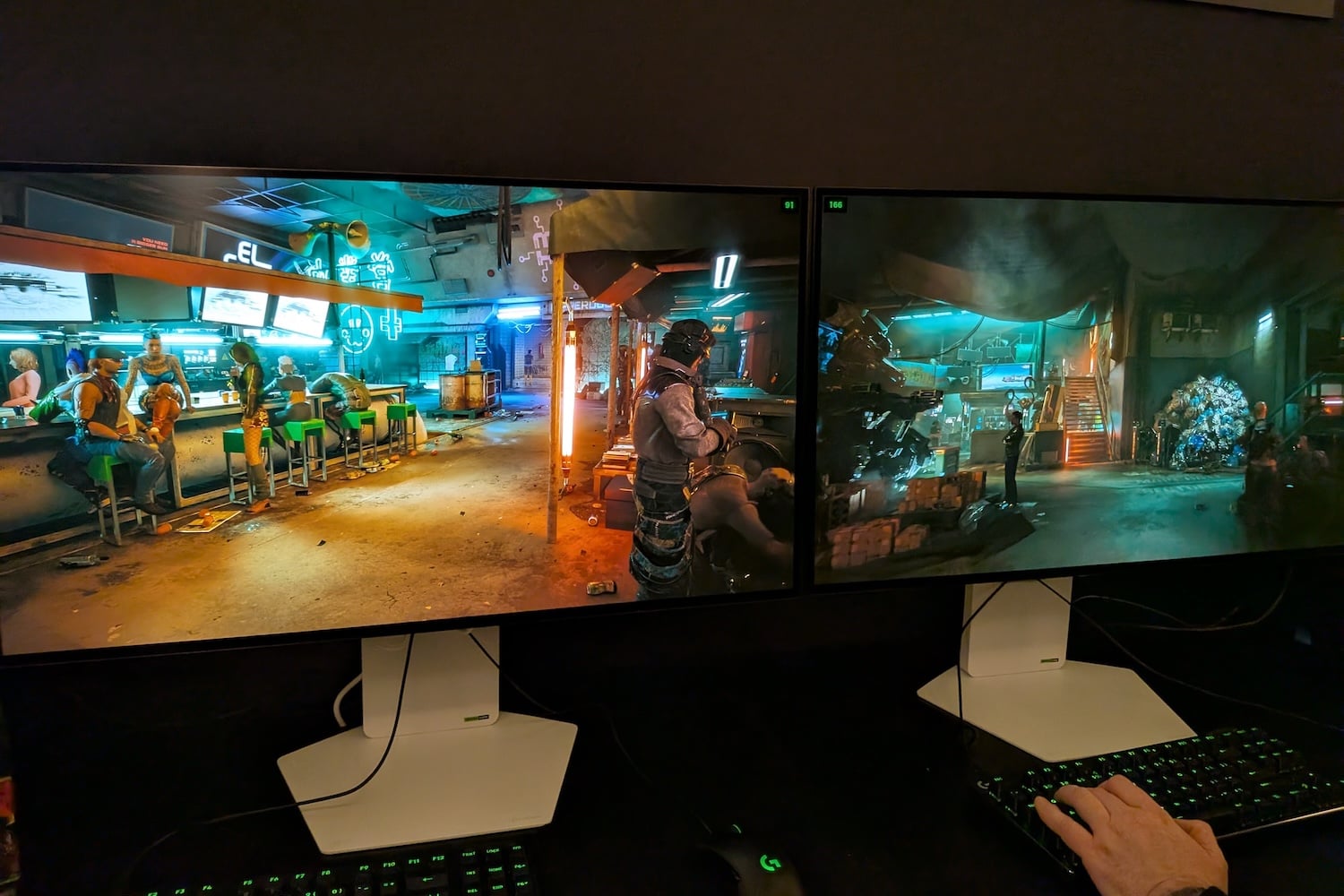
Frame generation is not a panacea for the natural limitations of console hardware. However, console gamers may benefit more from frame generation than your ultra-expensive gaming PC. Developers can tune these models to limit the potential drawbacks as much as possible. Console gamers are also more willing to accept subtle graphical flaws for ease and playability, at least more than their PC counterparts.
Like Xbox’s “Project Helix,” the PS6 will likely use AMD’s next-generation Zen 6 CPU and RDNA 5 GPU microarchitecture. Even if these consoles are powerful by themselves, they’ll still need the extra upscaling help. The PlayStation 5 originally promised we’d play games at 4K with support for 120Hz refresh rates. It never actually reached those heights. The PS5 Pro has come closest to offering a true high-end experience in games like Resident Evil Requiem. We’ll just have to see if a new console can make “fake frames” mainstream.
Read the full article here