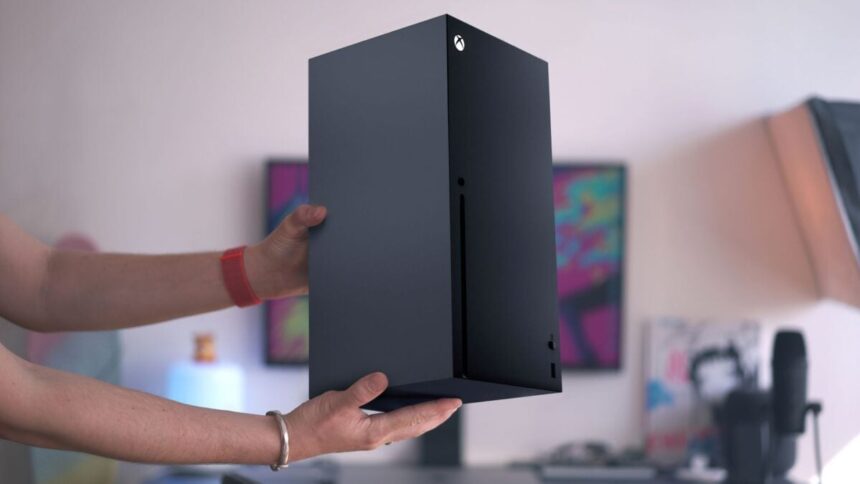
The cat’s out of the bag. The next Xbox console is codenamed “Project Helix” and won’t just play past and future Xbox-only games, but also run every title built for PC.
Asha Sharma, Microsoft’s recently installed CEO of gaming, shared on X the company’s “commitment to the return of Xbox” and added that the next-gen console will “lead in performance.”
Great start to the morning with Team Xbox, where we talked about our commitment to the return of Xbox including Project Helix, the code name for our next generation console.
Project Helix will lead in performance and play your Xbox and PC games. Looking forward to chatting about… pic.twitter.com/Xx5rpVnAZI
— Asha (@asha_shar) March 5, 2026
That message is less of a product announcement and more of a precursor to a full, inevitable console showcase. Xbox is gearing up for GDC 2026. The company already has a “Building for the Future with Xbox” presentation slated for March 11. Considering how the company is being even more transparent about its plans than normal, Xbox may soon offer a more thorough rundown of its next-gen console hardware.
Xbox needs to convince fans they care
Sharma’s announcement isn’t exactly new. Former brand president Sarah Bond had already confirmed the console was in the works. Xbox has a history of revealing past console codenames, such as Project Scarlett, which eventually became the Xbox Series X. The important thing to gauge is how much energy Xbox is now throwing behind its upcoming console.
Even the Microsoft bigwigs are stepping up. The Verge’s Tom Warren posted a picture of CEO Satya Nadella sent to him by Xbox’s VP of Marketing, Aaron Greenberg. Nadella is seen wearing an Xbox hoodie at a company Xbox town hall with Sharma in his best “hello fellow kids” impression.
Microsoft CEO Satya Nadella appeared at an internal Xbox town hall on Thursday wearing an Xbox hoodie. He discussed the future of Xbox alongside new Microsoft Gaming CEO Asha Sharma. 📸 by @aarongreenberg pic.twitter.com/JrXxGy9x5K
— Tom Warren (@tomwarren) March 6, 2026
This open-handed, full-court press for the next-gen Xbox is less for Microsoft’s own benefit and more to build up hype from a beleaguered fanbase. The Xbox community has been left in the doldrums for the last several years. Fans felt that Microsoft had effectively abandoned the Series X console to push Game Pass subscriptions.
The power and price conundrum
The one thing that Sharma didn’t offer was any hint of price. A performance-leading device will naturally cost more. Our best source for Xbox internals, the YouTuber Moore’s Law is Dead, has been talking through the Xbox’s AMD-made chip, codenamed Magnus, for the past several months. He suggested the console could cost around $1,000, though that’s an estimation based on leaks of the price for AMD’s supposed new chipset.
Based on leaks, the SoC (system on a chip) that AMD is working on for Magnus is a beast. It reportedly includes 68 RDNA 5 compute units—AMD’s core clusters built on a still-unreleased next-gen GPU microarchitecture. It’s also said to feature three Zen 6 and eight Zen 6C CPU cores, according to Moore’s Law’s sources. That’s estimated to make “Project Helix” deliver an estimated six times the performance and 20 times better ray-tracing capabilities compared to the Xbox Series X.
Xbox and Valve will compete on PC/console hybrids
There are two ways Microsoft could go about making PC games run on a console. One is to use Xbox-specific architecture and then run PC games through compatibility layers. The other option is to just make a version of Windows that also facilitates Xbox games. If anything, Xbox is likely going with the latter. The company had already tested out a “full screen experience” on its partner devices, the Asus ROG Xbox Ally handhelds. The FSE made accessing games with a controller easier than it would be normally. The only issue was these handhelds didn’t have the capacity to run Xbox-native games outside of streaming.
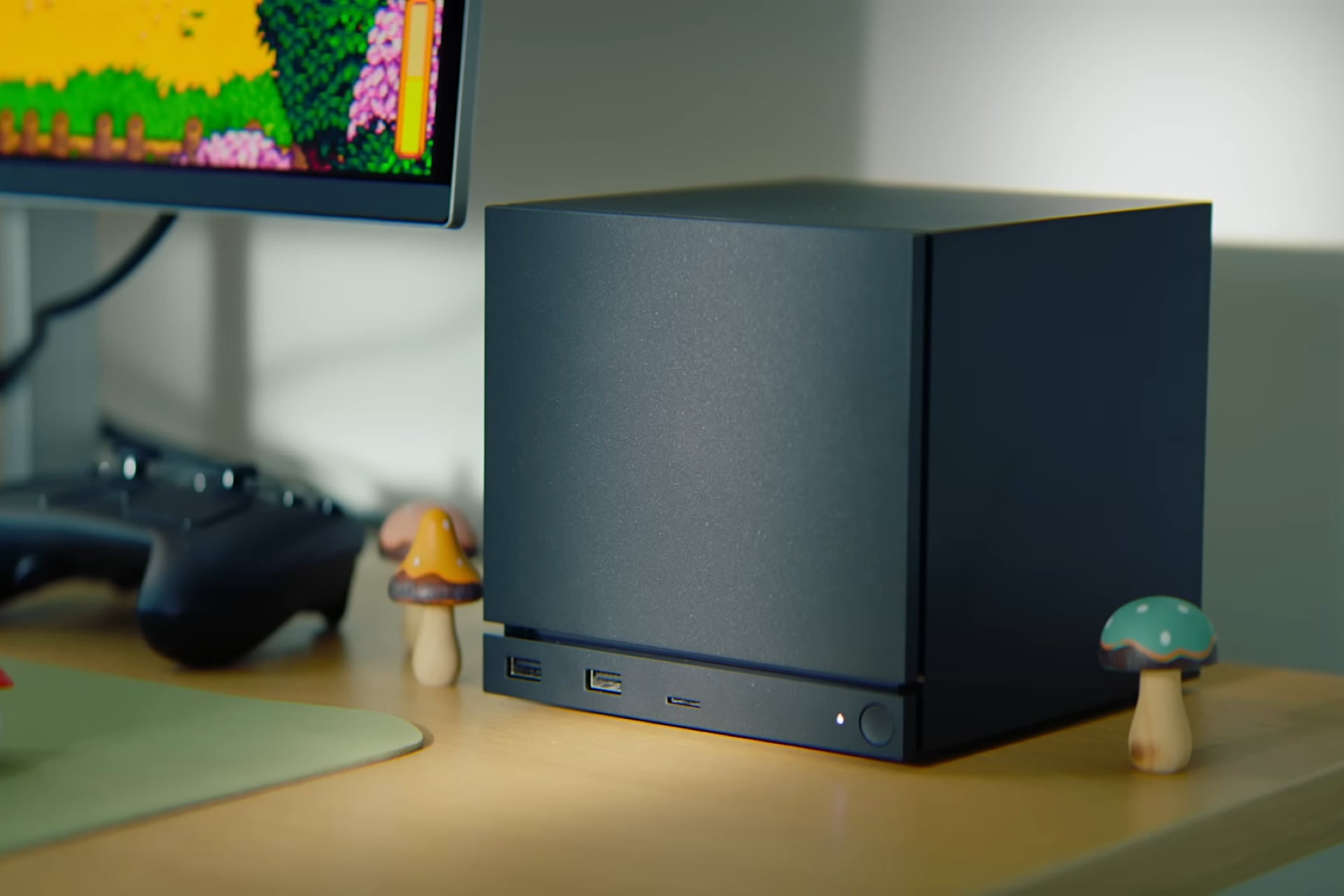
We’ll likely see “Project Helix” launch in 2027, at least according to AMD CEO Lisa Su. The next-gen Xbox is bound to cause controversy due to its price. However, when you consider the cost of current gaming PCs due to the ongoing RAM price meltdown, a $1,000, gaming-ready Windows machine doesn’t sound so outlandish.
Xbox is still competing with Sony’s next-gen “PlayStation 6,” but it will also need to meet and beat Valve’s Steam Machine. That PC/console hybrid plans to offer an easy PC-like experience, just not on Windows. The only thing we’ll have left to see is if Xbox can beat Valve on price for performance.
Read the full article here