
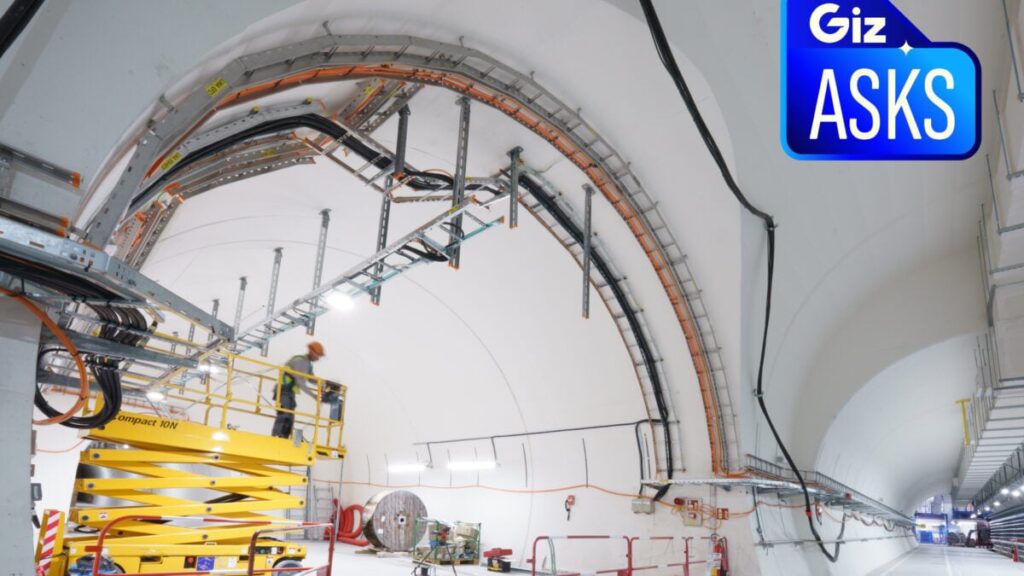
As the old physics wisdom goes, to answer big questions, build big machines. To that idea, CERN’s Large Hadron Collider (LHC) has really delivered on all fronts in its last 16 years of operations. As humanity’s largest, most powerful particle accelerator, the LHC had a hand in more than a few Nobel-winning discoveries, including the confirmation of the Higgs boson. It’s been a lab for physicists around the world to explore nature’s most extreme regimes—a pursuit that has sometimes led to odd findings bordering on modern alchemy.
But things weren’t all perfect. Many expected that a system as huge and capable as the LHC could discover physics beyond the Standard Model of particle physics. It didn’t. Physicists definitely noticed, with some even calling this lack of “new physics” their “nightmare scenario.”
Meanwhile, last month, the LHC officially went on hiatus for Long Shutdown 3. As the name suggests, this isn’t its first long break, but it is arguably the most important vacation for the accelerator. When it comes back in 2030, it’ll have a new name: the High-Luminosity Large Hadron Collider. And with its launch, naturally, people will start asking again: Will we find new physics this time?
For this Giz Asks, we asked experts to unpack the nuances of this question. How will the High-Luminosity LHC be different? What do physicists expect it could reasonably discover—or not discover? As experts, what questions are they personally hoping to explore? The following responses may have been lightly edited for length and clarity.
Daniel Tapia Takaki
High-energy nuclear physicist, University of Kansas.
What particularly excites me is the possibility that the surprise could come from new ways of looking at the data itself. There is enormous interest today in AI-enabled discovery, and combining AI with much larger datasets and more powerful detectors could reveal structures that conventional analyses might miss. But I am especially interested in going further and developing genuinely model-independent approaches.
One example from my own work is quantum tomography. We have spent decades producing quantum systems at colliders. We are now beginning to ask whether we can reconstruct them as quantum systems. Every collision at the LHC is fundamentally quantum mechanical, but traditionally we reconstruct only part of that quantum story from the particles emerging from the collision. Quantum tomography turns the question around: can we use those particles to reconstruct a more complete picture of the quantum system that produced them?
Nedaa Alexandra Asbah
Research staff with the ATLAS experiment, CERN’s general-purpose particle physics program.
The High-Luminosity LHC (HL-LHC) is a major upgrade of the existing LHC that will allow ATLAS to collect about six times more data than today, opening a new era of precision measurements and searches for rare phenomena. To operate in this much more challenging environment, the ATLAS detector is undergoing major upgrades, including a completely new Inner Tracker for precise particle tracking, the High-Granularity Timing Detector to help separate hundreds of simultaneous proton collisions, and a redesigned trigger and data-acquisition system capable of processing far more information in real time.
ATLAS expects to record around 180 million Higgs bosons, allowing us to study its properties with unprecedented precision and look for even small deviations from Standard Model predictions. Particularly important measurements will include the interaction between the Higgs boson and the top quark, the heaviest known elementary particle, as well as the extraordinarily rare production of two Higgs bosons, which provides direct information about the Higgs self-interaction.
The HL-LHC will also produce billions of top quarks and enormous samples of other particles, providing new opportunities to search for phenomena that have so far escaped detection. Handling these unprecedented datasets will require major advances in computing, with artificial intelligence and machine learning playing an increasingly important role in reconstructing particles, selecting interesting collisions, and analyzing the data efficiently.
While new discoveries can never be guaranteed, the HL-LHC will allow us to test our current understanding of particle physics more stringently than ever before and potentially uncover clues about physics beyond the Standard Model.
John Jowett
Accelerator physicist at GSI Darmstadt; currently with the ALICE collaboration, CERN’s heavy-ion physics program.
The principal goal of the High‑Luminosity LHC is to increase the rate of proton–proton collisions—and the experiments’ ability to analyze them—in order to probe what lies beyond the Standard Model, the rather banal label for what is arguably humankind’s grandest intellectual construction. The LHC has already subjected the Standard Model to extraordinarily precise tests, including the momentous discovery of the Higgs boson.
But physics is vast, and genuine surprises often arise in its many sub‑fields even when they remain consistent with the Standard Model at the most fundamental level. This is true at the LHC itself. In heavy‑ion collisions, for example, we see a rich variety of emergent phenomena in quark–gluon plasma (QGP) physics. By colliding beams of heavy nuclei, we can recreate tiny droplets of this unimaginably hot, dense, and strange substance that filled the universe in its initial microseconds. The power to do this, however fleetingly, in the laboratory still feels miraculous to me.
Physicists in ALICE and the other LHC experiments have already uncovered phenomena they did not anticipate. The most striking are related to the emergence of collective behavior in hadronic matter. But there is so much more, ranging from the fate of heavy quarks in the QGP to the detection of the heaviest anti- and hyper-nuclei and the effects of extreme electromagnetic fields. With higher luminosity, innovative detector technology, and, possibly, new nuclei in the beams, we can look forward to an abundance of interesting physics in the coming years.
Filip Moortgat
Research physicist with the CMS experiment, CERN’s general-purpose program for studying subatomic particles, dark matter, and extra dimensions.
The High-Luminosity Large Hadron Collider is a major upgrade to the world’s largest particle accelerator at CERN, expected to begin operations in 2030. Think of it as making the world’s strongest microscope on the universe at least 5 times more powerful. The HL-LHC will create a combined 380 million Higgs bosons in the ATLAS and CMS experiments during its lifetime. The Higgs boson (discovered at CERN in 2012) is the particle that gives other particles their mass, and fully understanding its properties is one of the biggest priorities in particle physics. A key goal is finally catching sight of “di-Higgs” events, where two Higgs bosons are produced together—a very rare occurrence that happens only once per thousand Higgs bosons. This is important because it lets scientists directly measure how the Higgs interacts with itself, which reveals the true shape of the force field responsible for giving particles mass. This measurement could confirm our current theories of the evolution of the universe or, more excitingly, point toward a new type of physics beyond what we currently understand.
Beyond studying the Higgs boson, the HL-LHC will also hunt for other particles that we have not discovered yet. The highest priority is the search for dark matter—the invisible substance that makes up about 85% of all matter in the universe but never touches ordinary matter in ways we can easily detect. With the massive amount of data from the HL-LHC, and with significantly improved detectors, physicists of the ATLAS and CMS experiments hope to spot signs of dark matter by looking for collisions where part of the produced energy disappears without a trace into invisible particles. This could finally give us a clue about what dark matter actually is.
In essence, the HL-LHC is our best near-future bet for peering behind the curtain of reality, testing whether our understanding of the universe is correct or if something fundamentally new is waiting to be discovered.
Alessandro Tricoli
Research physicist, Brookhaven National Laboratory.
When I was a young scientist waiting for the LHC to start, I felt both excitement and apprehension—what if something didn’t go according to plan? I was in the ATLAS control room in 2009 when the LHC injected its first beams, and I remember the anxiety of waiting for data, then the relief and joy when we finally saw particle tracks on the control-room screens. That progression of data eventually led to the 2012 discovery of the Higgs boson—although proving it has exactly the properties predicted by the Standard Model is a story still being written, and the final word will come from the HL-LHC. Now more senior and contributing to the HL-LHC’s construction, I feel that same mix of excitement and apprehension.
With a ten-fold increase in data, we’ll measure the Higgs boson’s interactions to percent-level precision, including whether it interacts with itself. If it matches Standard Model predictions exactly, that will be just as profound as if it doesn’t: a “vanilla” Higgs still leaves open questions like the origin of dark matter, while any deviation would point to the Higgs as a portal to new physics. Beyond the Higgs, the tenfold increase in statistics, combined with new detectors and techniques, will let us probe rare processes that were simply invisible at the original LHC—searches for new matter particles and forces at the TeV scale that bear directly on dark matter and the nature of neutrinos.
This is also an exciting moment because the HL-LHC’s story doesn’t stand alone: Brookhaven National Laboratory is building the Electron-Ion Collider (EIC), which will come online a few years after the HL-LHC starts and whose results will be deeply complementary. The EIC acts as a precision scalpel on protons and heavy ions to understand the strong force—the strongest force in nature, yet in many ways the least well understood—mapping the internal structure of protons and heavy ions with a precision the LHC itself cannot achieve. Because the HL-LHC collides protons on protons, understanding that internal structure and the strong force’s properties is essential to interpreting its data and separating genuine new physics from Standard Model backgrounds.
There are even scenarios where the EIC could discover new light, weakly coupled particles inaccessible to the HL-LHC directly. It’s a rare moment where two flagship colliders share deeply cross-fertilized detector and accelerator technology—giving a new generation of scientists the chance to work across both frontiers at once. We can use the legacy of experiments like the LHC at CERN and RHIC at Brookhaven—both of which just concluded their current operations—as stepping stones to develop new and more powerful detectors to explore the unknown with the HL-LHC, the EIC, and eventually the Future Circular Collider (FCC).
There is a very strong cross-fertilization between the technologies used across the EIC, HL-LHC, and FCC, both for accelerators and detectors. Young scientists have a unique opportunity to participate in R&D, construction, and data analysis across multiple collider experiments at once. The technologies being developed will also have a broader impact beyond particle physics—in space science, chemistry, and biology, as well as in the treatment and diagnosis of diseases such as cancer, for example, through radiation therapy.
Tim Gershon
Particle physicist, University of Warwick, U.K.; spokesperson for the LHCb experiment, CERN’s antimatter program.
It is true that there has not been any smoking gun for physics beyond the Standard Model (or “New Physics” in our jargon) at the LHC so far. But there have been several intriguing anomalies, where the data appear inconsistent with SM predictions, but we cannot say for sure due to uncertainties in the predictions themselves. Two that are worth mentioning are (i) the rates and angular distributions of rare B meson decays such as B0 -> K*0mu+mu-, and (ii) differences between the behavior of matter and antimatter versions of D mesons. What is especially exciting about these is that the huge increase in data samples that will be provided by the HL-LHC, in particular after the upgrade of the LHCb detector, provides ways to reduce the theoretical as well as the experimental uncertainties. So with the improved measurements, it may turn out that “New Physics” has been hiding in plain sight all along!
It is also worth emphasizing that the physics program of the LHC and the HL-LHC has never been “new physics or bust.” Results from the LHC have led to a much deeper understanding of the SM, which in some cases includes completely new phenomena. A good example of this is the incredible number of new hadronic states discovered at the LHC, mostly by LHCb. These include new types of conventional hadrons, such as the triplet of doubly charmed baryons of which the last two were discovered only this year. Additionally, the LHC has discovered hadrons bound together in ways that were not previously known—the so-called tetraquarks and pentaquarks. The HL-LHC will provide fertile ground for more discoveries and more surprises in this area.
Giz Asks is a recurring Gizmodo series in which experts answer big questions in their own words, offering a range of perspectives on the ideas, discoveries, and debates that affect our lives and shape our understanding of the world.
Read the full article here