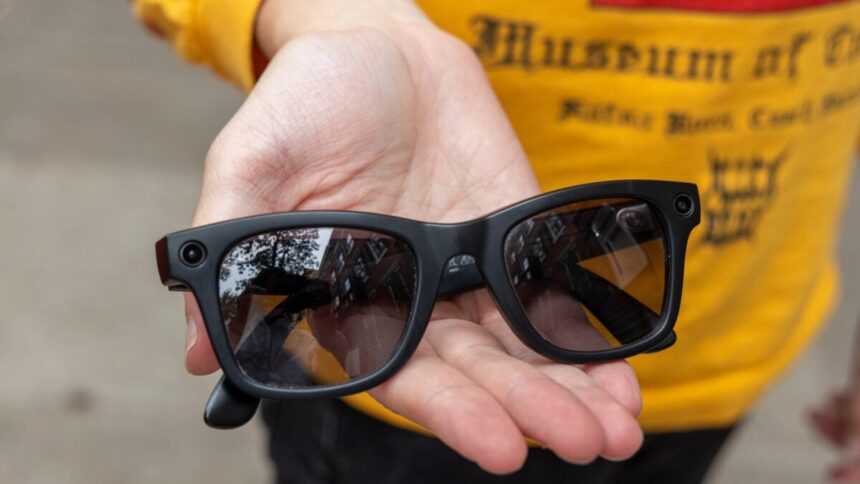
Everyone wants in on AI glasses nowadays, and that includes Chinese tech titan Huawei. This week, Huawei’s CEO of Consumer Business, He Gang, confirmed in a post on Weibo that its first smart glasses with an integrated camera will be released on April 21. While we haven’t seen what they look like, everything we do know suggests that they might be awfully similar to Ray-Ban Meta AI glasses.
Huawei hasn’t share exactly what the AI glasses will do yet, but the confirmation of a camera coupled with some early rumors suggests a similar feature set and hardware to Meta’s non-display smart glasses. According to a leak from January, the smart glasses will likely center on photography and video as core features, as well as AI, including translation and computer vision that can identify things in your surroundings.
This is pretty much the standard playbook for AI glasses as it stands, and one that’s already been outlined by Meta and its growing Ray-Ban and Oakley iterations. It’s also the general feature set of existing smart glasses in China, including those made by Rokid, which even look like less stylish Ray-Ban dupes.
Like the Ray-Ban Meta AI glasses and Meta’s smart glasses with a screen, the Meta Ray-Ban Display, the AI glasses are almost sure to rely on your phone via Bluetooth and Wi-Fi to do almost all of the heavy lifting, though I’m interested to see what kind of integration it has with Huawei’s phones. As is the case with Samsung and Google, there’s a major opportunity for phone makers like Huawei to deliver a pair of AI glasses that feels more seamlessly integrated into the smartphone experience.
Even if Huawei’s camera-clad AI glasses are shaping up to be very similar to Meta’s, it won’t really matter much from a business perspective, given the fact that Meta doesn’t currently sell its smart glasses in China. Likewise, Huawei certainly won’t be worried about competing against Meta in the U.S. for obvious geopolitical reasons.
Maybe Huawei will surprise me with a different look or some aesthetic flourish, but for now, it looks like we’re getting exactly what 2026 has already foreshadowed: more AI glasses.
Read the full article here