Power Shift is Ellyn Lapointe’s ongoing Gizmodo series that explores advancements in green technology, with a focus on renewable energy, grid modernization, and emissions reduction.
Amid surging energy demand from AI data centers, costly efforts to upgrade the aging power grid, and tightened global gas supplies, electric bills are skyrocketing across the United States. As Americans try to cut costs, an affordable DIY solution first popularized in Europe is now sweeping the nation.
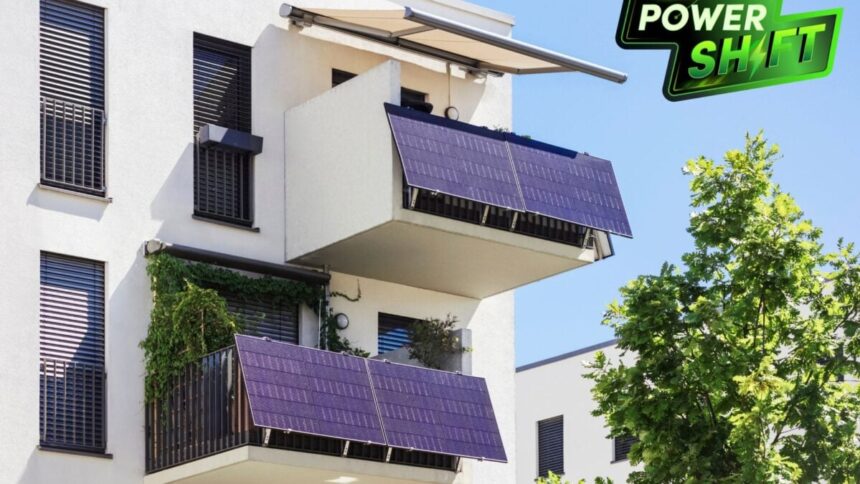
Plug-in solar, also known as “balcony solar,” is exactly what it sounds like: compact solar energy systems that plug right into a wall outlet to supplement your home’s energy supply. Despite the nickname, these systems don’t have to run on a balcony. They can work anywhere sunlight is available, from your back patio to the roof of your garden shed. They’re significantly more affordable than large rooftop solar systems, and while they don’t generate as much energy, they can still take a big chunk out of your electric bill.
Just ask Ben Paulos. He’s a researcher with the Clean Energy States Alliance who set up plug-in solar at his home in Berkeley, California, as part of his research. It generates about 150 kilowatt hours of electricity per month, which is roughly 17% of the average American household’s monthly energy consumption, according to the U.S. Energy Information Administration.
Paulos built his own 900-watt plug-in solar system for about 65 cents per watt. That’s generally more affordable than purchasing an off-the-shelf system in the United States. His paid for itself in just 18 months, but that certainly won’t be the case for everyone.
Because Paulos’s home was already outfitted with rooftop solar, he is billed through a net-metering system, which means he gets credit for any extra power he exports to the grid. Electricity rates are high in California at about 35 cents per kilowatt hour, so that exported energy is worth a lot. Living a relatively low-energy lifestyle in such a sunny place also helps, he told Gizmodo.
An 18-month return on investment is “probably about as good as you can get” for a plug-in solar system in the U.S. right now, Paulos said. He said a more realistic timeframe might be a few years, as the vast majority of users won’t be able to partake in net metering, and some places are simply sunnier than others. What’s more, plug-in solar isn’t legal in every state yet.
So, when considering whether plug-in solar is right for you, there are some important questions to ask. Here’s what you need to know before purchasing one of these systems.
Is plug-in solar legal in my state?
Plug-in solar legislation is advancing rapidly across the United States. In the last year, 11 states have legalized it: Utah, California, Colorado, Virginia, Maryland, New Jersey, New York, Connecticut, Vermont, New Hampshire, and Maine. A bill passed the Massachusetts House of Representatives in February, and legislation is also active in Washington D.C. and Pennsylvania.
The legal framework around plug-in solar varies significantly by state. Different states have different safety standards, utility requirements, output limits, and ways of handling exports to the grid, so it’s important to know what the rules are where you live before you invest in a system.
If your state hasn’t legalized plug-in solar, there’s a good chance that could change in the next several years.
“High energy prices are a top-tier issue right now, and this is something legislatures can do to help their constituents lower their energy prices,” Paulos said.
Does plug-in solar make sense for my home?
Not every household is a good fit for plug-in solar. Firstly, these systems are going to make the biggest difference for folks whose energy rates are highest, so users in California and New England will get bigger bang for their buck than users in Utah, for example.
Secondly, plug-in solar systems require a sunny location with enough space for at least one solar panel, a microinverter, and a standard household electrical outlet. They are particularly well-suited to renters and can work great on a balcony or patio. They can also be a good fit for homeowners with shaded rooftops but sunny yards.
But homeowners with roofs that have good solar orientation and can accommodate larger panels should probably opt for a rooftop solar system, according to Paulos. “They cost more, but they also save more,” he said.
If you decide to go the plug-in route, the next question to consider is whether you should purchase a battery. These are typically sold separately from plug-in solar kits and can be expensive, but they are often worth it for those with high nighttime energy rates or those who do not earn credit for power exports to the grid.
How much money can I actually save?
This is the million dollar question, and the answer depends on many different factors. The biggest savers are going to be plug-in users like Paulos who pay high electricity rates, live in a sunny place, and benefit from net-metering.
Most state legislation excludes plug-in solar systems from net-metering. Paulos earns credit for his exported energy because California allows owners of existing net-metered rooftop solar to expand their capacity by up to 1 kilowatt, or 10% of the original system’s capacity, with a plug-in system. These rules vary by state and utility, but in most situations, having a plug-in solar system won’t allow you to earn credit for your energy exports.
With that said, every kilowatt hour you avoid pulling from the grid directly lowers your utility costs and protects you from rising rates. According to EnergySage, a typical 400- to 800-watt plug-in system costs $500 to $1,500 and can save you roughly $15 to $50 on your monthly electric bill.
As more states legalize plug-in solar and U.S. manufacturing scales up, these systems should become more affordable, leading to even faster paybacks. Right now, plug-in solar isn’t exactly a boon for the energy affordability crisis, but it could make a big difference for the right household.
Read the full article here