The 1977 discovery of the Monte Verde II site was nothing short of groundbreaking, pointing to radically early human presence in South America—so radical, in fact, that not everyone was sold on this idea. A new study is now offering the strongest evidence yet that the Monte Verde skeptics were right.
The updated timeline, published today in Science, contends that human artifacts found at the Monte Verde archaeological site cannot be older than 4,200 to 8,600 years. That’s a lot younger than the widely accepted timeline, which maintains that the site is roughly 14,500 years old. Shockingly, the latest work is the first independent investigation of Monte Verde in 50 years. And if its findings are valid, that would introduce a major shift in our understanding of early humans in the Americas.
“There have always been doubters about Monte Verde,” Todd Surovell, the study’s lead author and an archaeologist at the University of Wyoming, told Gizmodo in a video call. “A lot of experts [studying early Americans] have long felt this thing doesn’t fit—we can’t treat this ‘outlier’ as rewriting human history.”
But of course, not everyone is convinced—including Tom D. Dillehay, the man who led the original investigations himself.
“They created a nice story,” Dillehay told Gizmodo in an email. “They saw what they wanted to see and came to the site with predetermined conclusions.”
Unsolved mysteries
One long-standing question in archaeology concerns when humans first entered the Americas. Generally speaking, researchers believe that early humans crossed the Bering Land Bridge from modern-day Asia into Alaska near the end of the last major ice age.
Another mystery has to do with how and when these early humans eventually made their way south. For a long time, the standard for the earliest humans in America was the Clovis culture, named for its characteristic spearpoints. The artifacts, first discovered in modern New Mexico and later found scattered throughout North America, were said to be roughly 13,100 to 12,700 years old, Surovell said. And the so-called “Clovis barrier” held steadfast—until Monte Verde.
A groundbreaking discovery
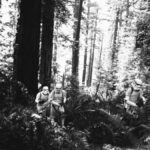
Monte Verde’s first excavations—led by Dillehay—began in 1977. Two decades later, an external team of archaeologists evaluated the dating and stratigraphy of the artifacts, offering a remarkable age for these apparent human-made artifacts: 14,500 years.
“As might be expected for an extraordinary claim, it took years for the dating, site integrity, and even artifact and feature identifications to be accepted,” said J. David Kilby, an archaeologist at Texas State University.
“It was a paradigm-altering discovery,” said Ben Potter, an archaeologist at the University of Alaska, Fairbanks. “Since then, sites that have been portrayed as pre-Clovis vary widely in the quality of the data—many of them very poor—but they get a little ‘oomph’ because of the supposed strength of the Monte Verde record.”
Kilby and Potter, neither of whom was involved in the new study, told Gizmodo that Monte Verde’s acceptance complicated many things about our understanding of the earliest Americans while lending greater credence to other somewhat dicey ideas.
For instance, Monte Verde resurfaced the coastal migration theory, which purports that early humans scaled a frozen Pacific Ocean down the continent because land-based routes were ice-locked. But that theory was “fringe,” Surovell said, as it depended on “two magical mechanisms” in which people traversed the ice sheets with archaic technology while leaving no evidence further north on their way south.
The challengers
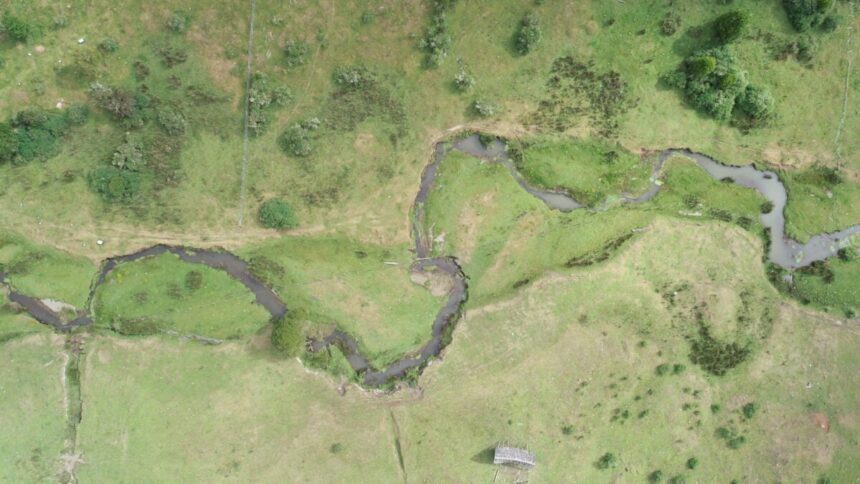
In 2022, Surovell and co-author Claudio Latorre, a paleoecologist at the Pontifical Catholic University of Chile, were walking along the Monte Verde site. That was when Latorre pointed out some curious bright orange sand and gravel that appeared to have formed under temperate rainforests long after the Ice Age.
“And he says to me, ‘This organic matter is all redeposited—what if all those Ice Age dates [Monte Verde investigators] got are just old organic matter that came from older deposits?’,” Surovell recalled.
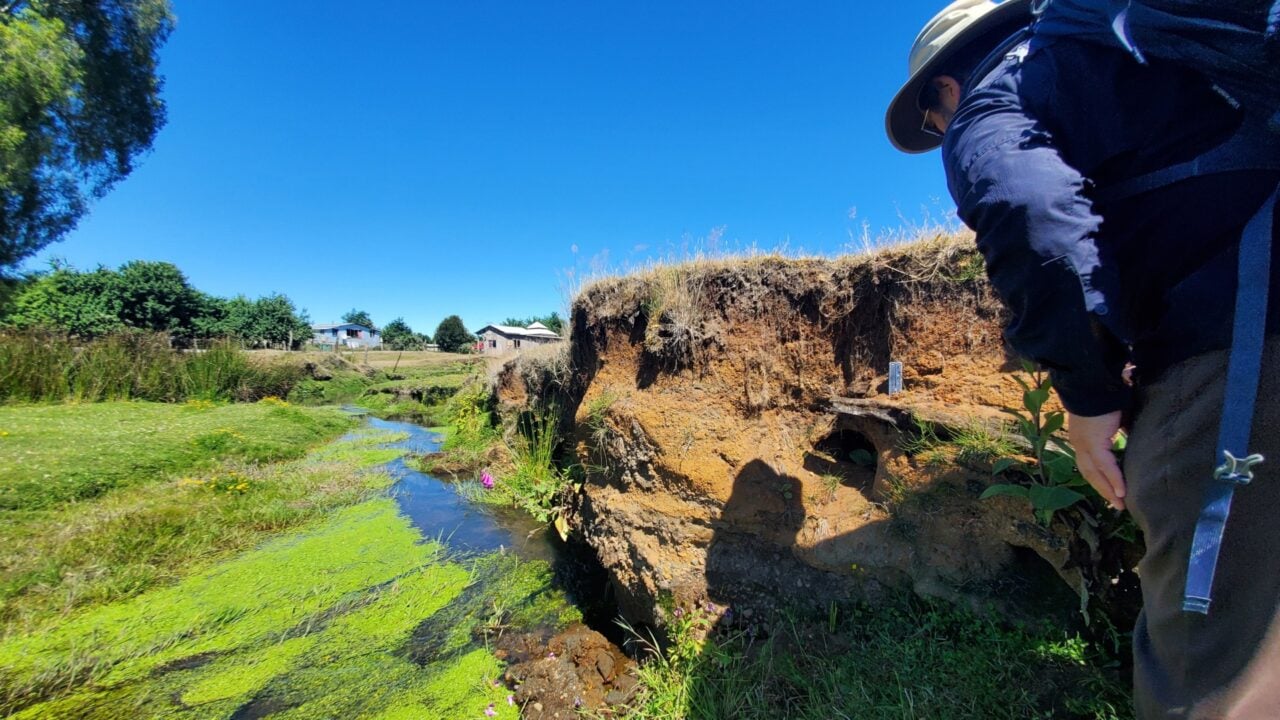
Surovell himself was doubtful at first, but the research “quickly pivoted” when the pair found loads of redeposited organic matter throughout the terrain. Over the next three years, the team collected and analyzed various samples from the site. They dated the samples using radiocarbon and luminescence dating, which clued them into the chemical age and the last time each sample was exposed to sunlight, respectively.
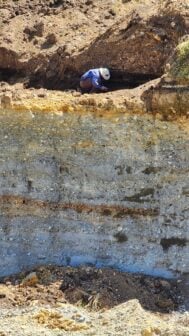
But the final “nail in the coffin,” as Surovell put it, was tephra—volcanic ash—about 11,000 years old, lying beneath the archaeological components of Monte Verde. As geochemical evidence, volcanic ash is extremely unique, he added, so there’s little to dispute about where and when the ash settled.
When the researchers dated the deposits immediately around Monte Verde’s archaeological elements, they found that, as expected, the samples couldn’t be older than about 8,000 years. The evidence placed the site “broadly within the Middle Holocene,” so between 4,200 and 8,600 years ago, Surovell said. That’s a broad timeframe, but the point, he added, is that the site can’t possibly be older than 11,000 years old.
In archaeology, “there’s always a difference between what I’m trying to date, the event I’m trying to date, and the event that I’m actually dating,” Surovell said. So the original investigators may have “unfortunately” happened to date redeposited wood—which the site has in excess—that was 6,000 years older than the actual human settlement at Monte Verde.
Researchers rejoice
Kilby, Potter, and Luciano Prates, an archaeologist at the National University of La Plata, Argentina, all affirmed to Gizmodo that the study’s findings are compelling.
“It is undoubtedly the most important work on this topic in recent decades,” said Prates, who wasn’t involved in the new work.
“Wow. That was my first impression,” Kilby said. “The argument is based firmly in the law of superposition and the law of cross-cutting relationships, both of which are at the foundation of geologic explanation, and tephras are among the most reliable chronostratigraphic markers we can employ.”
Potter added that the new timeline makes much more sense when considering the overarching patterns of an early human presence in the Americas. For instance, there are clear, relatively continuous patterns in the migration of peoples in Greenland to Alaska, the Bantu people in Africa, or the Inuits across the Arctic.
“This is a well-known human phenomenon,” Potter said. “The fact that this site was discovered over 50 years ago, and we have tons of analysis since then—like, where are the other Monte Verdes? They’re nowhere to be seen. So it’s an anomaly, a red flag to begin with.”
…But not everyone
In a statement to Gizmodo, Dillehay outlined some objections to the new work. He claims Surovell’s team worked around—and not immediately within—the actual archaeological site. Dillehay argued that the researchers “fail to mention” samples that couldn’t have been transported by water-laid deposits, such as “associated and patterned stone, bone and other tools, pieces of animal hide and meat, numerous exotic stones and edible plants, hearths, [and] human footprints.”
Dillehey said the data was a “largely unintegrated” collection of “inventions and misunderstandings” that are primarily open for interpretation. Dillehay and his colleagues are currently preparing a “detailed scientific response that will systematically address the methodological, empirical, and contextual errors present in the study.”
More archaeological tea incoming
The findings are sure to incite some heated debate in the archaeological community. That said, Potter anticipates that the new work will “create space for more hypotheses to be on the table,” such that researchers may explore multiple explanations for a site like Monte Verde, which evaded independent scrutiny in the past five decades.
“Regardless of which interpretation of Monte Verde is correct, this back-and-forth reinvestigation of results is what healthy scientific progress looks like,” Kilby added. “Our specific interpretations and conclusions are always provisional—they are always works-in-progress awaiting additional investigation.”
“The big lesson here is archaeologists need to encourage and allow and start this culture of independent replication,” Surovell said. “By the way, I would love anybody to try to replicate what we’ve done at Monte Verde. I encourage that. And if they find we’re wrong, great. If they find we’re right, great. It doesn’t really matter, right? What matters is that we can do this work.”
Read the full article here