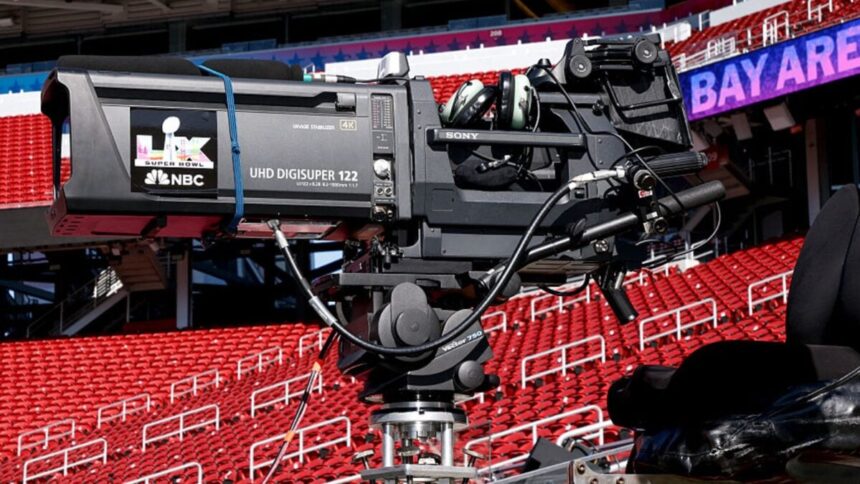
When Super Bowl LX rolls around this year, all eyes will be on the NFL. That includes, on average, a gargantuan audience of 120 million human viewers from across the U.S. (around one-third of the country), but also more untraditional eyes—ones of a non-human variety.
In addition to football fans and people who just want to mindlessly watch advertisements, there will be an armada of cameras fixing their gaze on Levi Stadium in San Francisco. Those “eyes” are dedicated to capturing each and every solitary moment of the sport’s most pivotal day—big plays, fan reactions, and any potential Janet Jackson-style “wardrobe malfunctions,” just to name a few. Some of those all-seeing eyes might even wind up tipping the scales of the game—especially the ones made by Sony.
This year’s impending Super Bowl will be just the first ever to feature Sony’s Hawk-Eye tech, a camera system that uses a half dozen 8K cameras installed in the catwalks of NFL stadiums to assist on-field officials with the critical task of determining the line to gain. For those not fluent in NFL lingo, that’s the line—the yellow one superimposed on TV broadcasts—that teams need to reach in order to keep their offense on the field. (The 2025 season, for context, is the first full season where Hawk-Eye was used ubiquitously across the league to provide virtual measurements, though it was tested initially in 2024.)
While the players themselves work as a team to win the NFL’s biggest game, Sony’s Hawk-Eye cameras and the NFL officiating apparatus work as their own kind of team. After footage is captured by the cameras, it’s then sent to the NFL’s Art McNally GameDay Central Officiating Center in New York. From there, on-field officials are informed of the distance, while virtual recreations of those measurements are made to be shown to the in-stadium audience and anyone watching on TV in real time.
It might not sound like a lot, but for diehard fans and the teams in the game, it’s a critical facet in determining whether, after 22 weeks of grueling televised violence, a team walks away with the Lombardi Trophy and some shiny new rings or with empty hands and a demoralizing start to the offseason.
Obviously, with those kinds of stakes, the pressure is on Sony for its systems to really get things right.
“As the biggest game and the most-watched show of the year, the Super Bowl production requires tools we can trust,” said Ken Goss, NBC Sports EVP of Studio and Remote Operations, in a statement leading up to Super Bowl LX. “Working with Sony allows us to flawlessly deliver every angle, replay, and on-field moment to viewers watching around the world.”
While this is the first year that Sony’s Hawk-Eye cameras were used frequently in the NFL for virtual measurements and in the Super Bowl, the technology has actually been implemented in other sports for similar purposes. In tennis, the tech is famously used for automated line-calling, determining whether the ball is in or out, and deciding which player gets awarded points. In this capacity, the tech is apparently accurate within an impressive 5mm. In soccer, Hawk-Eye can be of equal importance, since it’s used to determine whether the entire ball has crossed the line and whether a goal has been scored—not a minor task in a sport that is often decided by one score.
The NFL also implemented Hawk-Eye to assist with replay assistance in 2021, though that stopped short of determining concrete stuff on a consistent basis, like the line to gain.
It’s clear that professional sports have faith in the efficacy of Hawk-Eye for making critical decisions, but as important as Sony’s cameras have become, there is one thing they still do not do in the NFL; neither Sony, nor the NFL uses Hawk-Eye to actually spot the ball. Instead, Hawk-Eye cameras are secondary to the referee’s official spotting of the ball, with the ref determining where the ball wound up and Hawk-Eye determining what the player’s distance to a first down is based on that spot.
The NFL says Hawk-Eye is simply a faster alternative to old-school chain gangs, though it keeps referees with orange sticks on the sideline in the event that the technology fails. Here’s the official use for Hawk-Eye according to the NFL:
“Sony’s Hawk-Eye virtual measurement technology will serve as an efficient alternative to the process of walking chains onto the field and manually measuring whether 10 yards have been met after the official has spotted the ball.”
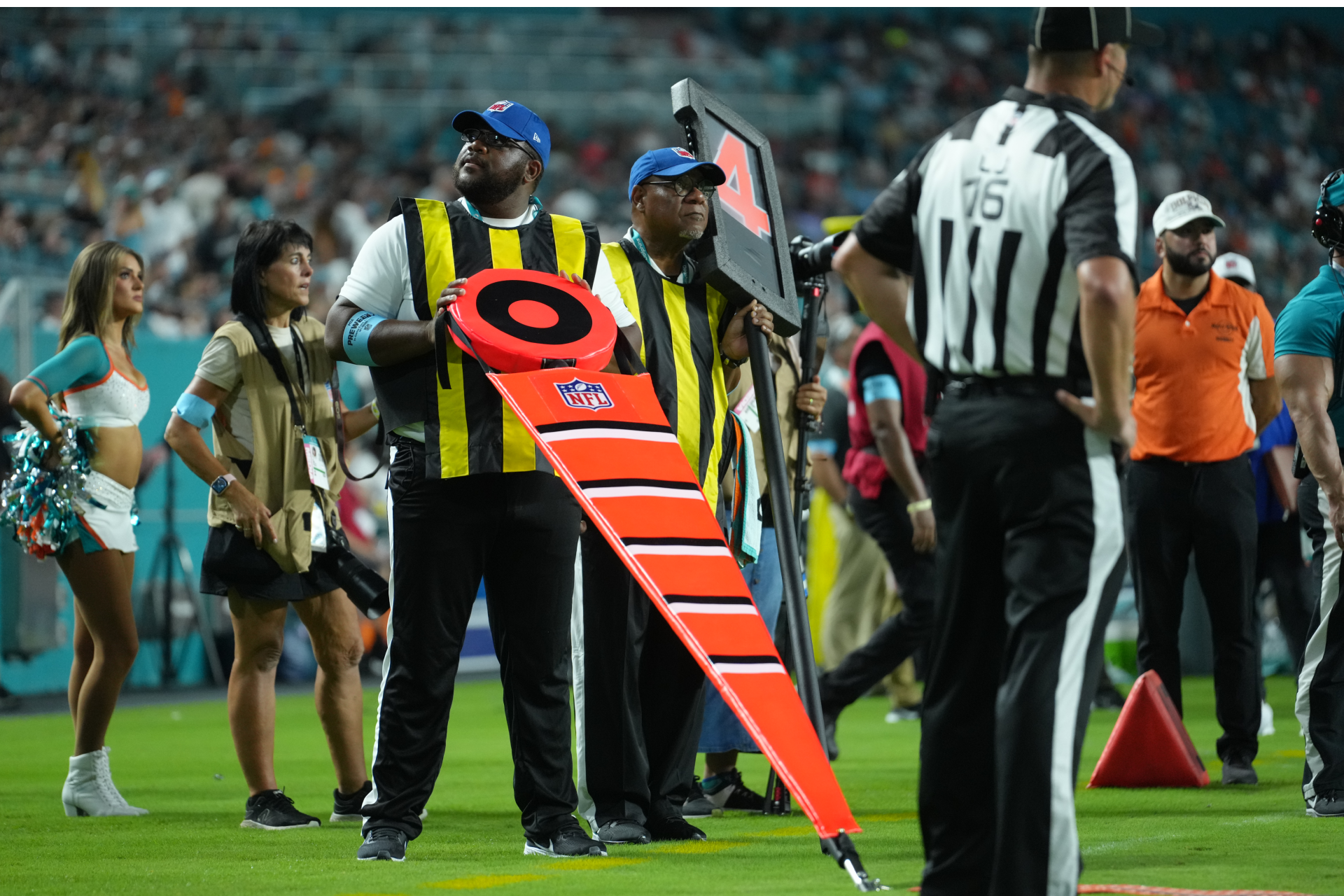
According to the NFL, the full process of using Hawk-Eye takes about 30 seconds, which saves 40 seconds compared to the previous method of sending out real humans with a chain to decide the line to gain.
In short, that means that the human referees, despite the eye in the sky they now have, are the ones determining how far a player actually gets and whether teams have to relinquish possession or go for broke and risk going for it on 4th down and potentially turning the ball over on downs.
It may seem odd not to use this advanced tech to potentially improve the accuracy of the game, but according to former NFL referee Jeff Bergman, who worked as an NFL line judge for 30 years until retiring in 2023, things aren’t as straightforward as they seem.
“Spotting the ball is an art,” Bergman tells Gizmodo. “When the ball carrier is being tackled, you’re looking for a body part other than the hands or the feet to hit the ground. And then you have to know where the forward-most point of the ball is, and you have to make sure the ball isn’t coming out. So, there are four or five different things you have to be aware of.”
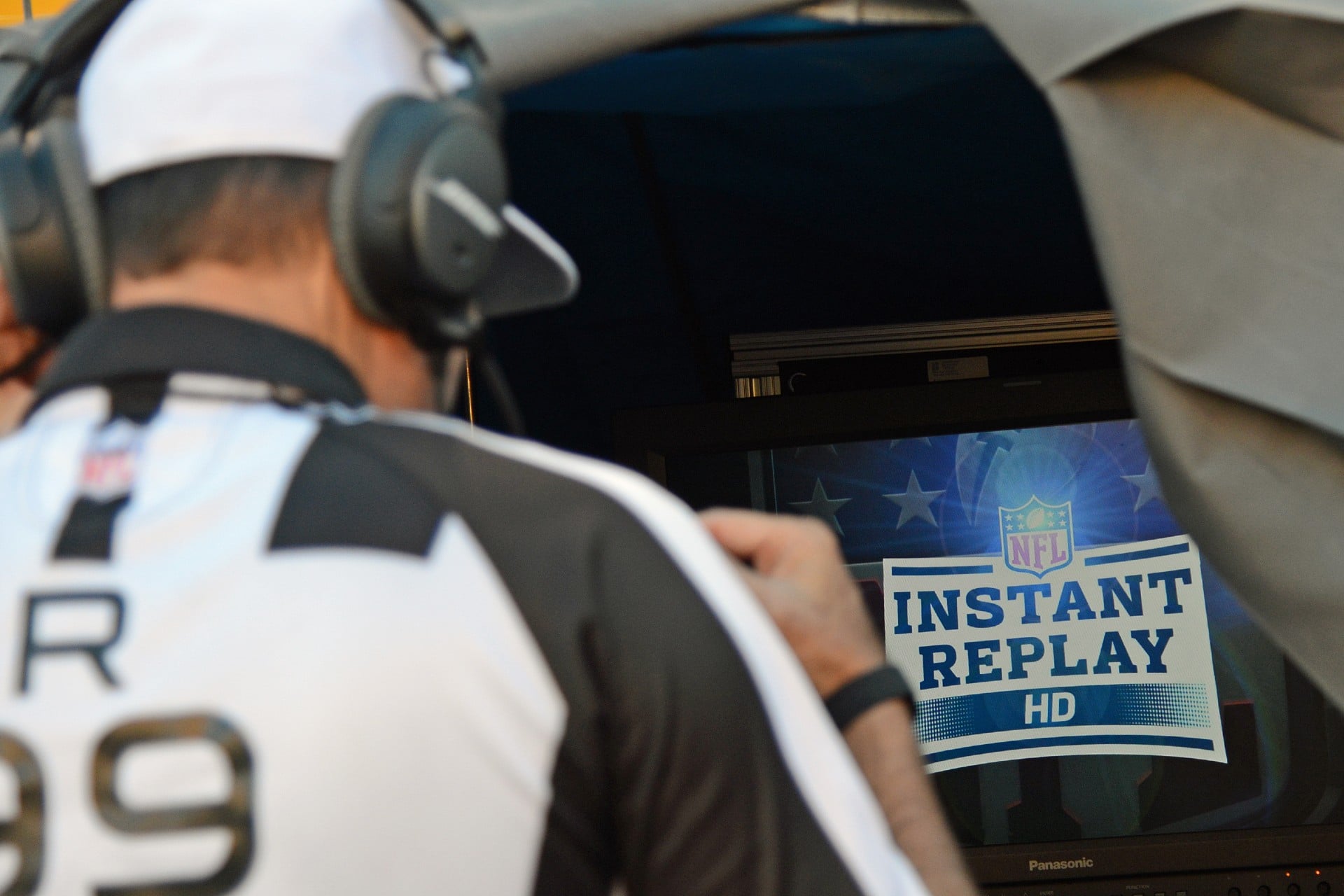
And as to whether Hawk-Eye is actually speeding the game up, Bergman, who was officiating in the NFL when Hawk-Eye was merely being tested on replay assistance in 2021, is even more skeptical.
“They used it [Hawk-Eye] in the past, but it was only half-baked. And from what I saw this year, I believe it’s still only half-baked,” Bergman says. “The thought process behind the virtual measurement was to expedite the measuring and speed up the game. Well, it actually takes a lot longer. And then the virtual measurement ultimately comes out, and it says it’s two feet, eight inches short. Well, on the field, we know it’s less than a foot.”
Sony did not wish to comment for this story.
Imperfect or not, there’s a vocal constituent of people who would like to see Hawk-Eye, or technology like it, go further. Take a stroll through Reddit, YouTube, or online sports punditry, and you’ll see plenty of feedback urging the NFL to introduce more technology like Hawk-Eye to make rulings more consistent and accurate.
Even Bergman, a skeptic though he may be, is open to the expansion of technology in the NFL, telling Gizmodo, “Any type of additional intel that you can get as an official to help you make decisions is something that should be really embraced.”
The NFL, for its part, hasn’t given any indication that it plans to further move the needle on using tech to make calls like that on the field, though. Here’s what NFL executive, Kimberly Fields, told the Associated Press almost exactly a year ago when asked about Hawk-Eye:
“What this technology cannot do is take the place of the human element in determining where forward progress ends… There will always be a human official spotting the ball. Once the ball is spotted, then the line-to-gain technology actually does the measurement itself. So I think it’s probably been a point of confusion around what the technology can and can’t do. There will always be a human element because of the forward progress conversation.”
Gizmodo reached out to the NFL, but a representative was not made available for comment in time for publication.
The NFL does have other technologies outside of Hawk-Eye tech that seem promising, but those are also imperfect for the time being. For example, in 2017, the NFL put RFID chips inside the ball that can record all sorts of data. While those chips are capable of determining ball position, they fall short of being able to measure forward progress, which is the football terminology for how far a player gets before being officially ruled down.
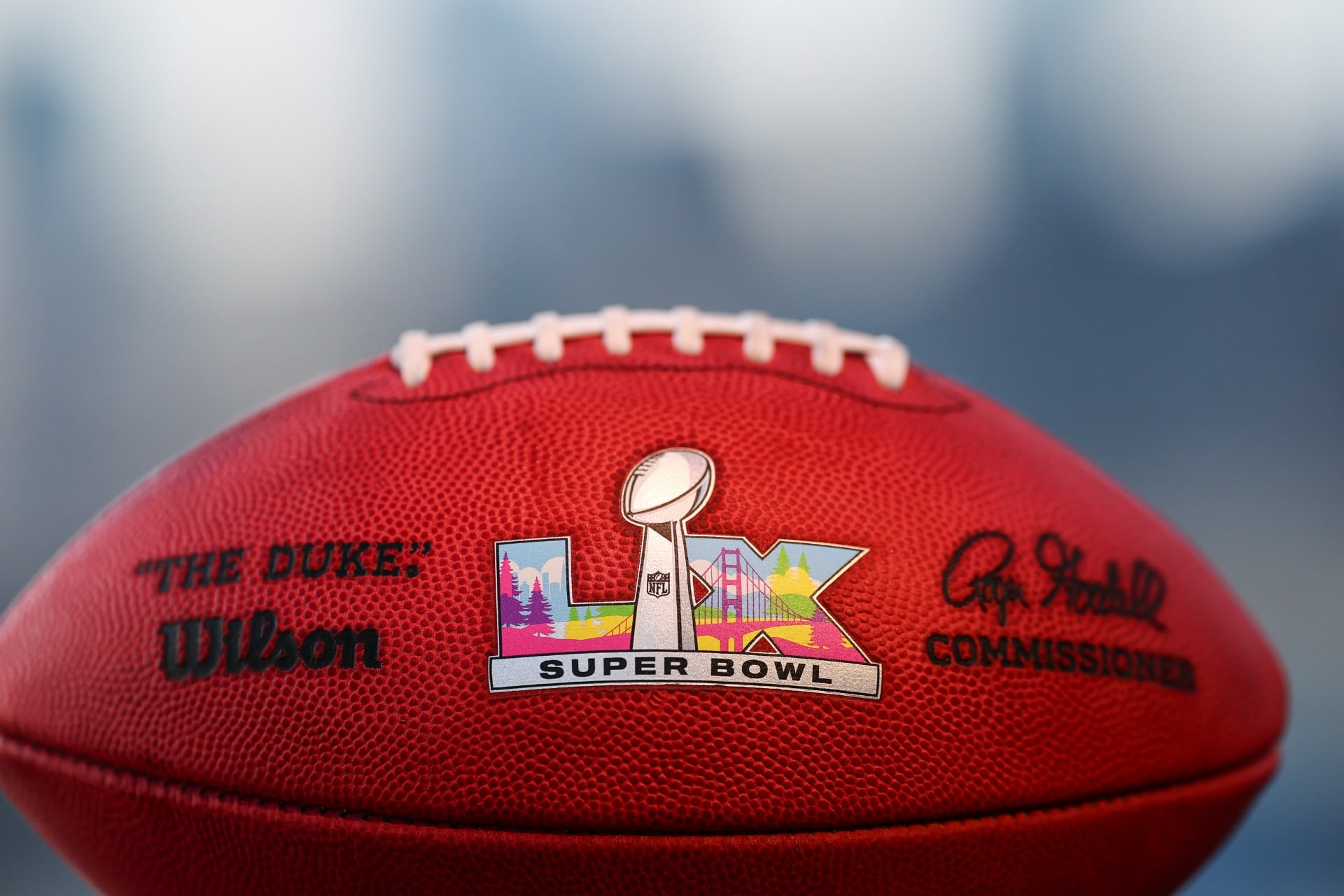
There are a few reasons why those chips don’t suffice for ball spotting, but a major one is that they (even advanced ultra-wideband ones) have a margin of error of six or more inches, which is about half the length of a football. A distance like that can be the difference between a first down and a change of possession. In short, it could potentially change the game. Then again, so could a shoddy spot by the referee.
Bergman, for his part, says he’d like to see technology be used to make officials better at their jobs, not replace their say on the field entirely.
“Utilizing the technology is critically important to a game official, but you really have to embrace that, and you have to want to do it. And you have to be taught to do it the proper way,” Bergman says. “I’m huge on technology, but it has to be able to be as reliable as the people on the field, and it has to expedite the play, not slow it down.”
Whether the NFL has the means to make that happen or if the tech world can even marshal the know-how to make the process work is still an open question. Gizmodo reached out to another provider of technology to the NFL, Catapult, which makes similar player-tracking tech that can monitor metrics in practices, determining things like speed and injury risk, but didn’t exactly get a straight answer on whether a ball-spotting future for technology is a real possibility.
“The sports industry has made great strides, but we’ve only just begun to unlock the power of performance tech,” Matt Bairos, Chief Product Officer at Catapult, said in an emailed statement to Gizmodo. “Football has always been a video-first sport. Coaches think, teach, and make decisions through video. But the real breakthrough, the seamless fusion of video with live, trusted athlete data, is starting to happen now.”
That sounds grand, but not everyone is optimistic about the future of sports tech like Hawk-Eye. Bergman, retired from a life in the NFL though he may be, saw a different future on the field this year—a much longer one.
“If you are having difficulties determining if the ball has made the line to gain, you’ll be light years away from trying to determine where the spot of the ball is,” Bergman says.
Read the full article here