Sony and Honda’s PlayStation-integrated electric vehicle collab felt too good to be true. Turns out it was.
Sony Honda Mobility, the joint venture between the two companies, announced on Wednesday that it was discontinuing the development and launch of the Afeela vehicles.
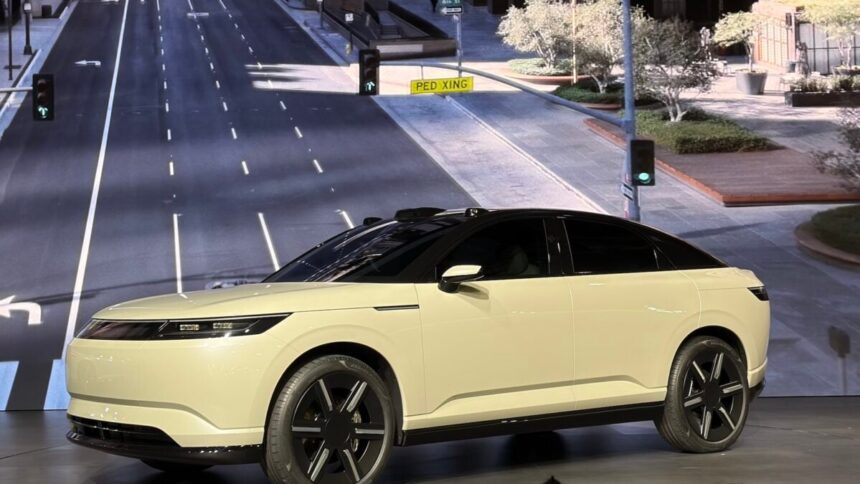
The Sony Honda Mobility Afeela 1 was a much-hyped EV model that would feature gaming capabilities, in-car movie viewing on screens throughout the vehicle, Zoom integration, a voice assistant, and some generative AI capabilities. The company even had plans for the car to eventually reach Level 4 autonomous driving abilities on city and highway roads.
The company had recently debuted a pre-production version of the car along with an unnamed Afeela SUV concept at CES 2026, and the Afeela 1 was even picked among the best automotive tech at the conference this year by Gizmodo. It was supposed to arrive in California by the end of the year, and eager customers had already started paying to reserve their purchase. Now, both the car and the future SUV rendition are dead, and the joint venture, SHM, will be issuing full refunds for the reservation fees.
The decision comes amid “Honda’s reassessment of its automobile electrification strategy.” Earlier this month, the Japanese automaker said it would restructure its EV business primarily in the U.S. in a $15.7 billion writedown that is set to result in the company’s first annual loss in its 69-year history as a listed company.
As part of the move, Honda announced that it was canceling the Honda 0 series EVs and the Acura RDX in the U.S., and now the companies are saying that the restructuring is making Honda unable to provide “certain technologies and assets” that it was originally planned to provide.
“In light of this change, SHM has determined that it does not have a viable path forward to bring the Models to market as originally planned,” the venture said in a press release. “SHM will continue discussions with Sony and Honda regarding its future business plans.”
Honda’s departure from its once sizable electrification commitments might not surprise you if you’ve been following along with the general state of the EV market in the United States. Driven by weaker demand in the wake of Trump’s dismantling of the $7,500 federal EV tax credit and rising competition from Chinese auto giants and their incredibly cheap offerings, automakers scaled back their EV goals.
But even though demand is still weaker than when the EV tax credit was in place, some auto retailers have been sharing promising stats. As gas prices soar due to the geopolitical uncertainty triggered by the Iran War, American users have become more interested in electric vehicles as a more stable, conflict-proof option.
Experts also say that Honda’s struggles in the EV market might stem from the fact that it just invested too much, a little too late into the EV race, causing the auto giant to have a hard time catching up to major competitors like BYD and Tesla.
Read the full article here