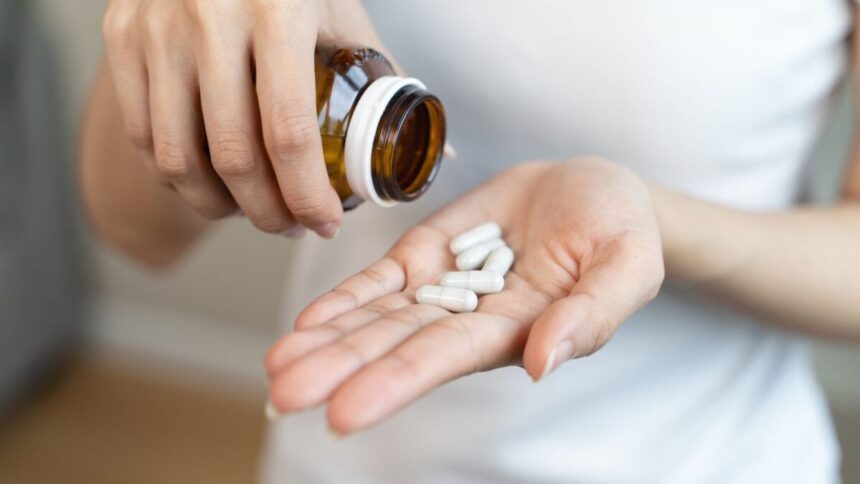
Doctors are only now starting to catch up on the weird, rapidly growing, and wildly unregulated world of underground bodybuilding supplements. Even with surging media attention on the rise of dubious performance-enhancing drugs, like peptides, some of the most hyped compounds are still completely off the medical profession’s radar.
Researchers at Harvard have begun to dredge the swamp of online gym rat folk wisdom, identifying three popular supplements that weightlifters are hyping for muscle growth without clinical evidence—and, in one case, precious little active compound actually in the product as sold. These compounds are so new as supplements that 375 sports medicine researchers professed less knowledge about them than two totally fictional supplements—which the Harvard researchers had thrown into their survey as controls for lying.
Rohil Dhaliwal, a researcher with the Broad Institute of MIT and Harvard, and his coauthor, Harvard Medical School professor Harrison G. Pope Jr., focused their attention on three supplements gaining traction online: Turkesterone, a naturally occurring phytoecdysteroid (i.e., a plant steroid); Ostarine, a selective androgen receptor that’s known to promote muscle growth but is not currently approved by the FDA; and MK-677, also known as Ibutamoren, a synthetic drug made by pharma giant Merck that mimics the growth hormone effect of some peptides.
The FDA, in fact, has already sent one warning letter to a supplement hawker, the evocatively named Warrior Labz SARMS, for trying to pass off its sales of MK-677 as “not for human consumption” and “for research purpose only.”
Keyboard cowboys on the frontiers of medicine
“Internet metrics showed extensive underground interest and information about all three compounds,” Dhaliwal and Pope reported in their study, “with evidence of hundreds of thousands of purchasers.”
To set a baseline, the duo compared this interest to Google search trends for a common androgenic-anabolic steroid, nandrolone. Online interest in the three untested supplements was 1.4 to 2.4 times greater than search interest in nandrolone across the three years they investigated, 2022 to 2024.
The Harvard researchers also harvested data from Bodybuilding.com and Reddit discussions of turkesterone, ostarine, and MK-677, as well as YouTube “explainer” videos and Amazon reviews for the compounds, either as “research” chemicals or as unregulated supplements.
Turkesterone yielded the most prolific and scammy results, with social media posts raking in millions of views—including, naturally, podcast clips from a discussion on the Joe Rogan Experience—and at least 70 unique products available online. When Dhaliwal and Pope performed chemical analyses on 10 of these over-the-counter turkesterone supplements, they found that “none displayed greater than 0.5 % of the advertised amount of turkesterone.”
No sheriff in town
The researchers likened the online market for these products to the “Wild West” in their study, published online in the journal Performance Enhancement & Health on Saturday, with a real emphasis on how these compounds have evaded the detection of experts and policymakers.
“Discussion involving these supplements in the underground online community dwarfs the apparent degree of knowledge in the ‘aboveground’ scientific and professional communities,” according to Dhaliwal and Pope, who came to this determination through a clever survey of experts.
The team scraped together email addresses for 6,885 sports medicine researchers via a Python script designed to trawl the peer-reviewed journal literature. Dhaliwal and Pope then emailed surveys to those sports medicine professionals, inquiring idly about ten weight-lifting supplements. Five were popular, exceedingly well-known gym bro biohacks: testosterone, ashwagandha, creatine, trestolone, and Dianabol. Three were the novel supplements in question: turkesterone, ostarine, and MK-677. And the last two were just totally made-up, to test each survey respondent’s accuracy and honesty: “tiabolone” and “methylandromide.”
About 5.8%, or 375 of the experts they emailed, completed the survey. In aggregate, these sports medicine researchers displayed a mean average familiarity with four of the popular bodybuilding supplements, with only trestolone floating in a territory of questionable statistical significance.
But the story was quite different for the underground supplements: When weighted against their responses to the fake compounds, these sports medicine experts displayed less-than-zero awareness, scoring negative values on their mean average familiarity. And, despite its appearance on Rogan, turkesterone appeared to carry the least name recognition of all three compounds.
Dhaliwal and Pope hope these findings will spur “better regulation” and “improve clinical awareness” of these emerging gym-bro-folk remedies and Wild West tinctures. “Published scientific research on the compounds and their possible dangers,” they noted, has thus far “proved very limited.”
Read the full article here