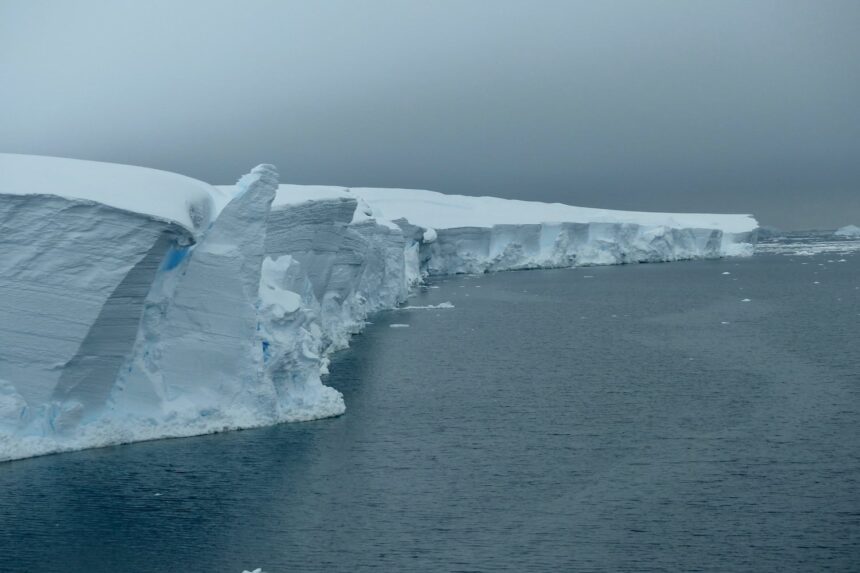
One of Earth’s most dangerous glaciers has claimed a victim: a suite of instruments that became trapped deep within the ice.
A team of researchers from the British Antarctic Survey (BAS) and the Korea Polar Research Institute (KOPRI) was working to place instruments beneath Antarctica’s Thwaites Glacier to understand how the ice was melting from below. Partway through the descent, the team faced a major setback as the instruments got lodged in the ice, ending the research project before it even began.
“Fieldwork in Antarctica always comes with risk,” Keith Makinson, BAS oceanographer and drilling engineer, said in a statement. “You have a very small window in which everything has to come together. While this outcome is deeply disappointing, the data we did recover are scientifically valuable and will help shape future efforts.”
Icy depths
Also known as the Doomsday Glacier, Thwaites could add up to 25 inches (65 centimeters) to global sea level rise if it were to completely collapse. That’s enough to flood low-lying cities and displace millions of people.
The giant mass of ice is largely unstable, and very little is known about the warming waters that flow beneath the glacier that cause it to melt from below. The scientists and engineers behind the recent expedition set out to measure the ocean conditions beneath Thwaites Glacier’s fast-moving main trunk.
To peek at what’s going on underneath the glacier, the team used hot water to create holes in the ice and began lowering a suite of instruments to collect data. The borehole was approximately 3,300 feet (1,000 meters) deep and around 11 inches (30 cm) wide and needed to be continuously maintained to prevent it from refreezing.
The team temporarily deployed the instruments beneath the ice, collecting measurements that revealed turbulent ocean conditions and relatively warm waters capable of melting the glacier from below. The researchers then attempted to lower a mooring system, which was meant to remain within the ice for one to two years and transmit data through a satellite.
As the mooring system was making its way down, however, the instruments got stuck in the borehole about three-quarters of the way down. This was likely due to the water refreezing or the glacier’s rapid movement.
Unfortunately, there was no time left for the researchers to repeat their efforts, as the ship returning them to New Zealand was bound to leave on February 7. Facing a tight schedule and worsening weather conditions, the team was forced to abandon the instruments trapped in the ice.
“Failure is always an option when you are pushing at the limits of scientific exploration,” Peter Davis, BAS oceanographer and member of the drilling team, said in a statement. “We know heat beneath Thwaites Glacier is driving ice loss. These observations are an important step forward, even though we are disappointed the full deployment could not be achieved.”
Trial and error
This was the team’s second attempt to deploy a suite of instruments beneath Thwaites Glacier. In 2022, the researchers were unable to reach the site due to severe sea-ice conditions.
This time around, they succeeded in drilling through the ice and partially lowering the instruments beneath the glacier. Not only that, the team managed to gather unprecedented data about the warming waters below Thwaites Glacier.
“This is not the end,” chief scientist and professor Won Sang Lee of South Korea said in a statement. “The data show that this is exactly the right place to study, despite the challenges. What we have learned here strengthens the case for returning.”
Read the full article here