
By using this site, you agree to the Privacy Policy and Terms of Use.
Accept
Tech Consumer JournalTech Consumer JournalTech Consumer Journal
  • News
  • Phones
  • Tablets
  • Wearable
  • Home Tech
  • Streaming
  • More Articles
Reading: Scientists Studied 338 NFL Players’ Brains After Death. Nearly All Had the Same Disease
Share
Sign In
Notification Show More
Font ResizerAa
Tech Consumer JournalTech Consumer Journal
Font ResizerAa
  • News
  • Phones
  • Tablets
  • Wearable
  • Home Tech
  • Streaming
  • More Articles
Search
  • News
  • Phones
  • Tablets
  • Wearable
  • Home Tech
  • Streaming
  • More Articles
Have an existing account? Sign In
Follow US
  • Contact
  • Blog
  • Complaint
  • Advertise
© 2022 Foxiz News Network. Ruby Design Company. All Rights Reserved.
Tech Consumer Journal > News > Scientists Studied 338 NFL Players’ Brains After Death. Nearly All Had the Same Disease
News

Scientists Studied 338 NFL Players’ Brains After Death. Nearly All Had the Same Disease

News Room
Last updated: August 25, 2026 8:24 pm
News Room
Share
SHARE

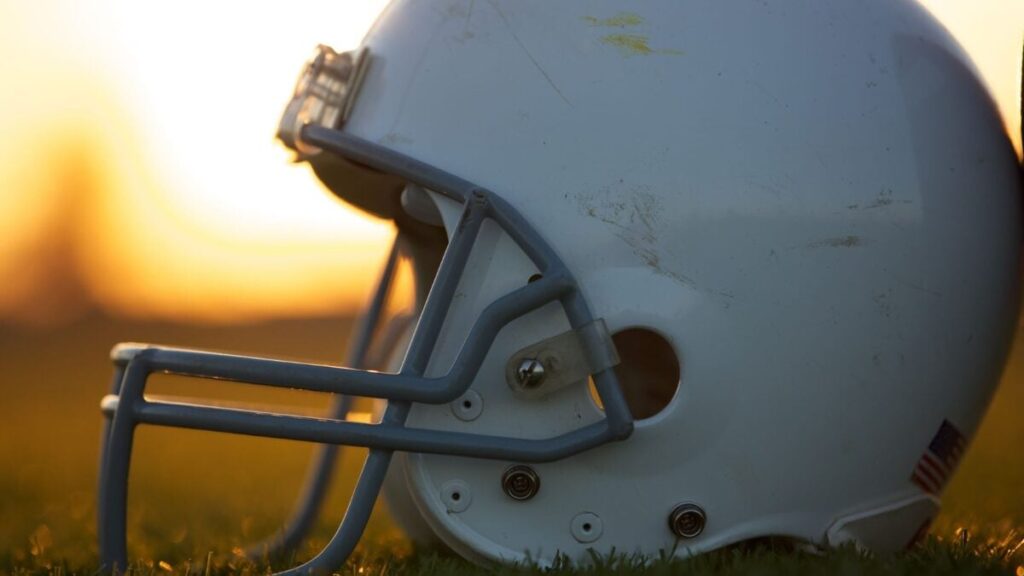
Football is one of America’s well-treasured pastimes. Research out today, however, highlights the hidden neurological costs that many professional football players have had to pay.

Scientists at Boston University, the Mayo Clinic, and others examined the medical records of hundreds of recently deceased former football players who donated their brains to science. Nearly all donors had died with chronic traumatic encephalopathy (CTE), they found, while a majority were also diagnosed with dementia. Roughly a quarter of all former football players who died between 2016 and 2021 at minimum had CTE, though the likelihood could be even higher, the researchers say.

“These findings indicate that NFL players have a higher prevalence of CTE at death than has been previously shown in multiple community based studies,” they wrote in their paper, published Tuesday in The BMJ.

The toll of CTE

CTE is a degenerative condition caused by repeated traumatic brain injuries. Though the condition has been described medically since the 1920s, it’s only in the past 20 years that researchers have conclusively tied CTE to high-impact sports like football.

Several high-profile deaths of former football players and other athletes with CTE have led to greater research on the condition. These efforts have included brain banks that allow former NFL players to donate their brains for study after they die. CTE, like many neurological conditions, can only be definitively confirmed by examining the brain post-mortem (that said, scientists are working to develop tests for living people).

The researchers conducted a sweeping analysis of all former NFL football players who debuted after 1949, when plastic, hard-shell helmets became mandatory, and who died between 2008 and 2021, totaling 1,712 people. This included 338 players who donated their brains to one of several banks, particularly the UNITE (Understanding Neurologic Injury and Traumatic Encephalopathy) brain bank housed at Boston University.

Neuropathologists on the research team were assigned to determine CTE status in the brain donors while being blinded to the players’ clinical medical history and football careers, and clinicians evaluated whether the donors had dementia while being blinded to the players’ CTE status.

A visual abstract of the team’s findings. © Daneshvar, et al/The BMJ

All told, 93% of brain donors were diagnosed with CTE, including 31% who had severe stage IV CTE. Meanwhile, nearly 60% of donors met the criteria for dementia, and the odds of having dementia were significantly higher in players who had stage IV CTE. Notably, only 41% of the players who seemed to have dementia had neurological disease listed as a primary or secondary cause of death when they actually died. That might suggest that at least some of these deaths were wrongly classified.

Because CTE can only be confirmed with a brain autopsy, it’s not possible to know exactly how many former players who died between 2008 and 2021 had the condition. At minimum, based on the donor results, at least 18% had CTE. Looking only at the period between 2016 and 2021, when brain donation became much more common, that percentage shoots up to nearly 25%. These minimum estimates are conservative, the researchers note, and are still higher than past studies have suggested.

That said, these findings should be viewed in the greater context of what we know and don’t know about brain pathology in general, according to Steven Galetta, a professor and chair of neurology at NYU Langone Health.

“I will say that at least 24% of former NFL players having evidence of CTE on pathological examinations is sobering. However, I think it warrants careful clinical correlation because about 20% of normal individuals over 60 years have evidence of amyloid deposition on their PET scans and they don’t have clinical evidence of Alzheimer’s,” Galetta, who is not affiliated with the study, told Gizmodo. He also notes there is a possible selection bias at play here. “Patients who are near dying might be more inclined to donate their brain, so we need to be careful about generalizations and assumptions in this selected population.”

To which he added: “Nonetheless, these are important pathological findings that have to be investigated further and carefully considered by those who play contact sports over prolonged periods of time.”

More to learn

The growing awareness of CTE and its risks has led to real reforms within the NFL and other sports. This has included a transition to safer football helmets, rule changes to reduce plays that end in brutal head impacts, and protocols to minimize harm from concussions, which do seem to be working. Yet at least some researchers have argued that these changes haven’t gone far enough to address CTE risk, particularly at the youth sports level.

It will take time to truly know whether these reforms and other potential changes in the future will cut down the prevalence of CTE. It will also take more research to better understand the connection between CTE and outcomes like dementia. Ideally, Galetta says, this research will include long-lasting prospective studies that can provide more definitive answers.

Given the many still-living former football players and other athletes who played in rougher eras, CTE is likely to keep casting a long shadow on professional sports for the foreseeable future.

Read the full article here

You Might Also Like

This Was a Bad Day for People Who Hate X but Sometimes Like to Read X Posts Anyway

At Trial, Instagram Head Denies Having ‘Stalled’ Teen ‘Take a Break’ Feature Despite Slow Rollout

Uber Is Letting Parents Keep an Eye on Their Teens Through a Driver’s Phone Camera

War for Westeros’ Gameplay Trailer Captures the Excitement of the Series

Congresswoman Wants to Add Images to Legislation to Keep Pace With the Post-Literate Future

Share This Article
Facebook Twitter Copy Link Print
Previous Article Legal Experts Are Alarmed the SEC Isn’t Investigating Trump-Linked Crypto Venture
Next Article ‘Backrooms’ Maps a Path to HBO Max in September
Leave a comment

Leave a Reply Cancel reply

Your email address will not be published. Required fields are marked *

Stay Connected

248.1kLike
69.1kFollow
134kPin
54.3kFollow

Latest News

Keep Building, but Keep It Hush-Hush
News
‘Backrooms’ Maps a Path to HBO Max in September
News
Legal Experts Are Alarmed the SEC Isn’t Investigating Trump-Linked Crypto Venture
News
Perplexity Launches Local AI Model That Will Run on Your GPU Instead of the Cloud
News
Bitcoin Tops $80,000 as the Treasury Secretary Weakens the Dollar
News
122 Companies Are Quietly Sucking the West Dry, Study Finds
News
Evidence of Ancient Sharks Found Buried in the Egyptian Desert
News
New Plain Old AirPods 5 (Without Cameras) Could Arrive Next Month
News

You Might also Like

News

Apple’s M5 Ultra Mac Studio Goes For Absolutely Bonkers Performance

News Room News Room 5 Min Read
News

Astronomers Think They’ve Found the Best Evidence for Dark Matter Yet

News Room News Room 4 Min Read
News

‘Obsession’ Is the Highest-Grossing Original Film of the Decade

News Room News Room 4 Min Read
Tech Consumer JournalTech Consumer Journal
Follow US
2024 © Prices.com LLC. All Rights Reserved.
  • Privacy Policy
  • Terms of use
  • For Advertisers
  • Contact
Welcome Back!

Sign in to your account

Username or Email Address
Password

Lost your password?