


Being the first to smash two ideas together usually buys a filmmaker a little historical grace, where audiences remember the ambition more than the mess. Scarlet, celebrated anime director Mamoru Hosoda‘s latest feature film, doesn’t get that kind of grace. As a Hamlet-meets-isekai hybrid epic, it steps into a world already overly familiar with the first and oversaturated with the latter, and you can feel the film straining—almost pleading—to convince viewers it’s saying something profound. What’s left is a pretty film that’s a touch too irritatingly sanctimonious for its own good.
Scarlet follows a medieval princess of the same name, played by Mana Ashida, who awakens after her murder in the Land of the Dead—a vast, sun-blasted Calid-esque desert where time folds in on itself and the already departed wander its endless dunes. Her mission is brutally simple: track down the conspirators who overthrew her father, the king, and, if fate allows, cut down the usurping uncle who killed her. Along the way, she encounters Hijiri (Masaki Okada), a modern-day Japanese medic inexplicably dropped into this wasteland, who insists on helping her survive its endless violence and gently nudges her toward a path not defined by rage.
From the jump, Scarlet sets itself apart from Hosoda’s earlier works like Mirai, The Girl Who Leapt Through Time, Belle, and The Boy and the Beast. While the familiar themes of time and romance are still present (the latter insipidly so), this film is far more brutal than its predecessors. Practically every scene sees its heroine caked in dirt, with bruises seeping through days‑old wounds as she crawls across the desert like a soulslike stamp rally, moving from one vicious battle to the next.
Despite her demure appearance, she’s more than capable of fighting underneath, snatching victory from the jaws of defeat as she roams the wasteland in pursuit of revenge. Her endless battlefield, the wasteland itself, is as strong a metaphor for purgatory as any. The Land of the Dead is an expanse of sand dunes and jagged mountains where time and space collapse upon themselves, and every wanderer has already died once, doomed to disappear in a crumble of dead leaves forever if slain again. The film trails its battered heroine through a medley of visceral battles, carving through hordes of raiders and knights with a steely ferocity that belies her delicate exterior, leaving you compelled to say “Hell yeah” as she progresses through her revenge tour.
The film is a visual marvel, with a seamless blend of 2D and occasional 3D character designs set against crisp, picturesque 3DCG environments so vivid they feel like a Magic Eye illusion—the kind that tricks your brain into thinking Studio Chizu simply dropped live-action footage of desert ruins and caravans behind its animated cast. Scarlet carries that same post-fantasy withdrawal folks felt watching James Cameron’s Avatar, wishing they could step inside its world themselves. Save for the film’s brief musical break—charming in its own archaic, Dance Dance Revolution way—Scarlet only momentarily undercuts the otherwise stellar presentation of Studio Chizu’s breathtaking animation. Still, its action is gnarly and brutal, ferocious in its sequencing, and the way perished wanderers crumble into ash and dead leaves—like Clair Obscur: Expedition 33’s gommage—lands as both devastating and poetically final.
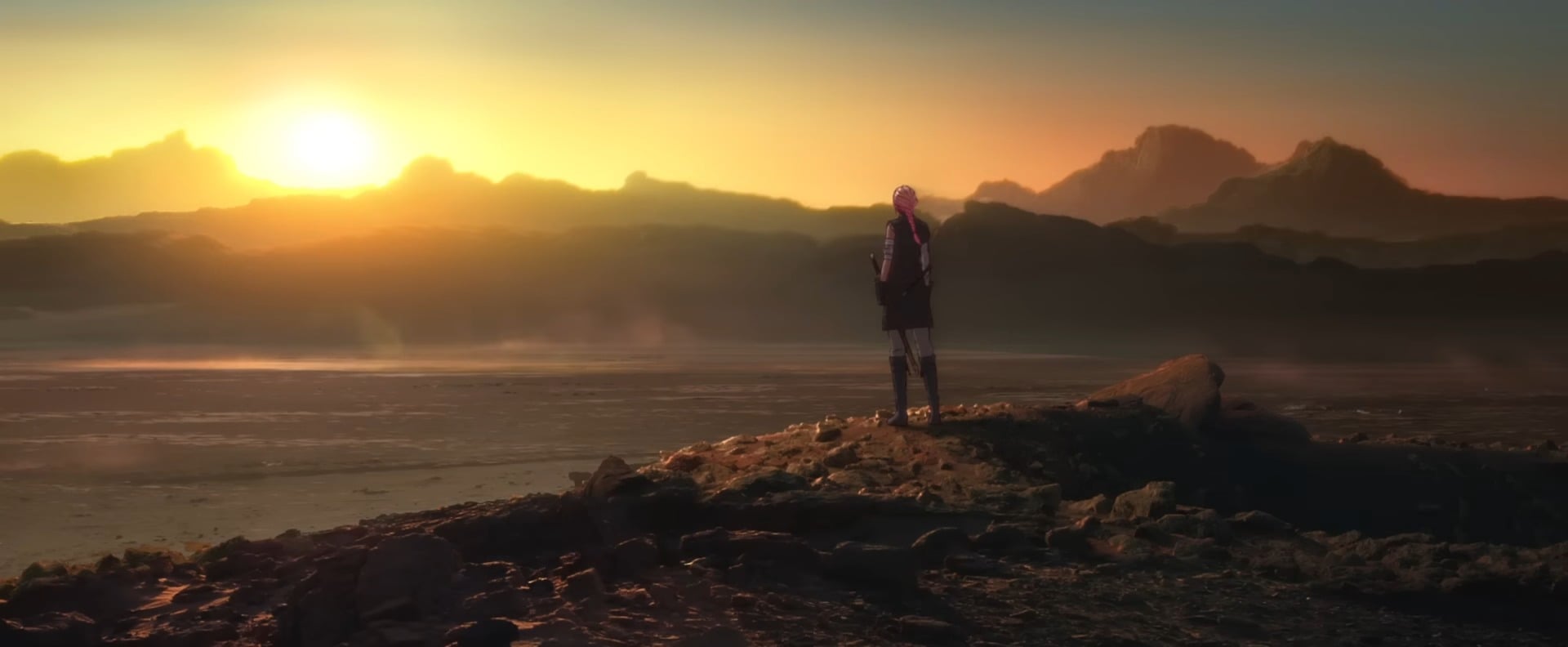
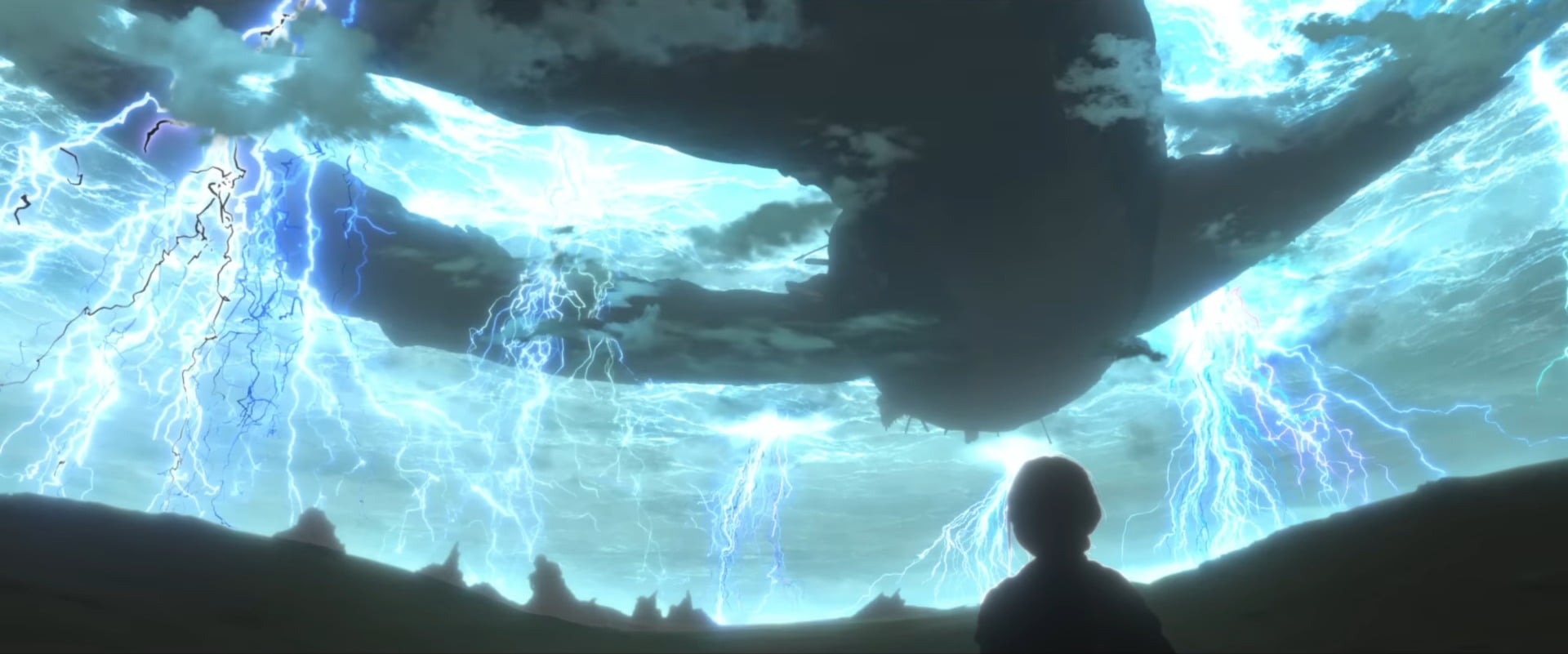
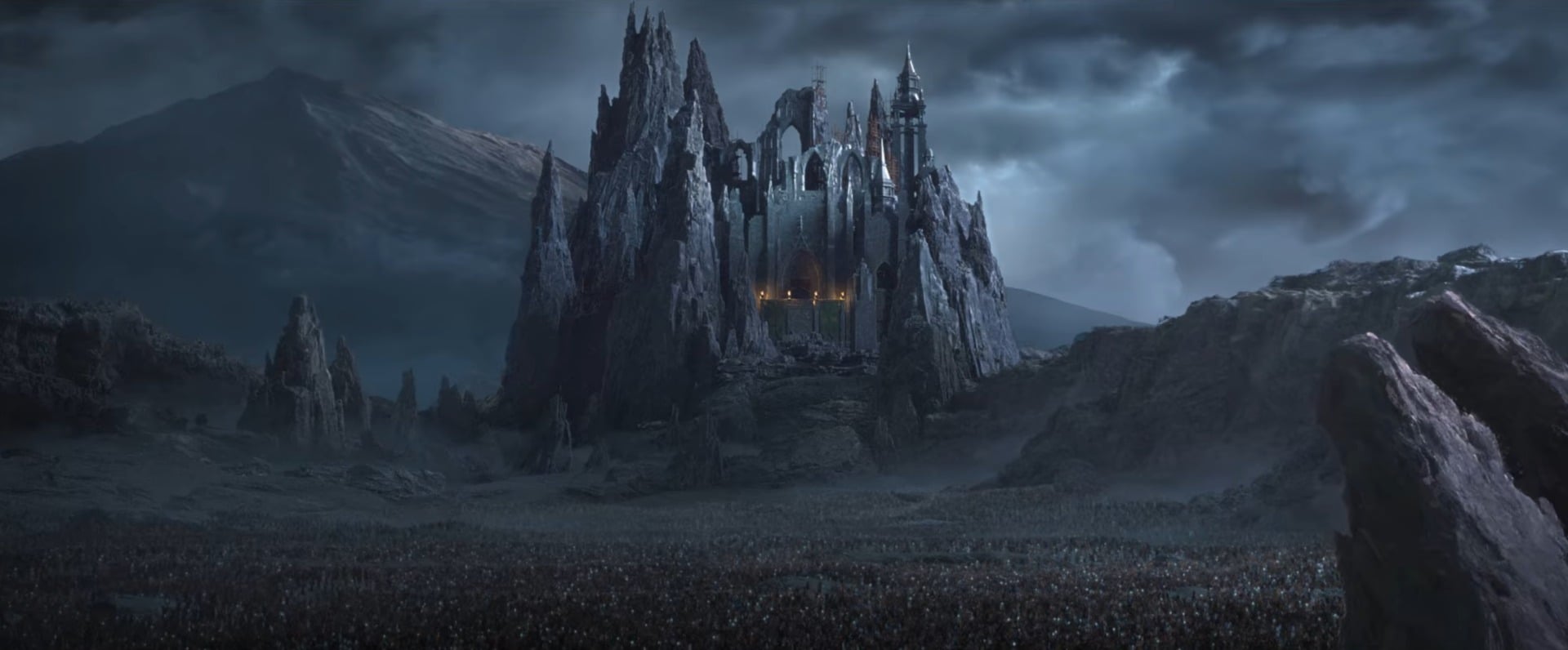
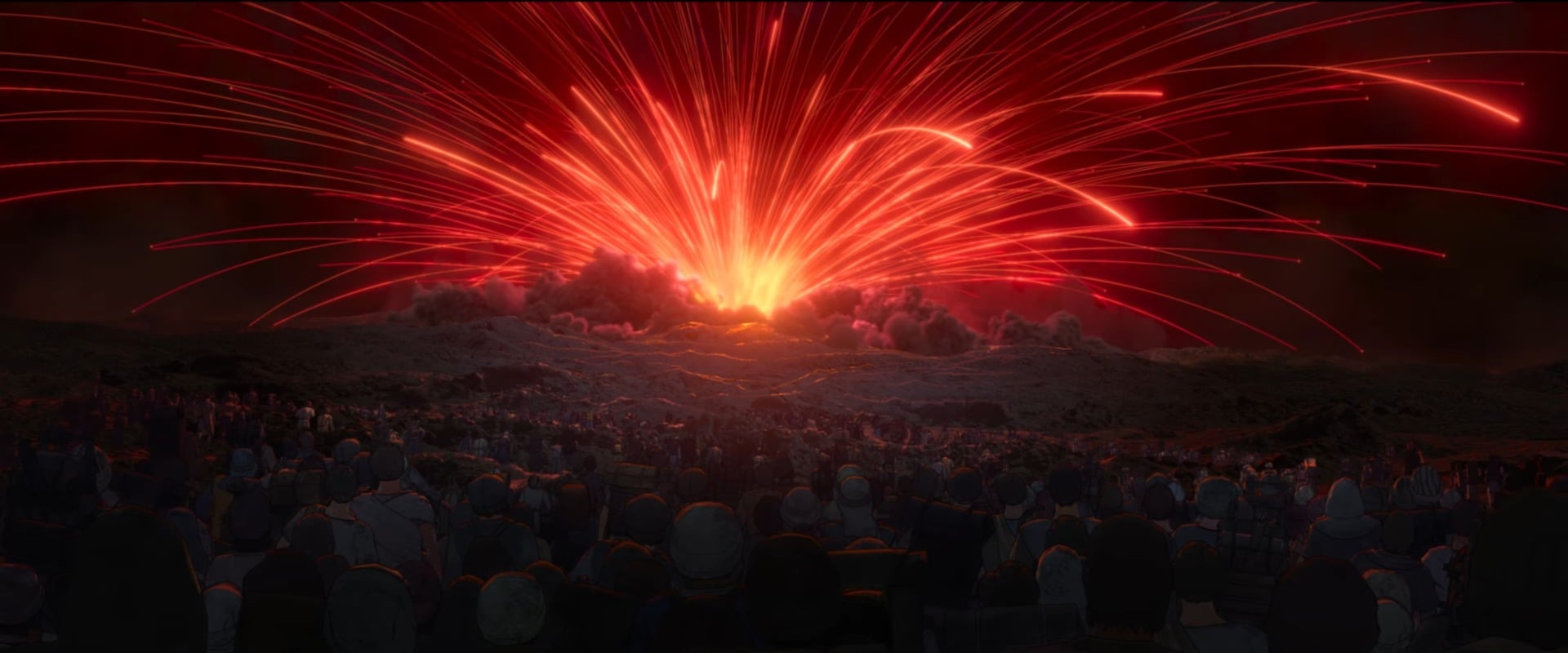
On the whole, the film is nothing short of stunning to look at, where skies are rendered like a raging ocean, the shadow of a colossal dragon looms overhead, an insurmountable crowd of people flock toward and flee an erupting volcano, and the warm glow of the sun practically emanates from the screen. Studio Chizu’s artistic talents are somewhere between those of Studio Orange and Ne Zha II; the film is simply that undeniable of a looker.
Plot-wise, however, Scarlet is more on the predictable side, and to its detriment, it tries its damndest to circumvent that in a way that makes viewers go from expectantly awaiting a fable-style moral of the story to giving the whole film an eye roll. You don’t have to be a literary scholar to clock Scarlet‘s central message from its early goings; the problem isn’t the message itself but the long, winding, self-consciously subversive route the film takes to deliver it.
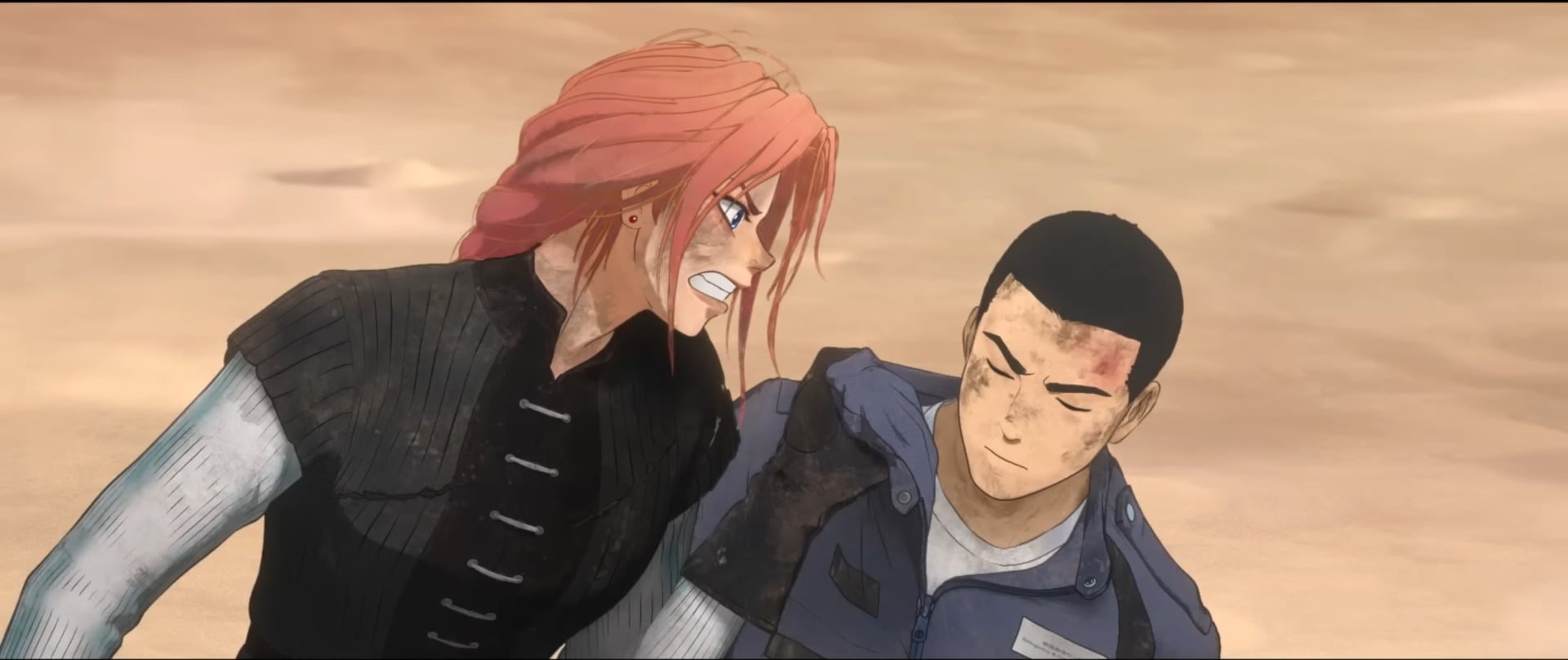
A major part of that drag comes from Hijiri, who’s meant to serve as Scarlet’s window character. Instead, he ends up feeling like a bland, hollow presence—a walking theme rather than a person. As a character, he’s frustratingly nothing, a Wonder Bread of a man, and because the film entrusts him as its pivotal emotional anchor, he becomes dead weight instead, slowing the momentum the film had going for it. And his tacked-on romance with Scarlet only makes things worse, rendering Hosoda’s usual time and romance fixings stale here.
Because Hijiri is so inert, the script’s isekai-leaning framing ends up feeling oddly mute. If anything, it’s more of a distraction from an otherwise intriguing premise about a character doomed by a Shakespearean narrative than a meaningful lens for reimagining Hamlet. And because the film is already leaning heavily on the audience’s familiarity with the revenge tragedy to make sense of its ensemble and their relationships before Scarlet’s cosmic odyssey begins, the supposed “modern outsider” meant to bridge those two worlds contributes almost nothing. If anything, the film becomes an affair where, unless you know Hamlet, it’s hard to say who it’s for.

Although Scarlet is undeniably gorgeous, its story starts to lose its vitality as it pushes toward the climax, twisting itself into an almost impressive, romantically stale knot just to deliver an obvious message in the most roundabout way possible. What’s left is beautiful, yes, but its theme rings a little hollow, verging on trite. As a hybrid reimagining of one of the most famous revenge tales, filtered through already oversaturated anime genres, Scarlet feels like a film that unironically insists upon itself and its depth, which makes its shaky message all the more eyeroll-inducing as it nervously tries to shift out of feeling predictable by piling flourish upon flourish until the once-clear water of its ideas that it beckons audiences to drink from turns murky.
By the time the film reaches its conclusion, its “do better” climax is less fake-deep than it is corny, which might be worse. In the end, Scarlet is a tale that feels wholly carried by its animation, which does far more heavy lifting than its script ever manages to do it justice.
Scarlet is playing in theaters now.
Want more io9 news? Check out when to expect the latest Marvel, Star Wars, and Star Trek releases, what’s next for the DC Universe on film and TV, and everything you need to know about the future of Doctor Who.
Read the full article here