On Monday, two of AI’s biggest players had a little public tiff that started with a well-sourced report from Reuters that OpenAI is dissatisfied with Nvidia’s chips and ended in OpenAI CEO Sam Altman tweeting, “I don’t get where all this insanity is coming from,” after Nvidia’s top exec Jensen Huang publicly wavered on its investments in the maker of ChatGPT.
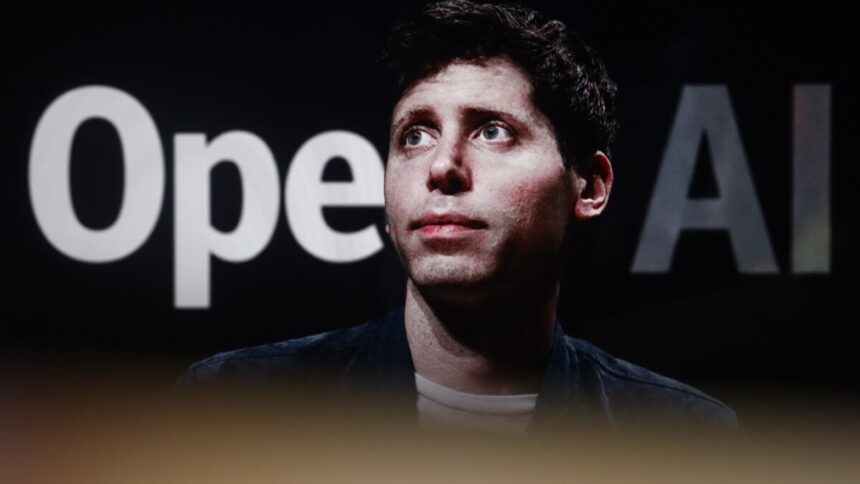
That seemed to be a bit of a new place for Altman to be, given that he’s used to getting his way. A new profile in Forbes of the top exec of the AI industry’s #1 darling really hammers home that Altman expects the world, and has yet to be presented with much evidence that he can’t have it. Which makes this particular moment interesting.
Up until a few months ago, ChatGPT had seemingly achieved genericide, where it became the Band-Aid or Kleenex of AI. That was in no small part thanks to OpenAI’s initial rushed launch of the chatbot back in 2022, which, per Forbes, was basically all Altman’s idea. While the rest of the company’s board worried they were going public too early, Altman insisted.
It arguably worked. In the years that followed, the company locked down tons of investments—hundreds of billions committed to their operation from firms like Oracle, Microsoft, and (of course) Nvidia. OpenAI became so entangled in the economy that there were (and still are) concerns that it might require a massive government bailout if it fails. And it bolstered the image that Altman had cultivated as a guy who is just used to things going his way.
Forbes talked to several people for its profile of Altman, but arguably the most illuminating observation came from his mentor and the founder of the startup accelerator Y Combinator, Paul Graham. “Sam gets what he wants,” he said, by way of explaining why he handed over the reins of his company to Altman in 2014. “He’s good at convincing people of things. He’s good at getting people to do what he wants.” Of course, that doesn’t mean what he wants is good for anyone other than himself.
For a guy who is often presented as a visionary, Altman seems like he’s having a hard time keeping his eye on the ball—a problem that has plagued him in the past. According to Forbes, Altman caught the Y Combinator team by surprise when he was announced as the CEO of the for-profit branch of OpenAI, and they asked him to step down from his role at the startup accelerator once he started treating it like a hobby instead of his job.
Altman has certainly stayed focused on AI since then, but after getting out ahead of the competition by releasing ChatGPT before any other major LLM was made available to the public, it seems like he’s chasing the puck instead of trying to skate to where the puck is going. According to Forbes, he currently has a stake in more than 400 companies. And while a lot of those have at least some utility in an AI-dominated future (like energy firm Helion or the deeply creepy human verification company World), Altman doesn’t seem to have a clear vision of what comes next.
“I think I am unusually good at projecting multiple things—years or a couple of decades into the future—and understanding how those are going to interact together,” he told Forbes. And yet, OpenAI appears stuck. The company is reportedly working on a wearable with Jony Ive that is supposed to embed AI into everyone’s daily life, but even that pitch seems dubious. Altman described gadgets that “observe you” and offer recommendations based on everything from a wealth of personal data to tracking eye movement. But Altman has also already been down this path. He backed Humane, which created an AI pin that failed spectacularly.
The wearable is just one example of OpenAI throwing shit at the wall and seeing what sticks. The company has branched out in all sorts of directions recently—so much so that employees want to slow down and reassess. Per Forbes, people inside the company think they’re doing too much too quickly and missing out on opportunities that looked like layups just months prior, like Apple choosing Google over OpenAI for its upgraded Siri despite having a working relationship with OpenAI.
Despite that, Altman just keeps pushing forward. “We basically have built AGI, or very close to it,” he told Forbes (though he apparently later walked it back by saying, “I meant that as a spiritual statement, not a literal one”). He expects people to accept that when he says it, because he’s used to that being the case—that he says something is a certain way and it is treated as true.
The cracks are starting to show, though. Microsoft CEO Satya Nadella told Forbes, “I don’t think we are anywhere close to [AGI],” and said that getting there is a technical process. Simply put, Nadella says, “It’s not about Sam or me declaring it.” Meanwhile, the companies that have bet big on Altman and OpenAI are starting to see the bill come due. Microsoft reported a $3.1 billion hit from its OpenAI investments last year. Oracle has been tumbling because it’s not getting any return from the billions it’s dumped into OpenAI. Altman and company are out trying to get more money from backers like Nvidia and Amazon, but the walls appear to be closing in with warnings that the company may run out of cash by 2027 and is still a half-decade from turning a profit.
Altman may start getting “no” for an answer for the first time in his life. We’ll see how that goes.
Read the full article here