
By using this site, you agree to the Privacy Policy and Terms of Use.
Accept
Tech Consumer JournalTech Consumer JournalTech Consumer Journal
  • News
  • Phones
  • Tablets
  • Wearable
  • Home Tech
  • Streaming
  • More Articles
Reading: Rubin Gets a Closer Look at the COSMOS Field, Revealing More Than 650,000 Galaxies in One Image
Share
Sign In
Notification Show More
Font ResizerAa
Tech Consumer JournalTech Consumer Journal
Font ResizerAa
  • News
  • Phones
  • Tablets
  • Wearable
  • Home Tech
  • Streaming
  • More Articles
Search
  • News
  • Phones
  • Tablets
  • Wearable
  • Home Tech
  • Streaming
  • More Articles
Have an existing account? Sign In
Follow US
  • Contact
  • Blog
  • Complaint
  • Advertise
© 2022 Foxiz News Network. Ruby Design Company. All Rights Reserved.
Tech Consumer Journal > News > Rubin Gets a Closer Look at the COSMOS Field, Revealing More Than 650,000 Galaxies in One Image
News

Rubin Gets a Closer Look at the COSMOS Field, Revealing More Than 650,000 Galaxies in One Image

News Room
Last updated: August 4, 2026 8:44 am
News Room
Share
SHARE

A new image from the Vera C. Rubin Observatory captures a well-documented patch of the universe in exceptional depth, revealing thousands of galaxies and stars that span across a wide range of distances and cosmic time.

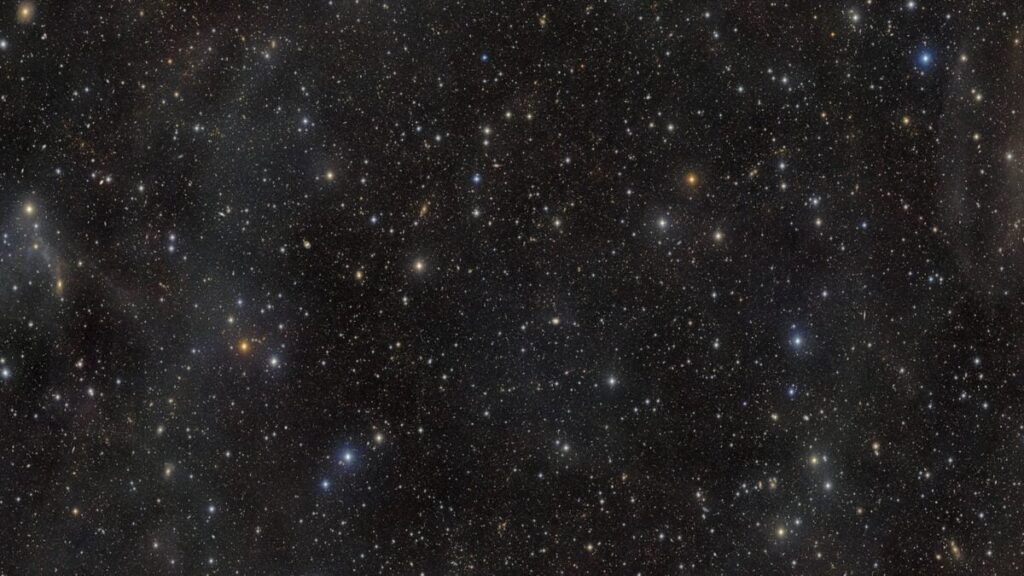
Using its 3.2-gigapixel camera, Rubin observed a region of the sky known as the COSMOS field to reveal more than 650,000 galaxies and over 50,000 stars packed in a single view. The new image provides a closer look at one of the most observed patches of the universe, adding a more detailed and dynamic view of this area.

Familiar grounds

The COSMOS field contains over 2 million galaxies that span across 75% of the age of the universe, with some as far as 12 billion light-years away. It serves as a prime spot for space telescopes to carry out sky surveys because it faces away from the crowded plane of the Milky Way galaxy, with only a few nearby stars and clouds of dust obscuring the view of the distant universe.

Located in the constellation Sextans, COSMOS covers an area of the sky that’s around three times the size of the full Moon. By pointing telescopes toward this patch of the sky, astronomers can see a remarkably large number of distant galaxies, the light of which has traveled billions of years to reach Earth.

The Hubble and Webb space telescopes have been used to capture large mosaics of COSMOS, and now Rubin is joining the party. Rubin’s highly sensitive camera and wide field of view not only compliments previous observations of COSMOS, it also allows scientists to compare the new image with decades of data so that they can confirm the observatory is indeed delivering accurate, high-quality measurements.

A fresh take

Rubin’s recent image of COSMOS was combined using multiple observations. The telescope captured a wide variety of galaxies, including spirals with delicate arms, smooth ellipticals, distorted merging galaxies, and faint red galaxies from the distant Universe.

Rubin Observatory reveals the renowned COSMOS field and its surroundings in the constellation Sextans. Credit: NSF–DOE Rubin Observatory/NOIRLab/SLAC/AURA

A few bright stars from the Milky Way appear in the foreground of Rubin’s exceptionally detailed view of the distant cosmic landscape, while soft traces of interstellar dust within our galaxy can also be seen in the image.

This won’t be the last time Rubin stares at this particular region of the skies. In fact, the COSMOS field is among the regions that Rubin will observe more frequently, compared to most of the areas included in its 10-year survey of the universe.

Rubin recently began its Legacy Survey of Space and Time (LSST), capturing hundreds of images each night to create the most comprehensive record of the universe in history. The telescope, overseen by the U.S. National Science Foundation (NSF) and the Department of Energy (DOE), is equipped with the largest digital camera ever built for astronomy and an ultra-sensitive 28-foot (8.4-meter) primary mirror.

During the decade-long cosmic survey, Rubin will generate a wide-field snapshot of the southern sky every few nights. Combining immense field of view with depth and speed to detect extremely faint objects, LSST will help enable discoveries related to dark matter, dark energy, supernovae, and near-Earth asteroids.

The Rubin Observatory released its first images to the public on June 23, 2025, capturing millions of galaxies and stars scattered across the Milky Way, in addition to 2,104 never-before-seen asteroids. When the LSST is complete, the final dataset will contain billions of objects with trillions of measurements, which will all be accessible through regular data releases.

Read the full article here

You Might Also Like

Plans for World’s First Octopus Farm Scrapped Over Ethical Concerns and Regulatory Hurdles

Anthropic Says the House Is on Fire. China Says AI Will Set You Free

Liquid Fluoride Can Stop Cavities Without Drilling, Major Trial Finds

SpaceX Is About to Find Out How Many Insiders Want to Hit the Eject Button

No One Knows What the Hell Elon Musk’s AI Graph Means

Share This Article
Facebook Twitter Copy Link Print
Previous Article Liquid Fluoride Can Stop Cavities Without Drilling, Major Trial Finds
Next Article Anthropic Says the House Is on Fire. China Says AI Will Set You Free
Leave a comment

Leave a Reply Cancel reply

Your email address will not be published. Required fields are marked *

Stay Connected

248.1kLike
69.1kFollow
134kPin
54.3kFollow

Latest News

The Tariff Refunds Are Rolling in—but Gadget Prices Aren’t Dropping
News
The CEO of Bluesky Says He Wants Less of a Focus on Liberal Politics (and More Sports)
News
Even Black Holes Can Get Indigestion. Unsurprisingly, Their Farts Are ‘Massive’ Expulsions of Gas
News
Trump Admin Has the Concept of a Plan for AI Safety Rules (Maybe)
News
A16Z Brags That Its AI Is Great for Poisoning the Internet With Fake Tech History
News
Dave Bautista May Take Over Kratos Role in ‘God of War’ TV Series
News
Kevin Feige on the ‘Brand New Day’ Box Office and What’s Next for Spidey and Marvel
News
Chilean Mummies Prove Europeans Brought Smallpox to the Americas—But That’s Not All
News

You Might also Like

News

‘Warhammer 40,000’ Animated Series Based on ‘Secret Level’ Episode in the Works

News Room News Room 3 Min Read
News

The First Full ‘Star Wars’ Anime Series Arrives This Week

News Room News Room 2 Min Read
News

‘House of the Dragon’ Star Gayle Rankin on What It’s Like Being a Freaky Westeros Witch

News Room News Room 4 Min Read
Tech Consumer JournalTech Consumer Journal
Follow US
2024 © Prices.com LLC. All Rights Reserved.
  • Privacy Policy
  • Terms of use
  • For Advertisers
  • Contact
Welcome Back!

Sign in to your account

Username or Email Address
Password

Lost your password?