By using this site, you agree to the Privacy Policy and Terms of Use.
Accept
Tech Consumer JournalTech Consumer JournalTech Consumer Journal
  • News
  • Phones
  • Tablets
  • Wearable
  • Home Tech
  • Streaming
  • More Articles
Reading: Reconstructed Satellite Images Show How Close D-Day Came to Disaster
Share
Sign In
Notification Show More
Font ResizerAa
Tech Consumer JournalTech Consumer Journal
Font ResizerAa
  • News
  • Phones
  • Tablets
  • Wearable
  • Home Tech
  • Streaming
  • More Articles
Search
  • News
  • Phones
  • Tablets
  • Wearable
  • Home Tech
  • Streaming
  • More Articles
Have an existing account? Sign In
Follow US
  • Contact
  • Blog
  • Complaint
  • Advertise
© 2022 Foxiz News Network. Ruby Design Company. All Rights Reserved.
Tech Consumer Journal > News > Reconstructed Satellite Images Show How Close D-Day Came to Disaster
News

Reconstructed Satellite Images Show How Close D-Day Came to Disaster

News Room
Last updated: August 28, 2026 4:13 am
News Room
Share
SHARE

Three separate teams of meteorologists worked in secrecy on the high-stakes weather forecasts required for the Allied invasion of Normandy during World War II. But punishing storm fronts in 1944 left them little to work with: Only four possible, but less-than-ideal, dates appeared feasible for “D-Day” from May into July that year—with each nerve-racking option presenting 13-to-one odds against success.

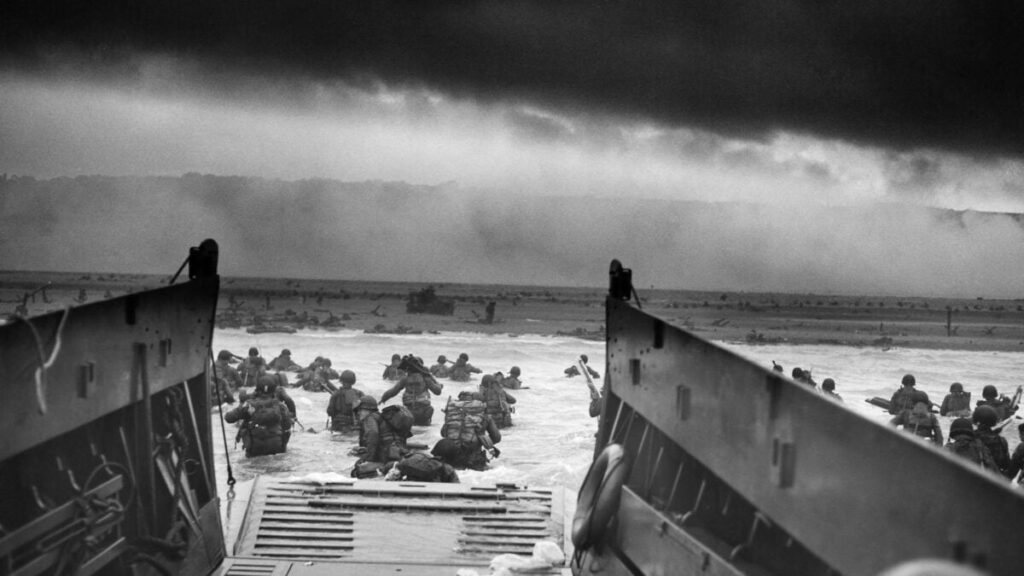
“So, meteorologically, D-Day was bound to be a gamble against the odds,” as Royal Navy meteorologist Lawrence Hogben recollected. And now scientists with the University of Reading and the European Centre for Medium-Range Weather Forecasts (ECMWF) have provided detailed visualizations of just how small this crucial window of clear skies actually was on the historic morning of what would become D-Day, June 6, 1944. Working with old weather records and a modern weather data-synthesis tool known as reanalysis, the researchers have effectively generated what satellite images might have looked like that day, when nearly 160,000 U.S., British, and Canadian troops stormed the beaches of Nazi-occupied France.

“Troops set off into a sky that was still breaking up after days of storms into a narrow window of better weather,” climate scientist Ed Hawkins explained in a statement from the university, where he collaborated on these historical reconstructions with the ECMWF.

“A day earlier, or a few hours either way, and the weather could have stopped the invasion in its tracks,” Hawkins said, “and changed the outcome of the war.”

Reconstructed satellite images show the cloud cover blanketing nearly everything except the English Channel and the beaches of northern France on D-Day from midnight to 3pm, starting clockwise from the top left. Credit: University of Reading / ECMWF

A perfect storm

The reconstructed satellite images depict a high-altitude view of the clouds that stretched across the British Isles and into the English Channel toward northern France on June 6, 1944. Reanalysis tools fill in or interpolate gaps between real measurements in climate data to faithfully recreate fuller images of historic weather patterns—a process that the U.S. National Oceanic and Atmospheric Administration calls “gridding.”

The images created by Hawkins and his colleagues show the cloudless patches of southern England and northern France critical to making D-Day possible. While powerful rain storms and roiling seas were major concerns, high winds and even low-lying cloud cover above Normandy were also major concerns, according to John Ross, author of The Forecast for D-Day: And the Weatherman Behind Ike’s Greatest Gamble.

“The weather over Normandy contained too much cloud cover for Ike’s [General Dwight D. Eisenhower’s] greatest strategic asset, the Allied air forces, to effectively protect the landings from German armor, artillery and infantry reserves,” Ross told History.com in 2014. On some of these other potential dates, he noted, the winds were “too strong for the deployment of paratroopers to secure bridges and crossroads inland from the beaches thus preventing German reinforcement of coastal positions.”

In the line of fire

Judged against data from the Copernicus Climate Change Service, the reconstructed satellite images match well with historical reports of the weather that morning, according to the university. The first weather report from that day noted primarily sunny skies and a northwesterly wind, despite ominous clouds in the distance and conditions a bit less favorable than what Allied military planners might have found comfortable.

Perhaps obviously, the new weather images conveniently follow this past May’s release of the StudioCanal period drama Pressure, in which Brendan Fraser from The Mummy plays General Eisenhower in debates over weather reports with Royal Air Force meteorologist Captain James Stagg. (Stagg is played by Andrew Scott, who you might recall as either the “hot priest” from Fleabag or Moriarty from the BBC’s Sherlock.)

More importantly, Hawkins noted, the new images help us understand what threats Allied forces actually faced that day, alongside the dangers of German bullets and mortar shells.

“They show just how narrow the margin was between success and failure,” Hawkins said, “and how much was riding on a small break in the cloud.”

Read the full article here

You Might Also Like

The Fight Over Whether the ‘Humankind 2’ Trailer Is Slop Is Its Own Kind of AI Damage

Archaeologists Found a 1,300-Year-Old Viking Dress, and the Reason It Survived Is Surprising

Nevertheless, OpenAI Persists With New Always-On Agent

Here’s What Happens in Netflix’s ‘Grand Theft Auto VI’ Extended Look

More Shonen Anime Should Have Their Own ‘One Piece Heroines’ Style Spin-Offs

Share This Article
Facebook Twitter Copy Link Print
Previous Article The Fight Over Whether the ‘Humankind 2’ Trailer Is Slop Is Its Own Kind of AI Damage
Leave a comment

Leave a Reply Cancel reply

Your email address will not be published. Required fields are marked *

Stay Connected

248.1kLike
69.1kFollow
134kPin
54.3kFollow

Latest News

Google, OpenAI and Over 100 Companies Call for More Action on AI-Driven Cyberattacks
News
The Creator of ‘Squid Game’ Is Making a Sinister Sci-Fi Movie
News
President Trump’s Love of Tariffs Comes Into Conflict With His Love of Data Centers
News
Scalpers Ate the Special Edition Xbox Series X25 Alive
News
Anthropic Is Quietly Cutting Google Out of the Equation
News
Americans Can Now Add Metal to Their Food From the Comfort of Their Own Grill
News
Samara Weaving to Fight Killer Wasp Outbreak in ‘Hivemind’
News
Is Anti-AI Fashion This Season’s Hottest New Look?
News

You Might also Like

News

Plaud’s First Wireless Earbuds Crank AI Productivity to Max Volume

News Room News Room 5 Min Read
News

Samsung’s Galaxy S26 FE Strips the S26+ Down to Its Basics

News Room News Room 3 Min Read
News

‘Ghost in the Shell’ Is Coming to Theaters in 4K and You Can Get Tickets Now

News Room News Room 2 Min Read
Tech Consumer JournalTech Consumer Journal
Follow US
2024 © Prices.com LLC. All Rights Reserved.
  • Privacy Policy
  • Terms of use
  • For Advertisers
  • Contact
Welcome Back!

Sign in to your account

Username or Email Address
Password

Lost your password?