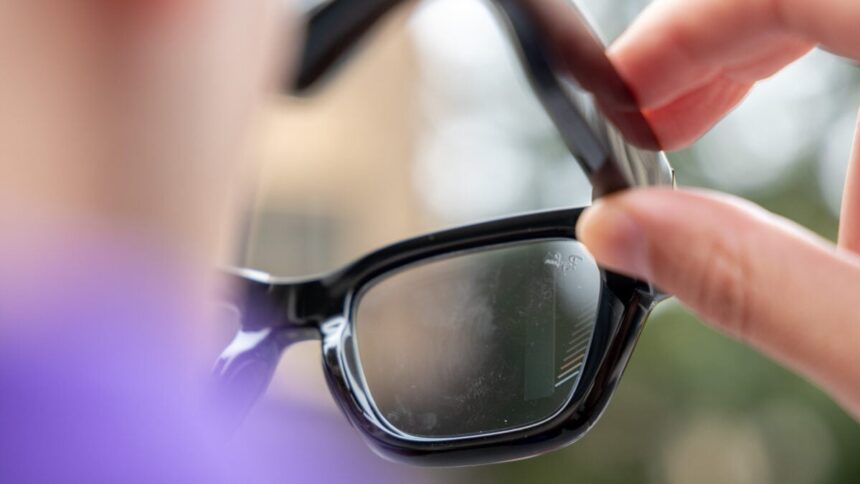
Privacy might be a top-of-mind concern for most people when it comes to smart glasses, but it’s not the only thing on the radar for regulators. According to a report from Bloomberg, the Meta Ray-Ban Display has hit roadblocks in Europe thanks to new rules on repairability and AI.
Chief among those obstacles is the battery inside Meta’s display-equipped smart glasses, which does not currently meet the European Union’s (EU) requirements for repairability. As it stands, batteries inside Meta’s smart glasses are not replaceable or removable, which is a big no-no under relatively new regulations in Europe that dictate all devices sold in the region must have removable batteries by 2027. According to Bloomberg, Meta is actively seeking an exemption for itself and other wearables, though it’s unclear whether its petition will stick.
For context, removable batteries inside smart glasses aren’t common, but they’re also not impossible. Recent pairs, including the Inmo Go 3 and a pair made by Alibaba, the Quark AI S1, feature batteries that can be swapped out at will to extend life, though opting for that design could increase bulk, which is probably not high on Meta’s to-do list.
Another roadblock in Europe is AI, which is also the subject of new EU rules that assess new AI features based on risk. It’s unclear which AI features in the smart glasses would be allowed under those regulations, making a rollout difficult. Meta sees AI as a critical piece of its smart glasses—it literally puts AI in the name of its non-display Ray-Bans—and without core components like computer vision, the Meta Ray-Ban Display and Ray-Ban Meta AI glasses might feel kneecapped.
Meta, for its say in the delayed rollout, has cited supply as an issue. In January, the company announced that the Meta Ray-Ban Display rollout was being paused to focus on fulfilling orders in the U.S. Here’s what it said in a statement at the time:
“Meta is pausing Meta Ray-Ban Display’s international expansion to the UK, France, Italy, and Canada due to an overwhelming amount of interest in the US and limited inventory. Meta will continue to focus on fulfilling orders in the US while it re-evaluates international availability.”
Based on Bloomberg’s reporting, the story of Meta’s slow Europe rollout would appear more complex than just “overwhelming demand”—and that’s not even counting the fact that scrutiny over smart glasses’ implications on privacy is also building in Meta’s only market, the U.S. Just last week, concerns reached the U.S. Senate, with Sens. Ron Wyden and Jeff Merkley (both D-Ore.) questioning Meta over its reported plans to include facial recognition in its smart glasses, characterizing the potential move as a threat to personal privacy. If regulators in the U.S. are raising eyebrows, something tells me the EU may also have similar concerns.
For now, the Meta Ray-Ban Display will remain a U.S.-only product. Whether it has an audience by the time Meta’s done running its smart glasses’ reputation into the ground, however, is anyone’s guess.
Read the full article here