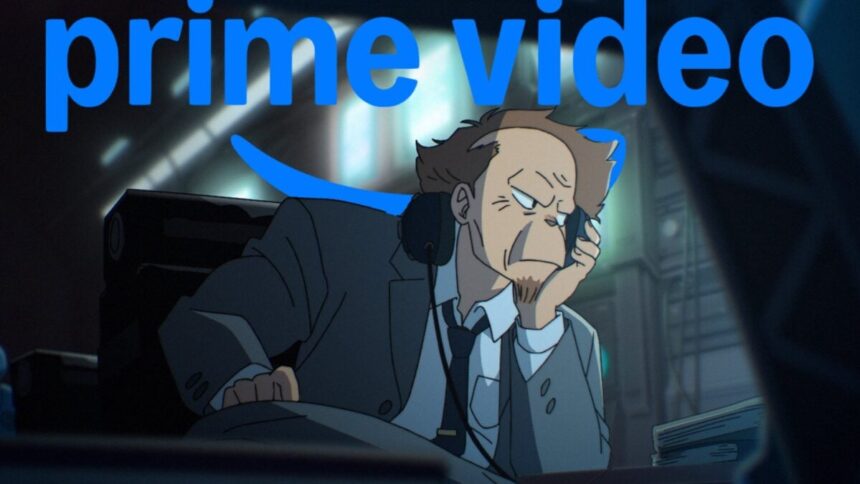
A week ago, Deadline reported that Amazon was staking its claim to become the “preferred destination for anime content globally” at its first Prime Video Presents: International Originals online showcase of the year. To further emphasize that point, Prime Video announced its 2026 lineup of shows, the biggest being Dan Da Dan studio Science Saru‘s upcoming The Ghost in the Shell anime adaptation. The news that Prime Video secured exclusive streaming rights to one of the most hotly anticipated anime of the year from a fan-favorite studio whose rising star appears to have no ceiling would be exciting if the streamer wasn’t where anime’s hype went to die.
Every streamer has its anime exclusives worth watching. Netflix has Ranma 1/2, Beastars, Devilman Crybaby, Cyberpunk: Edgerunners, Pluto, The Summer Hikaru Died, and Pokémon Concierge. Hulu has Summertime Rendering, Heavenly Delusion, and Bleach: Thousand-Year Blood War. Crunchyroll has Gachiakuta, The Elusive Samurai, Solo Leveling, and the latest season of Jujutsu Kaisen.
Prime Video has some heaters too—City The Animation, Mobile Suit Gundam GQuuuuuuX, Dororo, Sanda, Tatsuki Fujimoto 17-26, New Panty & Stocking with Gaterbelt, the Evangelion rebuild quadrilogy, and seminal classics like Memories. The problem is you’d be hard-pressed to know it had any of these gems because Prime Video barely promotes any of its exclusive anime, let alone its newly airing series, especially compared to its competition.
More often than not, the studios’ own social media accounts wind up doing all the heavy lifting. Case in point, Prime Video mustered two social media posts about a show like GQuuuuuuX. But after that, it went radio silent straight through its finale.
Destiny awaits. Mobile Suit Gundam GQuuuuuux streaming now on Prime Video. pic.twitter.com/hS131J5yp3
— Prime Video (@PrimeVideo) April 8, 2025
Anime connoisseurs would rank anime streamers starting with Netflix for quality and Crunchyroll for quantity. Hulu, Hidive, Prime Video, and, oddly enough, Tubi (which has some hidden gems) are fighting for third place. While Hulu and Prime Video are closer in their shared IDGAF energy when promoting their shows, Prime Video takes the cake for wantonly disrespecting the medium lately.
Subtitles and closed captioning for anime have seen a declining quality as juggernauts like Crunchyroll and Netflix flirt with AI integration to meet competitive content demand in the wake of a beleaguered, underpaid industry for animators and voice actors. But Prime Video’s ingenious idea to soft launch its long-cooking English and Latin American Spanish AI dubs for shows like Vinland Saga, No Game No Life Zero, and Banana Fish to cut costs for paying human actors was not only a spit in the face to fans but also to industry professionals, leading the streamer to quietly roll back the English version of the AI dub feature and (much later) the Latin American Spanish version after fans posted screenshots of their cancelled subscriptions in protest.
Amazon’s AI English Dub for Banana Fish is hilariously bad at times.#BANANAFISH pic.twitter.com/CtiE47W4yh
— Otaku Spirit (@OtakuSpirited) November 29, 2025
That, however, didn’t stop Prime Video from posting a job listing for a creative director of dubbing to “spearhead the creative vision for its AI-enabled dubbing platform” and “identify opportunities and set up creative workflows to expand AI dubbing to new languages and content types” shortly after the whole controversy. According to Anime Corner, which broke the story, Prime Video deleted the post 24 hours later, without giving a reason, though it’s safe to assume fan backlash, like the SpongeBob meme of teaching an old man lessons revived on social media, was likely the cause.
I recorded as Kaworu Nagisa for the @PrimeVideo Evangelion movie English dubs. I will always be incredibly proud to have been a part of such a famous franchise and to voice such a notable queer-coded character like Kaworu. It meant a lot, especially being queer myself.
But using…
— Daman Mills (@DamanMills) November 29, 2025
Although the AI dubs being awful isn’t the point—because even if they were “good,” AI slop is still AI slop—what made the whole affair worse is that those earlier shows already have English dubs. Vinland Saga alone has two: one from Sentai Filmworks and another from Netflix/VSI Los Angeles. That makes the whole dumb rigamarole of slapping an AI dub onto a remarkable series unnecessarily trite.
Knowing the initiative’s misguided raison d’être from a blog post last March was to help Prime Video become a “first-stop entertainment destination” through “AI-aided dubbing on licensed movies and series that would not have been dubbed otherwise” misses the entire point that human artists—from animators, subtitlers, and voice actors—are what make the medium worth watching. The whole debacle only gets worse when you factor in that Kadokawa and Sentai Filmworks/Hidive told Anime News Network they never approved of an AI dub of No Game, No Life Zero “in any form and weren’t even informed it was happening in the first place.
Amazon’s AI Dub of No Game No Life is Horrific!! The random Japanese voicing popping in and out is hilarious!@SentaiFilmworks, please give them your Official English Dub!#NoGameNoLife #ノゲノラ pic.twitter.com/apFZH51zhS
— Otaku Spirit (@OtakuSpirited) November 29, 2025
Prime Video specifically gave Banana Fish—a celebrated, openly queer anime whose fans have been waiting years for an English dub announcement—an embarrassing, cobbled-together AI dub instead, an insult to the very audience that relies on it as the exclusive place to watch the show. But as voice actor Kellen Goff points out, it would have cost Amazon—a $2.5 trillion company—somewhere around $54,000 to do a proper, professional dub of Banana Fish if it truly cared about becoming the de facto anime streaming site. Instead, Amazon chose to double down on cutting corners with AI, and the result is that fans don’t trust them with anything anime-related.
Amazon has opted to use AI for dubs of Banana Fish, including English. It sounds terrible.
If you’ve enjoyed our work, if you’ve ever wanted to be a VA yourself, consider voicing your displeasure by cancelling your subscription. pic.twitter.com/n7Ifk3LYnv
— Kellen Goff 🎤🐻🎩 (@kellengoff) November 29, 2025
Instead, fans tend to view Prime Video as a graveyard where new exciting shows either go to die or have AI slop thrown over them. That makes remarks by Gaurav Gandhi—Prime Video’s vice president of APAC and ANZ—praising anime as “a category truly experiencing explosive growth” for the streamer as one of its most watched genres ring a bit hollow. In truth, it feels like the company treats anime as content to add to its library on the strength of the work alone without letting its viewers know it’s there, much less making it easy to search on its webpage.
“Given that we are the home for the best anime in Japan, we want to become the preferred destination for anime content globally too,” Gandhi said.
Even though Gandhi went on to recognize The Ghost in the Shell as “the most influential Japanese sci-fi work of all time,” the company’s past history with other gems of its caliber doesn’t bode well for it getting any different treatment as a place where yet another Science Saru work will go to die.
When someone asks me what I’ve been up to, I just show them this: pic.twitter.com/u2fuGadOBJ
— Netflix Anime (@NetflixAnime) February 16, 2026
That isn’t to say Prime Video can’t reverse course. It’s been done before. Netflix learned the hard way in correcting its own misstep after yanking JoJo’s Bizarre Adventure from Crunchyroll and essentially shadow-dropping batches of Stone Ocean episodes—killing the show’s week-to-week hype, the same hype that once made the fan-anointed “JoJo Fridays” a communal event. Under the binge model, even die-hard fans barely realized the show was over.
Netflix eventually realized its error and started giving newer anime weekly releases and actual social media promotion to keep fans keyed in—creating the kind of online water-cooler conversations that make new episodes feel like a shared event again, the way TV used to.
Whether the same will hold true for its upcoming season, Steel Ball Run, remains to be seen, but the point stands: a streamer’s soured reputation as an “anime jail” for an otherwise beloved series can be repaired so long as the platform actually pays attention to what its viewers want and pputsforth an effort to promote its catalogue so fans know to tune in to them.
Prime Video might not be the premiere destination by the time The Ghost in the Shell premieres, but it could at least claw its way past Hulu/Disney+ as the third place people check out. The problem is there’s not much reason to feel optimistic when Prime Video has exclusivity over anything anime, given its track record with a medium that’s already proven itself mainstream, box office dominant, and award worthy. Here’s hoping The Ghost in the Shell ends up being the moment Prime Video finally decides to get its shit together and treat its exclusive anime like it actually matters—because at this point, the bar is underground.
Want more io9 news? Check out when to expect the latest Marvel, Star Wars, and Star Trek releases, what’s next for the DC Universe on film and TV, and everything you need to know about the future of Doctor Who.
Read the full article here