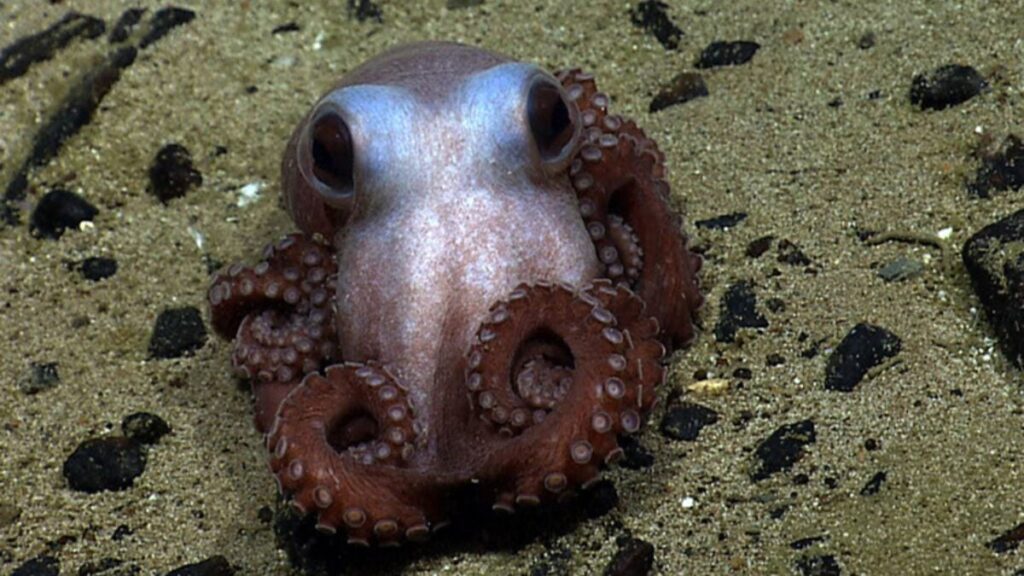
Octopuses are among the smartest, most scientifically fascinating creatures in the ocean. They are also a culinary delicacy enjoyed around the world. At the nexus of these two facts lies an ethical conundrum: Should we be eating animals that appear to be sentient and offer exceptional insight into non-human intelligence?
If one answers yes, another question immediately arises. What is the most ethical way to consume highly intelligent animals that live in sensitive ecosystems? Should we fish them from their natural habitat, or farm them? Spanish seafood giant Nueva Pescanova has long argued that aquaculture reduces the impact of environmentally harmful fishing methods and relieves pressure on wild fishing grounds, but its plan to create the world’s first commercial octopus farm recently went belly-up, the BBC reports.
The news follows five years of public outcry over the murky ethics of the farm and an equally long regulatory dispute with the port authority of Las Palmas de Gran Canaria, where it was supposed to be built. Nueva Pescanova reportedly said its decision to kill the plan was based on new requirements from the Regional Environmental Assessment Commission, including the need for a full environmental impact assessment, which changed the conditions, timelines, and scope of the project.
Cerebral cephalopods
Animal rights groups called the cancellation a victory for animal welfare, citing years of opposition from activists, scientists, and the public.
“Had it moved forward, this facility would have created an entirely new form of industrial farming for octopuses, threatening the welfare of thousands of these highly intelligent animals and setting a dangerous precedent for the future of marine animal exploitation,” In Defense of Animals, a California-based animal protection non-profit, said in a statement.
Scientists have long suggested that octopuses are unsuited to a life of captivity and mass-production largely due to their exceptional intelligence. In a 2019 essay, several researchers argued that octopuses’ ability to solve complex problems, outwit predators, tell individual humans apart, play, and hunt in cooperation with fish speaks to their sophisticated nervous systems, large brains, and their capacity for suffering.
Since then, the evidence supporting this idea has grown. A landmark study published in 2021 suggested that octopuses experience the emotional component of pain rather than simply reacting to it, and the UK officially recognized them as sentient beings that same year. In 2022, acclaimed octopus researcher and author Jennifer Mather published a series of papers presenting evidence for octopus consciousness.
More recent advancements include a review published in January that found “strong evidence of sentience in octopuses” and research published in June that found that these animals can use mirrors to find food hidden from sight, demonstrating spatial cognitive abilities.
Science drives opposition
In light of this and more evidence, California and Washington have banned octopus farming, and Mexico, Chile, and Spain have introduced bills as well. The latter’s anti-octopus-farming movement zeroed in on Nueva Pescanova, which publicly detailed plans for a farm designed to produce 3,000 tons of octopus meat per year in 2021.
But concerns over the farm haven’t just been ethical—its potential environmental impact caused alarm as well. In a 2023 article for The Conversation, Lindsay Hamilton, a professor of animal organization studies at the University of York, argued that while aquaculture may reduce overfishing and harmful practices like seabed trawling, fish farms are known to pollute coastal waters with pharmaceuticals and feces.
Based on Nueva Pescanova’s reported statements, these environmental concerns and the regulations designed to mitigate them were difficult hurdles for the company to overcome. With the project now scrapped, Nueva Pescanova said it would not rule out renewing their efforts elsewhere in the future. It appears unlikely they will not face the same backlash.
Read the full article here