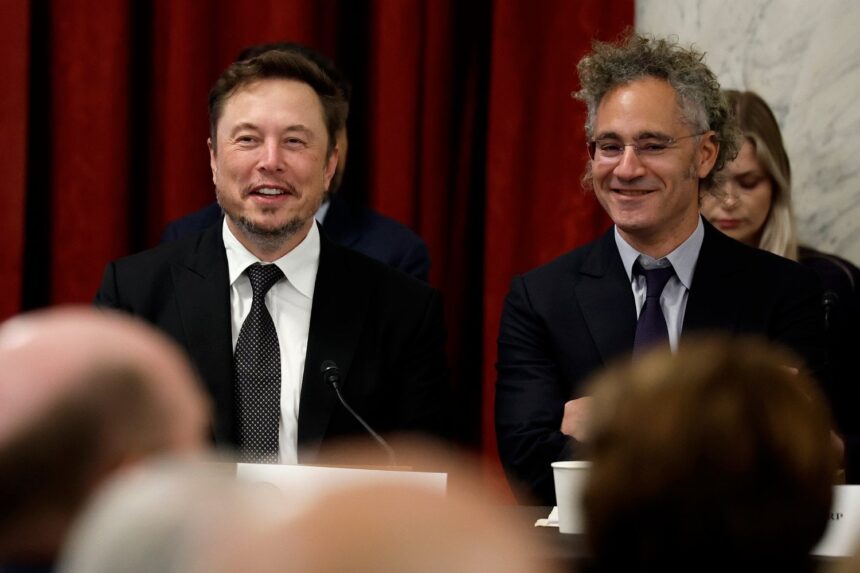
Neurodiverse people deserve to have public advocates. They also deserve better ones than Alex Karp. Just about every time the CEO of Palantir has spoken publicly in the last year or so (and he speaks publicly *a lot*) he’s made a point of bringing up neurodivergence. But he talks about it in ways that are frankly getting pretty weird.
During a recent appearance on the Technology Business Programming Network (TBPN), he said artificial intelligence is going to upend much of the current jobs market, and the path to employment, in his view, is going to be extremely narrow. “There are basically two ways to know you have a future,” Karp said. “One, you have some vocational training. Or two, you’re neurodivergent.”
Neurodiverse people deal with all sorts of variations on neurology that have historically labeled them as “other.” Conditions like autism, ADHD, or dyslexia—the latter of which Karp has openly discussed his personal experiences with—paired with education systems and places of employment unequipped to accommodate some of the challenges that neurodiverse people face, have created an environment in which people with developmental disabilities are often underemployed despite their capabilities, and they often deal with discrimination. So it would be great if neurodiverse folks got a fairer shake in the workplace.
But Karp’s suggestion doesn’t seem to be that neurodiverse people are equally deserving of opportunity. He’s instead seemingly inching closer and closer to something like neurodivergent supremacy. He’s not the only voice in tech to explore this idea, either. Elon Musk has credited autism as a driving force for his own success, and Peter Thiel has called Asperger’s syndrome “a plus for innovation and creating great companies.” Every time guys like these suggest that they are more “rational” because they don’t give into the “weakness” of empathy, they’re playing into some pretty gross stereotypes that emanate from this type of thinking.
Karp has been dabbling in this thinking for a while now. After a video of him being unable to sit still in a chair during an on-stage conversation went viral, his company launched a “Neurodivergent Fellowship” because, as Karp said in a statement, he believes “the neurally divergent (like myself) will disproportionately shape America’s future.”
While that’s fine on paper, it’s hard not to read it as part of a trend in his thinking. Karp clearly believes himself to be a visionary of sorts, someone who has earned his wealth and power and is very invested in maintaining it. There’s little reason to question the idea that dealing with dyslexia while growing up was difficult for him; the same goes for Musk’s experiences growing up with autism. But the tone of how these guys talk about neurodiversity has shifted in a way that sure seems like they’re now trying to frame themselves as superior to others because of their differences. Just something to keep tabs on.
Read the full article here