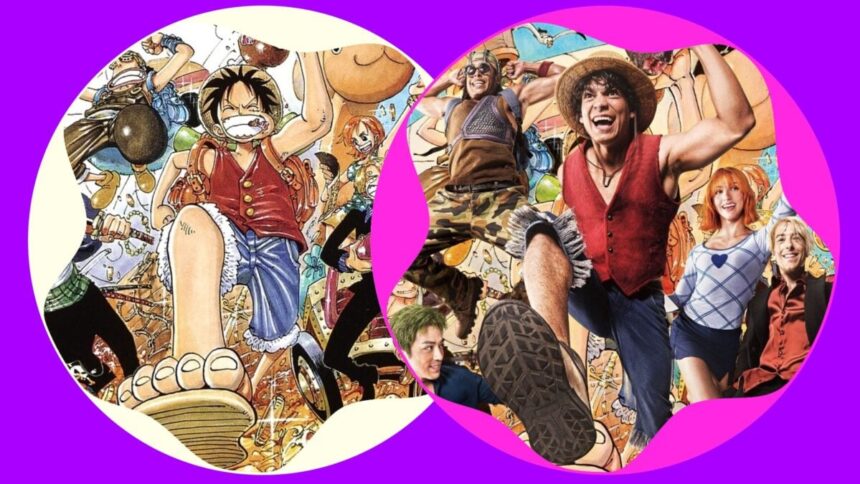
The One Piece live-action series is back, and, surprise, surprise, its second season is even better than its first. With a third season already in production, it’d be downright gluttonous to expect Netflix’s unicorn of a series to adapt everything and catch up with its manga and anime. Regardless, producer Tomorrow Studios has built some savvy future-proofing into the show’s production that can be read either as insurance in case the show never reaches a good stopping point or as a promise that it plans to adapt as much of the long-running shonen epic as it can.
A long-held key ingredient to One Piece‘s prior unheard-of success, “breaking the live-action curse,” is that series creator Eiichiro Oda plays a huge hand in the series’ development alongside super-fan showrunners like former co-showrunner Matt Owens. Because of this, the show has been able to replicate the series’s uncanny knack of foreshadowing major developments for Iñaki Godoy’s Luffy and his Straw Hat pirates that won’t be important until hundreds of chapters or episodes later.
This manifested in the first season, with the series wasting no time revealing that Admiral Garp is Luffy’s grandpa, giving both newbie and longtime fans some drama to chew on early on that would otherwise not be explored until much later in the series.
Season two takes advantage of its hindsight over the entirety of One Piece thus far—and nuggets of information that Oda’s still scribing—to even further extremes with more Easter eggs and cameos.
Much of Into The Grand Line‘s big to-do is its surprising number of cameos. Among them are appearances from Luffy’s other play brother, Sabo, and his biggest fan, Bartolomeo, in Loguetown in the premiere episode. Their appearances came as a huge shock to fans, considering that the former’s first official appearance is in the manga’s 583rd chapter and 494th episode, while the latter’s first official appearance is in the 705th chapter and 633rd episode.
Their early appearances in the show’s canon make a lot of sense because their debuts in both iterations reveal that they were in Loguetown with the Straw Hats the entire time. Though the show takes a more hands-on approach, it remixes the course of events to make fan-favorite character Bartolomeo’s involvement more prominent by having him team up with Luffy against Luffy’s biggest hater, Buggy the Clown.
Other cameos included the appearance of the Straw Hat’s future crew member, Brook. While a vocal minority of fans were surprised that his appearance and portrayal by actor Martial T. Batchamen confirmed what many already knew to be true (that he’s Black), others were scratching their heads about why he made an appearance so early.
Like the aforementioned duo, Brook isn’t due to make an appearance until the low-key slept-on One Piece arc, Thriller Bark. While yes, the arc and Brook’s appearance take place roughly 340 chapters and 240 episodes from what the show is adapting, Brook’s cameo is also far from being out of place. And that’s because his origin story is tied to Laboon, the blue whale that Luffy and crew meet at Reverse Mountain on the first leg of their journey into the Grand Line.
This right here is what I’m talking about
This show has had the luck of having 20 years of source material to pull from. Little things like this are so satisfying. https://t.co/2wliyDgD6K
— Hernandy D. Morales (@hernandy_s) March 10, 2026
While these cameos are the biggest ways the show is future-proofing itself, it also does so in smaller, yet impactful, ways. Key among them is Crocus’ mention of Laughing Tale, which means nothing to viewers seeing the show for the first time but is a major reveal in late-stage One Piece.
Other foreshadowing elements that are both subtle and significant include Gol D. Roger’s conversation with Garp about his son, Sanji’s telling Nami about his mother, and the statues of Nika and Loki being showcased well before their prominence in the manga’s current arc, Elbaph. Hell, the show is even jam-packed this season with ships (of the romantic kind), deep-seated fan theories, and deep-pull character references to add to its embarrassment of riches. Essentially, the show is revealing all its cards to both new and longtime fans by including all known series context, making the viewing experience feel more complete.
Okay, all of this is well and good in a vacuum, but it also gives off the uneasy sense of a show quietly covering its bases in case it never gets to adapt the full breadth of its source material. Of course, the series continues to do gangbusters for Netflix—punching through the ceiling and raising the bar for every adaptation that follows—but the question lingering in the background is whether all of this future-proof flourishing is the kind of contingency planning most shows deploy and whether One Piece is doing the same.
Barring the season three confirmation, Netflix is wont to cut a show’s momentum from underneath it around the season two mark, after all. So you can’t blame a show for being cautious, even if it’s been buoyed with the mandate from heaven as the rare live-action adaptation that actually works. Thankfully, one case member has already let slip that he’s spoken with Oda about where the story might end.
In a cast interview with the Movie Podcast, Zoro actor Mackenyu revealed that Oda once told him his lofty plans for the live-action series.
“He has a vision to where he wants us to take the live action to,” he said, correcting the finality of his previously phrased response about where Oda wants the series to “end.”
According to Mackenyu, he and the rest of the core cast have known about it since the show’s first season, which helped his portrayal of Zoro a lot. Though the rest of the cast went stone-faced like Marvel actors revealing too much, motioning Mackenyu to stop while he was ahead.
“There’s a specific arc he wants us to go up to before we’re 50,” Mackenyu said.
The identity of the arc Mackenyu alluded to is already being debated among fans while they juggle treasure hunting for the One Piece itself. However, the prevailing theory is that the show will end at the series’ Return to Sabaody arc, which makes the most sense. It sees the crew reunite after splitting apart in a post-timeskip arc. After doing some training, they take to the Grand Line once more to resume their search for the One Piece. It’s an arc so beloved that it served as the backdrop to the anime’s special feature, One Piece Fan Letter. It would also make a lot of sense, since it would allow live-action-only viewers from the Netflix series to finally take off their training wheels and either read the manga or watch the anime.
For you see, the real goal for us One Piece fans is simple: we want the live-action series to be the entry point for people who swore they’d never watch it because of its intimidating length. Knowing that Oda has a plan for how the series will end, along with new ways to watch it, like the anime remake and the women-led spin-off, means that anyone’s long-standing hesitation will have new ways to experience what fans have been talking about for the past 30 years.
Want more io9 news? Check out when to expect the latest Marvel, Star Wars, and Star Trek releases, what’s next for the DC Universe on film and TV, and everything you need to know about the future of Doctor Who.
Read the full article here