A war between some of the biggest names in weight loss has abruptly ended in a mutually beneficial truce—one that might have major implications for the average person seeking obesity treatment.
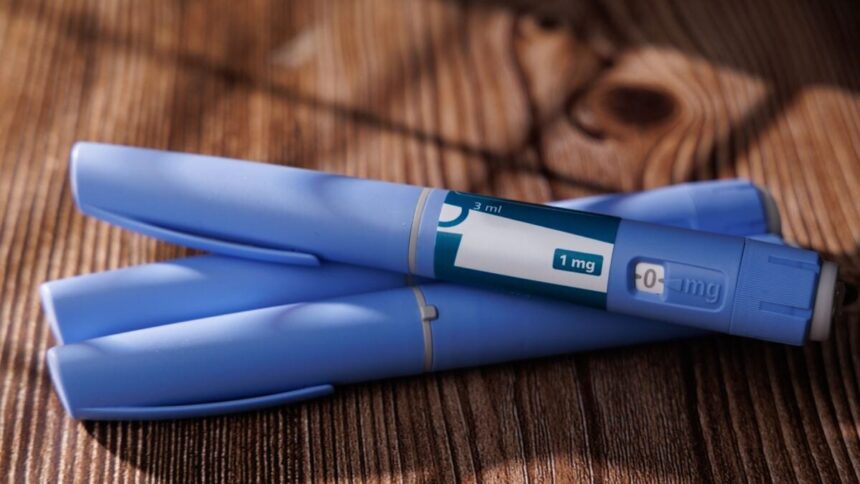
On Monday morning, Novo Nordisk, the makers of the GLP-1 drug semaglutide (Ozempic and Wegovy), and Hims & Hers Health Inc. jointly announced a ceasefire to their growing hostilities via a new partnership. Hims will now sell Ozempic and Wegovy at a discounted rate, while Novo Nordisk has terminated its lawsuit against the telehealth company. The deal will not only affect how Hims customers access these drugs moving forward but could also help substantially undercut the gray market surrounding compounded GLP-1s and possibly other peptides.
The weight loss war
The initial scuffle between Novo Nordisk and Hims had boiled over into a full-on conflict.
Last June, the pharmaceutical company ended its original partnership with Hims after it accused Hims of continuing to mass market compounded GLP-1 products that mimicked its blockbuster weight loss drugs. In early February, Hims took the fight to another level when it announced that it was launching the sale of a compounded semaglutide pill, one clearly meant to compete with Novo Nordisk’s recently approved Wegovy pill.
In response, Novo announced it was filing a patent lawsuit against Hims over its distribution and marketing of compounded GLP-1 products, while the federal government was none too pleased. The Food and Drug Administration issued a statement that it would go after any company attempting to bypass FDA regulations by making and distributing compounded GLP-1 copycats. By the weekend, Hims backed down and stated it would pull the GLP-1 pill, following “constructive conversations with stakeholders across the industry.”
But all that strife appears to be in the past.
Under the terms of its new agreement, Hims will officially stop advertising its compounded GLP-1s to customers, while current patients “will have the opportunity to transition to FDA-approved medicines,” the company stated Monday. It anticipates that a “limited” number of customers with specialized needs will still have access to compounded products if deemed appropriate by a doctor.
In exchange, Hims will now sell Ozempic and Wegovy at the same rate offered directly by Novo Nordisk or its other partner telehealth companies. Though the insurance coverage of GLP-1s remains spotty, Novo and Eli Lilly (makers of tirzepatide, the other major GLP-1 on the market) have steadily lowered the out-of-pocket cost of their drugs, particularly this year. Today, a person can buy the Wegovy pill at an introductory price as low as $149 per month, with subsequent costs rising to $299 per month (Wegovy’s initial list price was around $1,400 a month).
Novo is also ending its patent litigation against Hims, though the company noted that it reserves the right to refile in the future if needed.
What this means for compounded GLP-1s and peptides
Compounded GLP-1s have been in murky legal terrain for some time now. Compounded pharmacies are permitted to create and distribute copycat drugs under certain circumstances, such as a product shortage. These shortages have long since ended for semaglutide and tirzepatide, however, and both the FDA and Novo/Eli Lilly have sought to crack down on pharmacies widely making and selling these drugs.
Though Hims was far from the only company brazenly selling compounded GLP-1s to the public, it was arguably the most well-known one. And given the abrupt about-face from Hims, this partnership could very well accelerate the beginning of the end for this cottage industry. Just last week, the FDA announced that it issued warning letters to 30 telehealth companies for the illegal marketing of compounded GLP-1s. The recent price drops from GLP-1 makers have also allowed people to buy approved GLP-1s at a comparable (if still possibly higher) cost to compounded versions.
There have been some mixed signals from the federal government on compounded peptides in general, however. Late last month, Health Secretary Robert F. Kennedy Jr. declared he will soon direct the FDA to remove at least 14 peptides from a compounding ban list, allowing them to be produced by these specialty pharmacies (this list does not include any GLP-1s). Meanwhile, one of the largest gray market distributors of peptides, Peptide Sciences, announced this month that it would close down for good. Peptides Sciences was known for selling peptides as “research chemicals,” an even shadier and arguably less safe means of peptide procurement than compounding pharmacies.
All these rapid developments seem to point to a complex marketplace for these drugs moving forward: one where certain, largely untested, peptides can be bought easily enough from compounding pharmacies, but not copycats of approved GLP-1s.
As for why the government is making this distinction, who can say for sure? But it’s notable that GLP-1s have become one of the largest blockbuster drugs to ever exist. And even if Novo and Eli Lilly have been pressured into selling their products for less, it’s obviously more profitable if customers buy their official version through Hims or other telehealth shops than a compounded GLP-1.
The era of compounded GLP-1s could be drawing to a close, but for many people hunting for a bargain on their obesity treatment, that might not make much difference any longer.
Read the full article here