
By using this site, you agree to the Privacy Policy and Terms of Use.
Accept
Tech Consumer JournalTech Consumer JournalTech Consumer Journal
  • News
  • Phones
  • Tablets
  • Wearable
  • Home Tech
  • Streaming
  • More Articles
Reading: NASA’s Swift Is Doomed to a Fiery Death After Rescue Mission Fails
Share
Sign In
Notification Show More
Font ResizerAa
Tech Consumer JournalTech Consumer Journal
Font ResizerAa
  • News
  • Phones
  • Tablets
  • Wearable
  • Home Tech
  • Streaming
  • More Articles
Search
  • News
  • Phones
  • Tablets
  • Wearable
  • Home Tech
  • Streaming
  • More Articles
Have an existing account? Sign In
Follow US
  • Contact
  • Blog
  • Complaint
  • Advertise
© 2022 Foxiz News Network. Ruby Design Company. All Rights Reserved.
Tech Consumer Journal > News > NASA’s Swift Is Doomed to a Fiery Death After Rescue Mission Fails
News

NASA’s Swift Is Doomed to a Fiery Death After Rescue Mission Fails

News Room
Last updated: August 20, 2026 3:03 pm
News Room
Share
SHARE

NASA has reluctantly called off a mission designed to nudge one of its telescopes to a higher orbit after a private rescue spacecraft failed to shake off an issue with its attitude control.

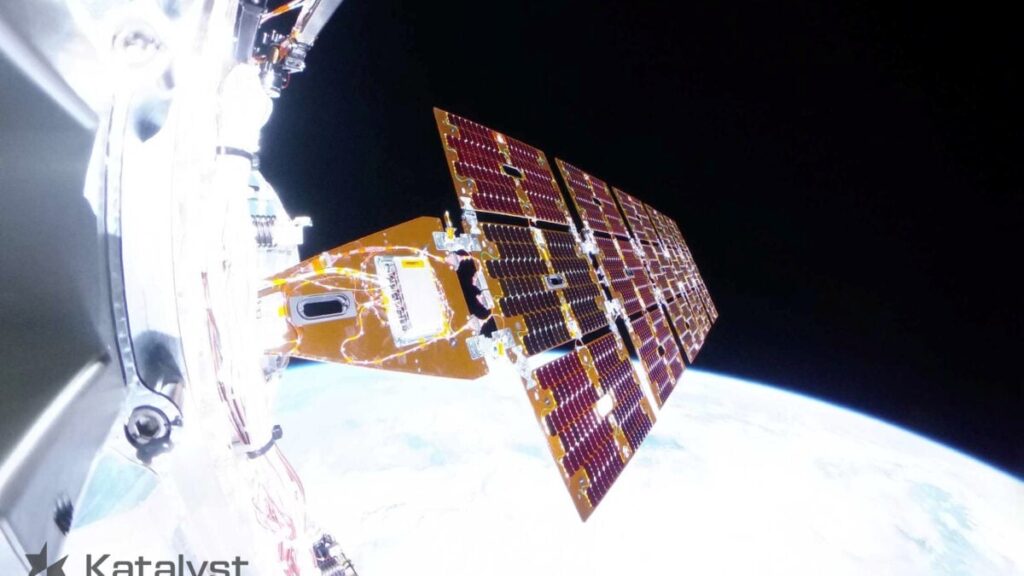
LINK, the servicing spacecraft developed by contractor Katalyst Space Technologies, experienced issues with attitude control in late July that caused it to spin uncontrollably in orbit. Last week, it looked like the company may have found a fix but a recent update from NASA has squashed all hope once and for all.

“Due to an ongoing commercial spacecraft attitude control issue, NASA and Katalyst Space announced Wednesday the LINK spacecraft will not capture or boost an agency satellite to a higher altitude to extend its science mission as planned,” NASA wrote in a statement yesterday announcing the end of the rescue operation.

“This is not the outcome we were working toward, but it does not change why this mission was worth attempting,” NASA administrator Jared Isaacman said. “The team moved with extraordinary speed to give Swift a chance to carry out more science while advancing capabilities America will need for satellite servicing in the future.”

Failed rescue

NASA’s Neil Gehrels Swift Observatory launched into low-Earth orbit on November 20, 2004 to study the most powerful explosions in the cosmos: gamma-ray bursts. Over the course of its mission, Swift gradually lost altitude due to atmospheric drag, but its orbit has been rapidly decaying due to increased solar activity and is likely to burn up in Earth’s atmosphere by the end of 2026.

In an effort to save Swift from this fiery plunge, NASA tapped Katalyst to build a spacecraft to nudge Swift to a more stable orbit.

The three-armed LINK spacecraft took off on July 3 onboard a converted Lockheed L-1011 aircraft from Kwajalein Atoll in the South Pacific. LINK was then launched into space from an altitude of 7.6 miles (12.2 kilometers) using a Northrop Grumman Pegasus XL rocket.

The mission was going well until LINK began experiencing some issues with its attitude control when two of the spacecraft’s three reaction wheels failed. Reaction wheels control a spacecraft’s orientation and stabilize its rotation using electric motors to discharge momentum. While the spacecraft’s other systems remained healthy, the failure caused LINK to tumble while in orbit and resulted in sporadic communications.

False hope

Katalyst’s team of engineers were racing against the clock to try and repair the spacecraft’s issues in time for it to rendezvous with the Swift observatory. Last week, there was some hope for the mission after engineers uploaded a flight software update for LINK, which was designed to stabilize the spacecraft so that it can continue its approach toward Swift. Now, it seems as though that wasn’t enough to fix the spacecraft’s attitude control issues.

NASA may have given up on its attempt to rescue Swift, but the agency will still use the LINK spacecraft to inform future servicing missions. “LINK still will attempt to conduct rendezvous and proximity operations with NASA’s Neil Gehrels Swift Observatory to demonstrate key capabilities for the future of space exploration,” the agency wrote.

Read the full article here

You Might Also Like

The Best Tech and Gear for Back to School 2026

The Creepy ‘Never After Dark’ Trailer Might Keep You Up at Night

Darth Vader Speaks at City Council Meeting

DOJ Throws Support Behind xAI’s Fight Against Minnesota AI Nudification Ban

This Robot Vacuum Has a Brush and Mop Pad That Can Reach Places Others Can’t

Share This Article
Facebook Twitter Copy Link Print
Previous Article This Robot Vacuum Has a Brush and Mop Pad That Can Reach Places Others Can’t
Next Article DOJ Throws Support Behind xAI’s Fight Against Minnesota AI Nudification Ban
Leave a comment

Leave a Reply Cancel reply

Your email address will not be published. Required fields are marked *

Stay Connected

248.1kLike
69.1kFollow
134kPin
54.3kFollow

Latest News

SpaceX Finally Recovers Starship After 24 Days of Tugging It Through Rough Waters
News
‘The Odyssey’ Is Now the Highest-Grossing R-Rated Film of All Time
News
This Electric Shock Glove Was Invented for Police in the 1930s to ‘Incite Fear’
News
OpenAI’s CFO Reportedly Downplays Importance of IPO to Staff
News
Mars’ Potato-Shaped Moon May Have Gotten Its Youthful Look From a Single Impact
News
Don’t Panic, the Pixel Watch 1 Isn’t Losing Google Health Support
News
People Scalping Movie Tickets Sucks, but Don’t Be Too Worried
News
FBI Warns That Hackers Are Targeting Siemens Equipment Amid Recent Water Plant Breaches
News

You Might also Like

News

An ‘Exercise Pill’ Just Cleared Its First Human Test

News Room News Room 5 Min Read
News

New NASA Images Reveal Crater Left Behind by SpaceX Rocket Impact on the Moon

News Room News Room 4 Min Read
News

What If This Was How You Found Out The Singularity Has Begun?

News Room News Room 3 Min Read
Tech Consumer JournalTech Consumer Journal
Follow US
2024 © Prices.com LLC. All Rights Reserved.
  • Privacy Policy
  • Terms of use
  • For Advertisers
  • Contact
Welcome Back!

Sign in to your account

Username or Email Address
Password

Lost your password?