NASA’s leadership is shaking things up, announcing a series of major changes aimed at keeping the agency on track for establishing a human presence on the Moon while getting rid of dead weight.
During a full-day event on Tuesday, NASA Administrator Jared Isaacman revealed a number of drastic alterations to the agency’s Artemis Moon program, with a strong focus on building a lunar base within the next decade while putting Lunar Gateway on an indefinite hold. The recent announcement wasn’t all Moon-related; the agency also revealed its plans to launch a nuclear-powered mission to Mars and scrap its ongoing initiative to fund a commercial replacement to the International Space Station (ISS).
The event, titled Ignition, packed a lot of exciting new details that laid out NASA’s vision for the future. Here’s a breakdown of what the agency has in store.
Locked in for Artemis
NASA is gearing up for the launch of the Artemis 2 mission, sending a crewed spacecraft to the Moon for the first time in more than 50 years. It’s safe to say the agency currently has tunnel vision for Artemis, hoping to stay ahead in the new space race.
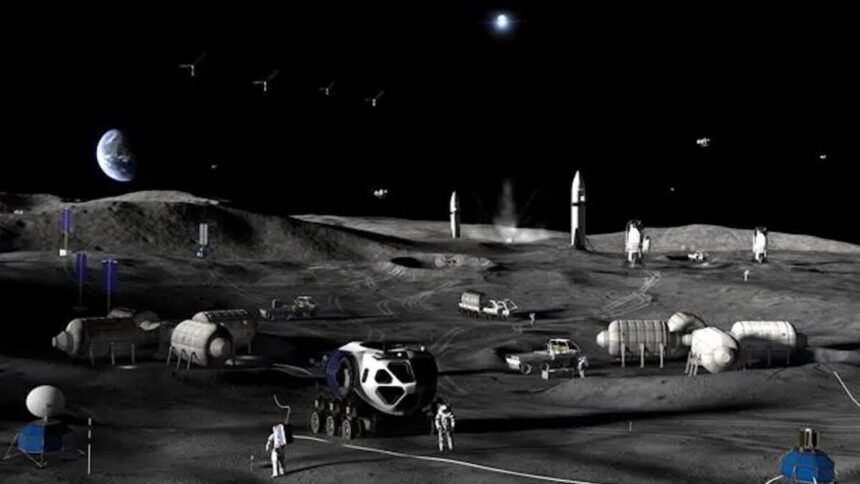
The most significant highlight of the recent updates is the plan to construct a permanent base on the Moon. NASA intends to launch uncrewed missions to the Moon on a regular basis to lay down the infrastructure for the lunar base, starting with two missions planned for later this year. By next year, the agency wants to speed things up with 10 missions planned for 2027 and 12 planned for 2028.
The upcoming missions will be part of NASA’s Commercial Lunar Payload Services (CLPS) initiative, with the agency relying on its commercial partners to deliver its payloads to the Moon’s surface. With all those regular trips planned for the Moon, NASA’s canceled VIPER rover will finally get a chance to land on the lunar surface in 2027 as part of an upcoming Blue Origin mission. The private lunar landers are also meant to deliver four drones, named MoonFall, designed to hop across the Moon’s surface and survey hard-to-reach areas.
After launching the initial batch of payloads, NASA is aiming to secure a spot on the Moon to build its base and establish a semi-habitable infrastructure by 2032. The final phase of NASA’s plan will run from 2032 to 2036; that’s when the agency hopes to establish habitats for long-duration human missions on the lunar surface.
Goodbye Gateway
The focus on building a lunar base will come at a price, with the space agency axing the ambitious Lunar Gateway and repurposing some of its parts. Lunar Gateway was meant to be launched into a near rectilinear halo orbit around the Moon to serve as an orbital outpost for astronauts. For now, NASA is opting to focus on missions to the lunar surface.
“It should not really surprise anyone that we are pausing Gateway in its current form and focusing on infrastructure that supports sustained operations on the lunar surface,” Isaacman said during the event.
The recent changes to Artemis build on an earlier announcement that signaled a major revamp of the Moon program. In late February, Isaacman revealed NASA’s plan to launch an additional mission in 2027 to attempt a rendezvous between the Orion spacecraft and commercial landers in Earth orbit before using them to land astronauts on the Moon.
NASA will now attempt to land astronauts on the Moon in 2028 and possibly even do it twice that same year with the Artemis 4 and 5 missions, respectively. The accelerated timeline for astronaut missions goes hand in hand with establishing a human habitat on the Moon and explains why Gateway got the boot for now.
“While I do believe an orbiting outpost has value in our overall exploration goals, this doesn’t mean that we can’t do it later,” Carlos Garcia-Galan, former deputy manager of the Gateway program, who now serves as program executive for NASA’s Moon Base program, said during the event. “We need to be focused on the surface, and everyone wants to be on the surface.”
Beyond the Moon
Despite all that Moon talk, NASA still has room to focus on exploring Mars. The agency announced plans to launch the first nuclear-powered spacecraft to the Red Planet by 2028 to demonstrate fission power for interplanetary missions.
Once it reaches Mars, the Space Reactor‑1 Freedom spacecraft will deploy a fleet of helicopters to explore the Martian terrain. The Skyfall mission is inspired by Ingenuity, the first helicopter to fly on another planet.
Instead of one scrappy chopper, Skyfall would deploy six small helicopters to the Red Planet using a single entry capsule, with each helicopter landing independently on the Martian surface. The next-generation Mars helicopter is designed to pave the way for a future human landing on the neighboring planet.
Don’t forget about LEO
While NASA is focused on establishing a presence on the Moon’s surface, the agency reaffirmed its commitment to maintaining a human presence in low-Earth orbit. It’s just not quite clear yet how it’s going to work.
NASA and its international partners are planning to retire the ISS by 2030, sending the space station to a fiery death through Earth’s atmosphere, where most of it will burn up from the heat of reentry. The agency created its Commercial Low Earth Orbit Destinations (CLD) program in 2021 as a public-private partnership to develop a replacement for the ISS.
During Tuesday’s event, NASA officials admitted that their planned transition to commercial space stations is nearly impossible to achieve. “We can’t entertain fiction on what that approach may be; it has to be grounded in reality,” NASA Associate Administrator Amit Kshatriya said during the event. “An operational campaign of this complexity, that took the allied governments of the world 30 years to maintain, is not something that exists native in industry.”
Under CLD, NASA would allocate funding to one or two companies to build their space stations in orbit. “In the absence of a mature market and the current budget we’ve been allocated, we cannot fund a path to two stations. It’s a challenge to even fund one,” Kshatriya added. “We cannot continue to maintain the illusion that the path that we’re on is going to close.”
As a result, NASA is shutting down its CLD program in its current form and seeking a new strategy. The agency plans to have companies attach commercial modules to the ISS to develop technical and operational capabilities in low-Earth orbit. Once the demand emerges for commercial space stations, the modules can then detach from the ISS and enter into free flight to go their own way.
With hopes of building a private space station gone, the ISS may stick around a little bit longer. Earlier this month, the U.S. Senate advanced a revised version of a NASA authorization bill, which would delay the retirement of the ISS from 2030 to 2032.
Read the full article here