The human body is a complex machine that’s been fine-tuned—through millions of years of evolution—to operate here on Earth. So what happens to that machine when you put it inside a box and fling it far beyond the safety of our planet’s atmosphere?
This, in vastly oversimplified terms, is the question that biomedical researchers at NASA have been asking for decades. These scientists study the health impacts of spaceflight to develop methods that protect astronauts’ bodies and minds, using ground research facilities, analog environments, and the International Space Station to conduct cutting-edge studies.
Now that NASA is finally sending humans back to the Moon, these scientists are preparing for the research opportunity of a lifetime.
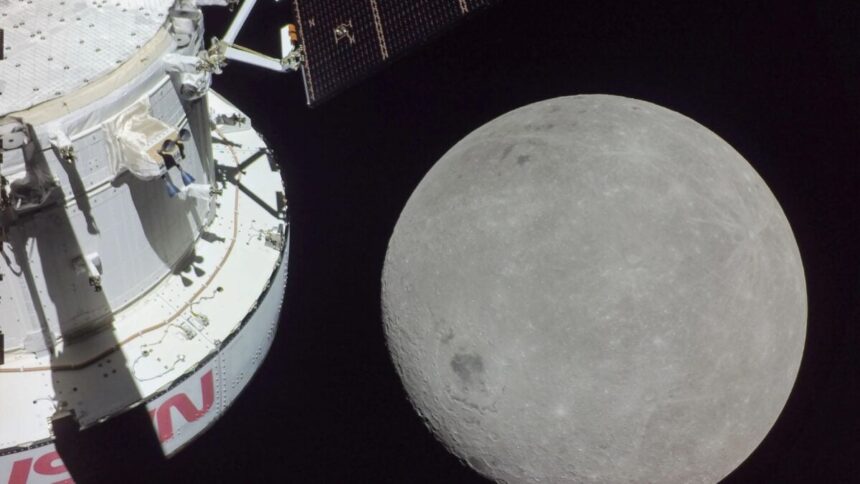
The Artemis 2 mission will send NASA astronauts Reid Wiseman, Victor Glover, Christina Koch, and Canadian Space Agency astronaut Jeremy Hansen farther from Earth than any human has gone before. During their 10-day flight around the Moon, they will encounter high levels of space radiation and reach a maximum distance of 250,000 miles from Earth. The mission is currently on track to launch as early as the first week of February.
“I often talk about the most complicated system on this vehicle is going to be the human,” Steven Platts, chief scientist of the Human Research Program at NASA’s Johnson Space Center, told Gizmodo. “We need to understand exactly what’s going to happen in order to prevent anything bad from happening and keep them safe and healthy.”
The hazards of deep spaceflight
If Platts and his colleagues have learned anything from their decades of research, it’s that spaceflight puts a lot of strain on the human body. He explained that there are five primary health hazards associated with spaceflight: radiation, isolation and confinement, distance from Earth, gravity (or lack thereof), and hostile, confined environments.
These hazards manifest differently depending on the mission profile, Platts said. The Artemis 2 crew will spend a far shorter period of time in microgravity than astronauts on standard ISS missions, for example. Still, 10 days is long enough to trigger certain physiological changes, such as fluid shifts and vestibular disruption.
When it comes to radiation, the Artemis 2 astronauts will get a much higher daily dose than those aboard the ISS. They will travel through the Van Allen belts—two donut-shaped zones of particle radiation trapped inside Earth’s magnetic field—and then enter the galactic cosmic radiation environment beyond the magnetic field.
The Orion spacecraft—which will carry the Artemis 2 astronauts on this journey—is designed to shield its crew from most of this radiation, but measuring how much breaks through and how human cells and DNA respond to it is crucial.
Galactic cosmic radiation can be particularly damaging. When looking at individual cells that have been exposed to these high-energy particles, “you can literally see the tracks that the radiation makes through the cell and the damage that it creates,” Platts said.
Orion is equipped with thousands of sensors that will measure radiation levels inside the spacecraft. Each crew member will also carry a sensor called a Crew Active Dosimeter in their pockets to closely monitor their exposure levels.
Understanding how the human body responds to the unique hazards of the deep space environment will be essential to future lunar landings and Mars missions. Artemis 2 will investigate this in several different ways.
Turning astronauts into living science experiments
During this mission, crew members will act as both researchers and test subjects, gathering data that will help NASA build interventions, protocols, and preventative measures to protect astronaut health. One study, called ARCHeR (Artemis Research for Crew Health and Readiness), will investigate how the deep space environment affects sleep, stress, cognition, and teamwork, all of which are key to astronaut health and performance.
Participating crew members will wear wristbands that continuously monitor their movement and sleep patterns throughout the mission. This data will support real-time health monitoring and safety assessments, while pre- and post-flight evaluations will provide insight into any cognitive, behavioral, and sleep quality changes.
The Artemis 2 astronauts will also provide wet saliva samples before and after the mission, as well as dry saliva samples during the mission. While in flight, they will blot their saliva onto a special type of paper in pocket-sized booklets, eliminating the need for a wet-sample refrigeration system on board the Orion spacecraft.
Saliva is an excellent indicator of human health, as it contains a rich mixture of biomarkers that signal immune system function. “We can see hormones, we can see viruses, we can see other chemicals in the blood… And with this technique, we can see changes in cortisol,” Platts said. Measuring how this stress hormone fluctuates over the course of the mission will be critical, as stress is linked to many of the adverse health outcomes of spaceflight, he explained.
These aren’t the only biological samples NASA will collect from the Artemis 2 crew, however. They will be the first astronauts in deep space to participate in the Spaceflight Standard Measures study, which has been collecting blood, urine, and saliva samples from astronauts aboard the ISS and elsewhere since 2018. These samples help researchers evaluate astronauts’ nutritional status, cardiovascular health, and immunological function.
Then there’s the AVATAR, the most groundbreaking biomedical study flying aboard Artemis 2. Short for “A Virtual Astronaut Tissue Analog Response,” AVATAR involves USB-sized “organ chips” that contain living human cells cultured inside microscopic, fluid-filled channels. These chips are designed to simulate the structure, function, and physiological responses of human organs.
To make them, the Artemis 2 astronauts first donated blood platelets to a local healthcare system. The cells remaining from their samples contained a small amount of bone marrow-derived stem cells, which NASA researchers then purified and placed into the chips next to blood vessel cells and other supporting cells.
“The chip will function essentially like our bone marrow does,” Platts explained. Flying these chips on the Artemis 2 mission—alongside the astronauts who created them—will allow NASA scientists to compare changes in the chip to changes in the astronauts’ actual bone marrow.
“Imagine future flights,” Platts said. “If I’m going to fly in two years, [NASA] can fly a tissue chip of me—my avatar—ahead of time and then bring it back and see what’s going to happen so that they can design the countermeasures for me, for my personal use.” Artemis 2 will be the first mission to fly with this biotechnology.
Together, these studies will produce a wealth of data, helping to pave the way for NASA’s return to the lunar surface and extend humanity’s reach deeper into the solar system. “It’s just amazing how many things we’re going to be able to find out just from this one mission,” Platts said.
Read the full article here