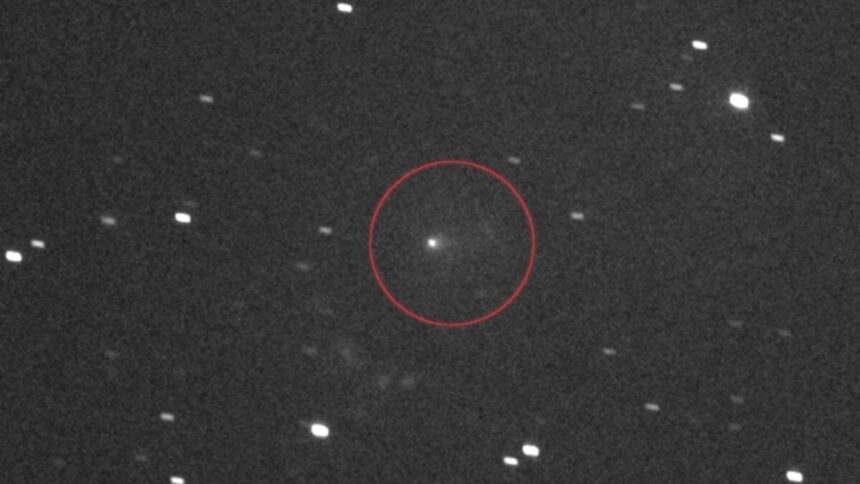
Interstellar comet 3I/ATLAS has spent the last several months on a tour of our solar system. NASA spacecraft and telescopes have snapped photos of this celestial visitor over the course of its journey, and after weeks of anticipation, the agency has finally unveiled these never-before-seen images.
During a press conference held at NASA’s Goddard Space Flight Center in Greenbelt, Maryland, on Wednesday, agency scientists showcased some of the best images of 3I/ATLAS yet, captured by various space-based NASA missions, including the Mars Reconnaissance Orbiter, the Lucy spacecraft, and even the Perseverance Mars Rover, among others.
“NASA’s science team has kept watch on 3I/ATLAS for nearly its entire journey through the solar system for the first time ever,” Nicky Fox, associate administrator of NASA’s Science Mission Directorate, said during the briefing. “There will be more opportunities to observe this comet as it continues its journey through the solar system, passing the orbit of Jupiter in spring of 2026.”
3I/ATLAS’s journey in photos
Ever since the ATLAS (Asteroid Terrestrial-impact Last Alert System) observatory discovered 3I/ATLAS on July 1, this comet has captured the attention of astronomers and Kardashians alike. 3I/ATLAS hails from beyond our solar system, and it’s only the third interstellar object we’ve ever seen.
When an interstellar comet passes through our cosmic neighborhood, it grants astronomers an exceptionally rare opportunity to study a sample from a far-off star system. These objects provide direct insight into the formation, evolution, and composition of distant worlds that spacecraft can’t reach.
Once astronomers confirmed that 3I/ATLAS was interstellar, the scientific community leapt into action, using every tool at their disposal to begin unraveling this comet’s secrets. Early observations suggested 3I/ATLAS may be the oldest comet ever discovered and that it’s larger and faster than both of the two previously known interstellar objects.
As 3I/ATLAS streaked toward our Sun, observations of its growing coma and tail revealed more of its characteristics. Using the James Webb Space Telescope’s Near-Infrared Spectroscopic (NIRSpec) instrument, astronomers found evidence to suggest that 3I/ATLAS is unusually rich in carbon dioxide, indicating that it likely formed under conditions far different from those in our corner of the galaxy.
The comet disappeared from Earth’s view in late September as it became lost in the Sun’s glare. But several of NASA’s Mars spacecraft caught a glimpse of 3I/ATLAS as it flew within 19 million miles (30 million kilometers) of the Red Planet in early October.
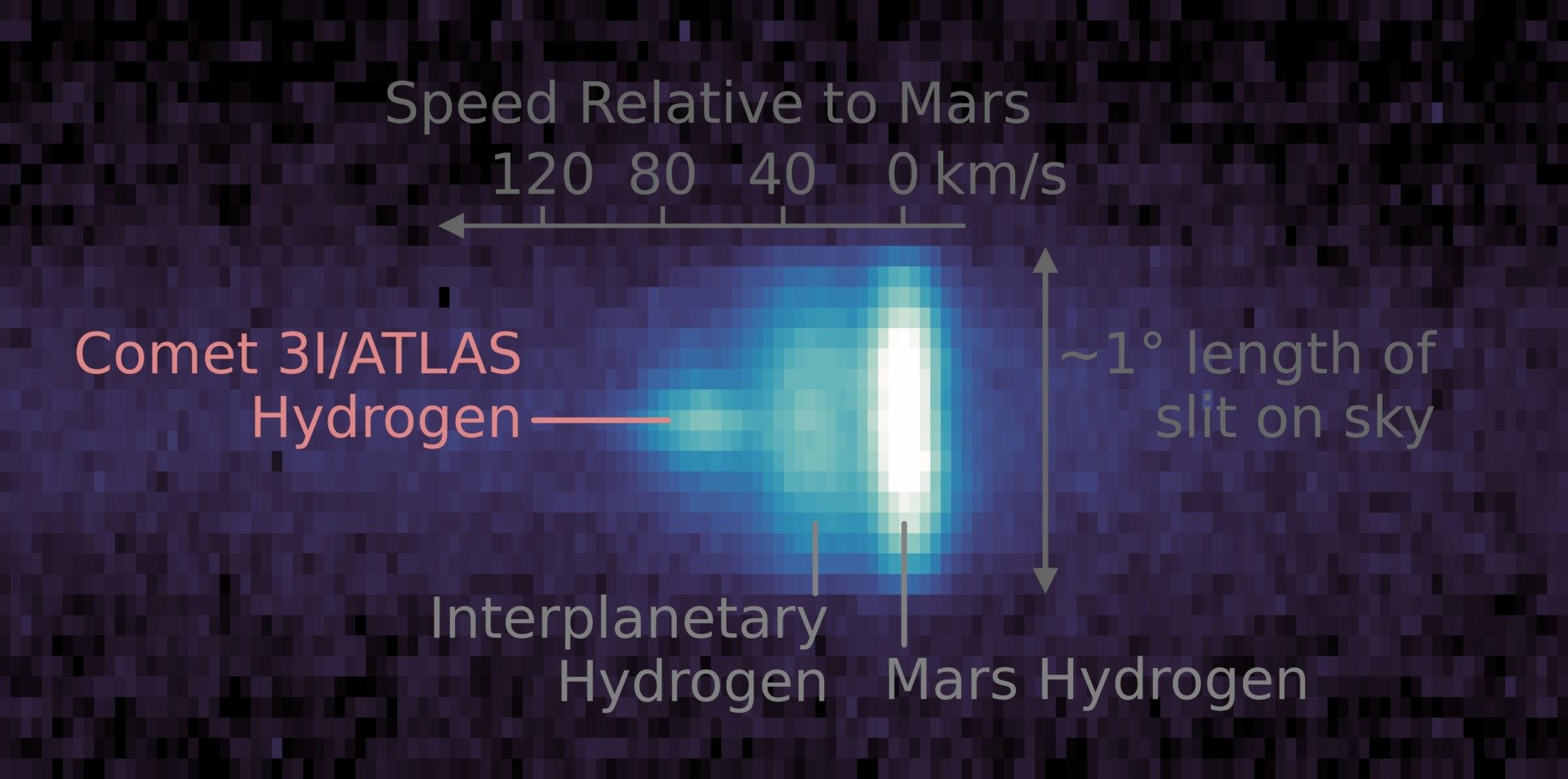
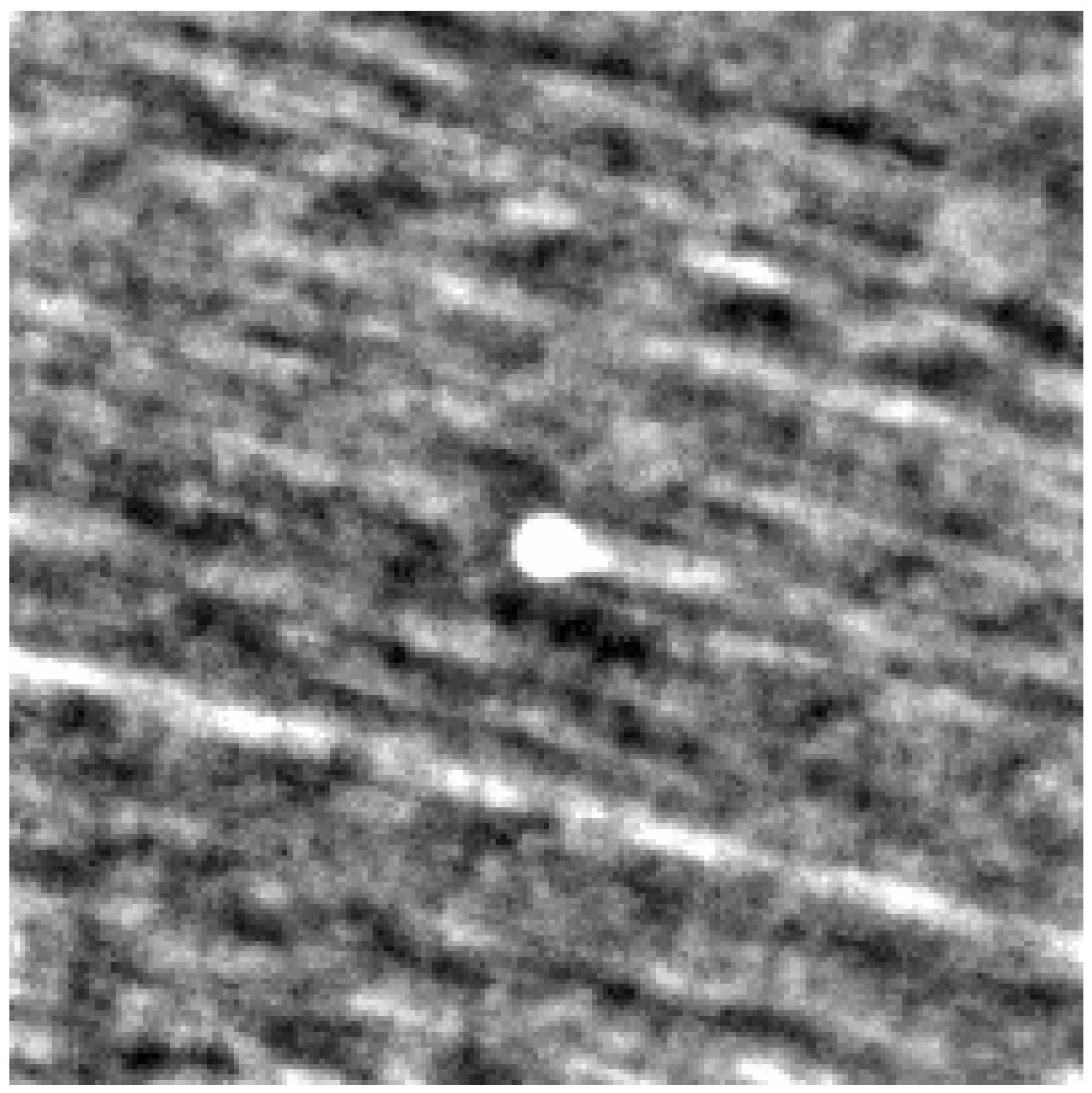
That fly-by produced some of the images NASA shared today, including the one above, captured by the MAVEN (Mars Atmosphere and Volatile EvolutioN) spacecraft. It shows 3I/ATLAS’s ultraviolet emissions split into three different bands—or wavelengths—corresponding to different elements that make up its composition. The image below, captured by the Mars Reconnaissance Orbiter, shows off the comet’s fuzzy coma. 3I/ATLAS’s Mars approach not only led to these new images but also helped astronomers to refine the comet’s location and trajectory.
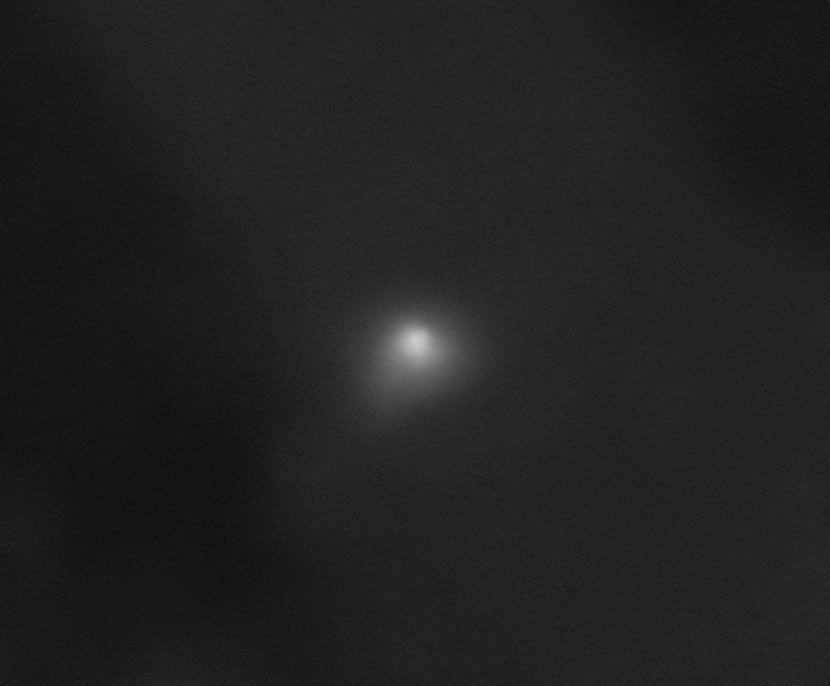
After 3I/ATLAS passed by Mars, the SOHO (Solar and Heliospheric Observatory) spacecraft imaged the comet between October 15 and 16. SOHO spotted the comet from roughly 222 million miles (357 million kilometers) away. At such a great distance, astronomers did not expect the spacecraft to be able to see 3I/ATLAS, but the image below was made using detailed image stacking of subsequent telescope images.
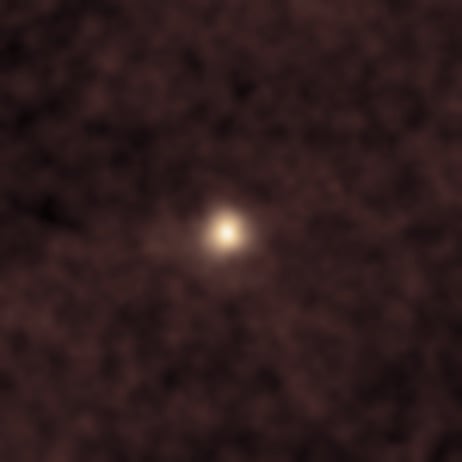
3I/ATLAS reached perihelion—its closest point to the Sun—at the end of October. The comet swung behind our home star and emerged earlier this month. It’s now visible from Earth once again, and skywatchers with backyard telescopes will be able to see 3I/ATLAS in the pre-dawn sky until spring 2026, according to NASA.
What’s next for 3I/ATLAS?
3I/ATLAS will make its closest approach to Earth on December 19, coming within 170 million miles (273 million kilometers) of our planet. This proximity will allow ground-based telescopes to make their most detailed observations of 3I/ATLAS yet—and hopefully produce another batch of stunning images.
On its way out of the solar system, 3I/ATLAS will also make an even closer approach to Jupiter in March 2026. Astronomers have proposed adjusting the trajectory of NASA’s Juno spacecraft—which has been orbiting Jupiter since 2016—to intercept the comet’s path. Juno’s suite of instruments could reveal new details about 3I/ATLAS’s composition, helping us better understand the conditions of the system it originated from.
After its Jupiter flyby, it won’t be long before 3I/ATLAS leaves our solar system for good. But even as it fades into the distance, this interstellar comet will leave behind a treasure trove of data that astronomers will be sifting through for years to come.
Read the full article here