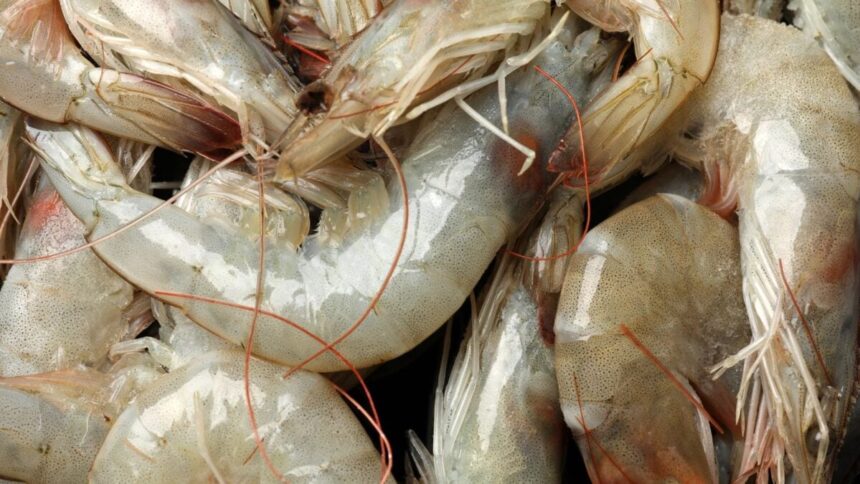
A virus plaguing shrimp and other seafood might also be responsible for an emerging eye disease in people that can cause permanent blindness, recent research suggests.
Scientists in China have linked the covert mortality nodavirus (CMNV) to cases of a condition known as persistent ocular hypertension viral anterior uveitis, or POH-VAU. They found evidence of the virus in the eye tissues of people with POH-VAU, many of whom reported recent exposure to raw seafood or marine animals; they also found that CMNV could cause similar eye symptoms in infected mice. If confirmed, CMNV would appear to be the first virus native to aquatic life tied to an eye disease in people—one that could become a growing health concern, the researchers warn.
“This study reveals that an aquatic animal virus is associated with an emerging human disease,” they wrote in the paper, published late last month in the journal Nature Microbiology.
Marine blindness
POH-VAU is an emerging eye disease characterized by high intraocular pressure and inflammation of the uvea, the middle layer of the eye. Chronic or recurrent cases of viral anterior uveitis (anterior refers to the frontmost part of the uvea) are typically caused by certain herpesviruses, including the herpes simplex virus (the cause of herpes). But the study researchers have been documenting a rise of POH-VAU cases in China not linked to any of these common culprits.
Earlier research suggested that some people with POH-VAU had viral particles in their eyes that resembled CMNV, a recently discovered virus that has become a serious threat to shrimp farming operations in Asia and Australia. So the researchers wanted to study whether CMNV might indeed be causing POH-VAU.
They looked at 70 patients diagnosed with POH-VAU between January 2022 and April 2025; they also compared these patients to healthy people. As before, the researchers found viral particles similar in shape and size to CMNV in the eye tissue removed from patients as part of a surgical treatment (and none in the control group). They also found that all the patients tested positive for antibodies to CMNV, while genetic testing showed that the virus isolated from people bore a 98.96% match to CMNV samples found in aquatic animals. Lastly, when they infected mice with CMNV, the animals developed similar symptoms to those seen in humans with POH-VAU.
How worried should we be?
Obviously, more research will be needed to confirm the role of CMNV in causing POH-VAU and answer other related questions, such as its actual likelihood to cause human illness. But there is certainly reason to be worried about the implications of this discovery if it is further validated.
For starters, it would highlight that emerging zoonotic diseases—those that can jump from animals to humans—don’t just originate on land, but in the ocean as well. Secondly, while most cases (around 71%) were linked to direct contact with raw shrimp or other seafood, the researchers did identify some cases without such a clear exposure. That raises the possibility that CMNV and POH-VAU could spread between humans, though this hasn’t been confirmed.
Even if this disease is only spread through seafood, the risk could be growing. The researchers also looked at data showing CMNV has been detected in 49 aquatic species so far that live in waters throughout the world, including the Americas and Europe.
Read the full article here