Plants can be quite tough—they’ll survive forgetful caretakers, aggressive pets, and other potentially life-threatening events. Apparently, these threats don’t compare to what some plants are capable of surviving: the extreme conditions of outer space.
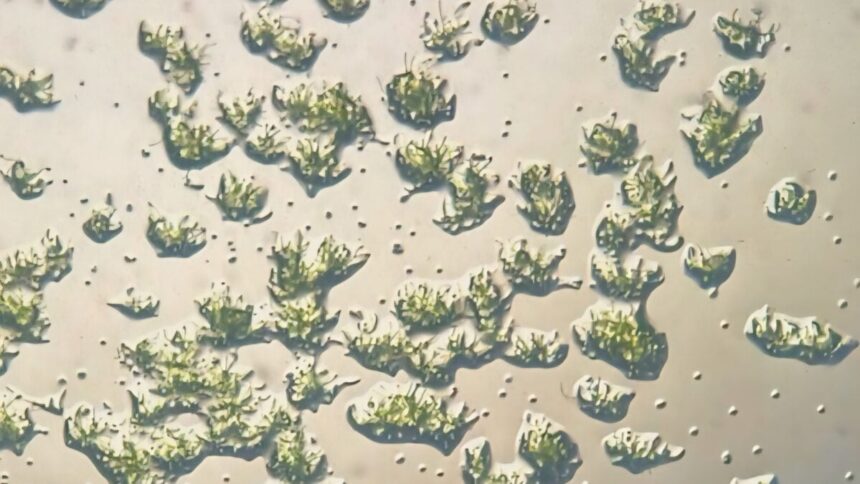
According to a new study published today in iScience, Physcomitrium patens—an extremely common moss species—can survive for 9 months outside of the International Space Station. What’s more, 80% of the moss spores came back to Earth intact and healthy enough to continue growing, breaking new ground in astrobiological research at the onset of humanity’s missions to the moon, Mars, and beyond.
“Space imposes multiple extreme stresses simultaneously, and we expected that nearly all the spores could die,” Tomomichi Fujita, study senior author and a biologist at Hokkaido University in Japan, told Gizmodo in an email. “Instead, many remained viable and apparently grew into perfectly normal plants. It also contributes to discussions about the resilience of life beyond Earth.”
Life beyond Earth
This is not the first time that researchers have tested how the extreme conditions of outer space affect Earth-born creatures. In fact, astrobiologists often recruit particularly sturdy creatures—typically microbes or other microorganisms like tardigrades—known to withstand harsh conditions on Earth. One experiment in 2005 sent lichen to space for around two weeks, whereas in 2022 researchers found cyanobacteria and fungi could withstand extraterrestrial conditions for months.
Moss, on the other hand, was already known for its remarkable survivability, being “among the earliest plants to colonize land,” and has been known to thrive in Antarctica, volcanic fields, mountain peaks, and more, Fujita explained.
“We wondered: If mosses could pioneer barren lands on early Earth, could their spores also withstand the environment of space and even contribute to future efforts to green the Moon or Mars?” Fujita mused. Physcomitrium patens was also genetically well-understood among researchers, making it the ideal species for analyzing the effects of outer space on the plant’s genetic material.
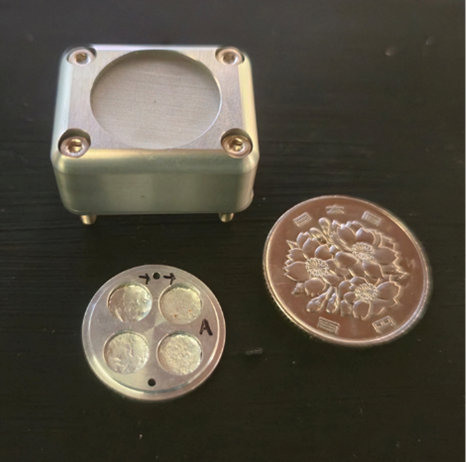
The moss, a dry, mature sporophyte—moss structures containing thousands of spores—launched to space aboard Cygnus NG-17 in early 2022 and returned to Earth in 2023, riding SpaceX’s CRS-16. Excluding brief storage periods, the moss lay exposed to space on a specially designed panel for 283 days (fun fact: that is three days less than the famous “stranded” Starliner crew from earlier this year, although these human astronauts were inside the ISS, not outside).
Moss life in space
While in space, the moss “endured vacuum, cosmic radiation, extreme temperature fluctuations, and microgravity,” Fujita explained. To put this into perspective, just the temperatures alone ranged from anywhere between -320.8 and 131 degrees Fahrenheit (-196 and 55 degrees Celsius). And so, Fujita’s team expected that “survival rates could be close to zero.”
“The biggest challenge was uncertainty,” he said. “We had no way of knowing how much damage the combined stresses of space would cause because such conditions cannot be replicated on the ground.”
To their—pleasant—surprise, they were totally wrong. Upon the moss’s return to Earth, Fujita’s team assessed the combined effects of such elements on the moss’s germination rates, growth patterns, photosynthetic activity, and cellular integrity.
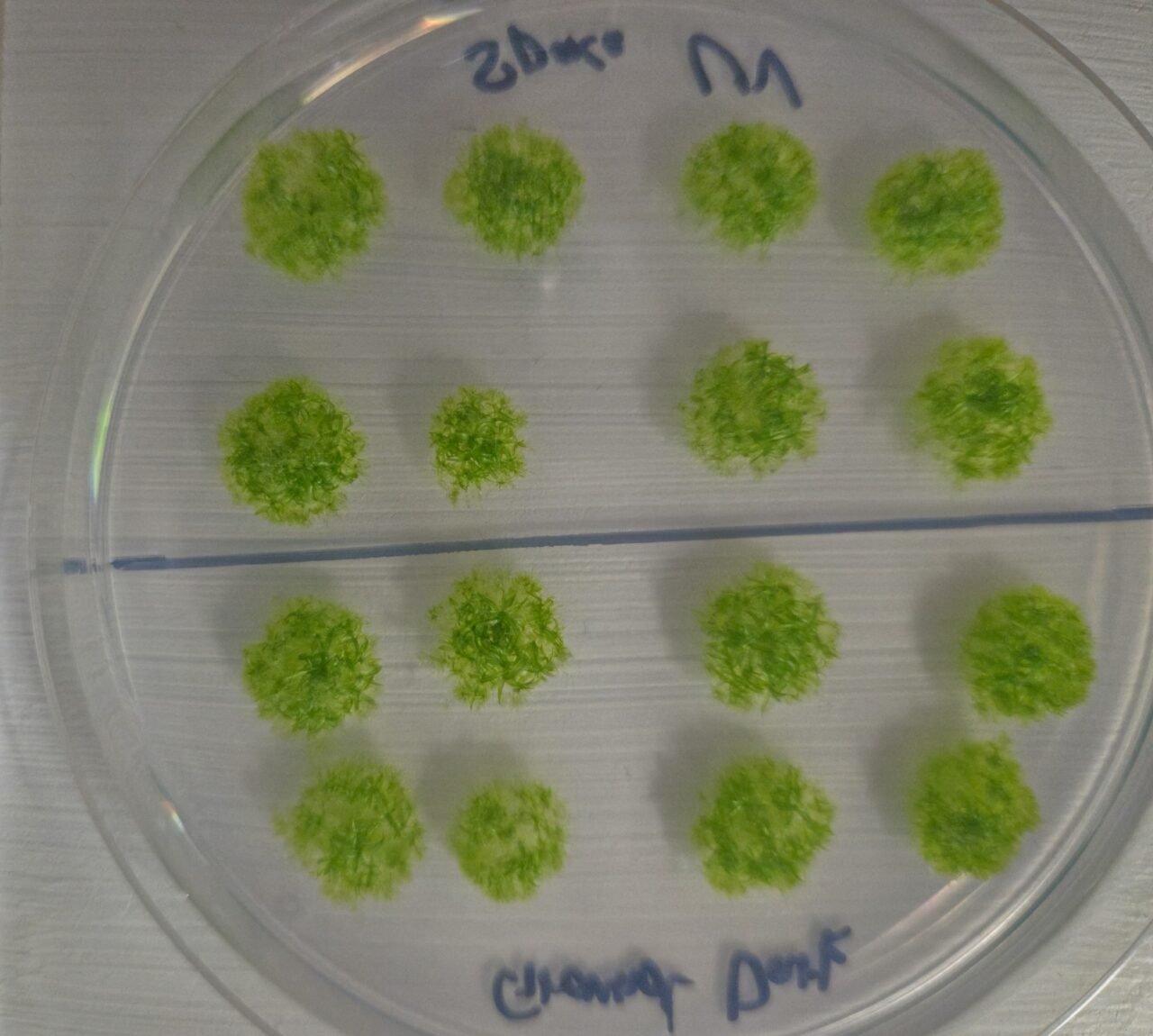
They found that a shocking 80% of the spores survived the intergalactic journey, whereas nearly 90% of those remaining spores were able to germinate, or grow. The chlorophyll levels in the moss were generally consistent as well, according to the paper.
That said, the study focused on a single type of moss, meaning it may not capture the full extent of how mosses—or plants, for that matter—respond to similar conditions, the paper noted. Space experiments are generally difficult to conduct, but Fujita is determined to continue building on the latest findings.
“This is not just a story about ‘moss in space,’” Fujita said. “It is part of a larger scientific effort to understand how life adapts to extreme environments, how ecosystems might be built in closed systems […] It is also a powerful reminder that life is far more resilient than we often imagine.”
Read the full article here