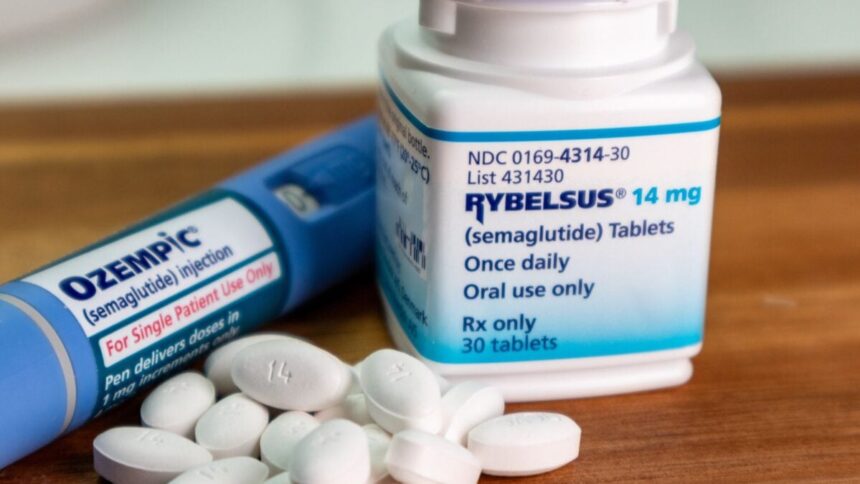
GLP-1 medications like semaglutide (Ozempic and Wegovy) and tirzepatide (Mounjaro and Zepbound) have fast become some of the most recognizable and popular drugs in the world. Recent research now shows that a sizable number of Americans have been taking GLP-1s off-label.
Scientists at New York University and others examined the medical records of Americans across the country. Since 2021, they found that at least 1.1 million Americans were prescribed a GLP-1 without having an FDA-approved indication for its use, such as obesity or type 2 diabetes. Though some people may be taking these drugs off-label for valid reasons, we’re largely in the dark about the overall harms of doing so, the researchers say.
“The risk–benefit profile in these populations remains uncertain,” the authors wrote in their paper, published Tuesday in the journal Obesity.
Without indication
The researchers analyzed data from COSMOS, a dataset created in collaboration with health care systems that use software from Epic Systems to maintain their electronic medical records; COSMOS covers over 300 million patient records from thousands of hospitals and clinics in the U.S. and other countries.
The team focused on a subset of adults without a clear FDA-approved indication for GLP-1 use, meaning they lacked a current diagnosis for either type 2 diabetes, obesity, or being overweight with a possible weight-related complication like high blood pressure, obstructive sleep apnea, or heart failure. They looked specifically at people prescribed one of the three GLP-1 drugs currently approved for obesity: liraglutide, semaglutide, or tirzepatide. Liraglutide is an older GLP-1 medication, while tirzepatide is the latest and combines GLP-1 with another hunger-related hormone called GIP.
Between 2021 and 2025, the researchers identified roughly 90 million adults without such an indication; of these, just over 1.1 million were prescribed a GLP-1 during those years. The rate of GLP-1 prescriptions in this group also surged over time, though it stayed low in absolute terms. In 2021, 0.11% of people without a recorded indication were prescribed a GLP-1; by 2025, it had risen to 1.5% of people—a 13.6-fold relative increase.
How much of a problem is this?
The researchers are careful to note that a person not having an FDA-approved indication for a GLP-1 in their medical records doesn’t necessarily mean they don’t have such a condition. BMI and weight-related conditions may have been underrecorded in this database, or some people may have qualified for a GLP-1 prior to entering the database or were given a GLP-1 after they lost some weight to begin with.
The researchers did try to account for some of this potential noise by excluding people whose BMI wasn’t recorded at least six months prior to their GLP-1 prescription. They also conducted a secondary analysis that only looked at people without a current indication who never had a previous recorded history of obesity. The researchers did find the same basic trend of increased off-label prescriptions over time in this group, but notably far fewer people altogether—roughly 350,000 people total.
Given these caveats, it’s certainly possible that many people seemingly given a GLP-1 off-label, such as those who have previously been obese, are still taking them to manage their body weight in a reasonably healthy way. Sustained weight loss has long proven difficult, even for people who can lose substantial amounts through lifestyle changes at first. It’s also important to note that while roughly 11% of Americans have reportedly taken a GLP-1 in their lifetime, the current obesity rate is around 40%, meaning there’s still a large gap in the appropriate user base of these medications.
Another consideration is that GLP-1s are emerging as potential treatments for conditions beyond obesity and diabetes alone, most notably substance use disorders. Though early studies have shown encouraging results for GLP-1s as an addiction treatment and they’re now being tested in larger clinical trials, this use is still off-label for the time being.
All that said, there are some possible reasons to be concerned about the study’s findings. Roughly a third of people given an off-label GLP-1 were recorded to have a normal body mass index. And people in this group were six times more likely to have a history of eating disorders than non-GLP-1 users. Importantly, though, the researchers could not reliably distinguish between different types of eating disorders. GLP-1s have shown promise for treating certain eating disorders, like binge-eating disorder, but other studies have flagged the risk of people misusing GLP-1s to maintain unhealthy eating patterns.
One last thing to mention is that these off-label prescriptions were more common among women, white people, people with private insurance, and people from less socially vulnerable areas. That could suggest, the authors wrote, that “expansion beyond labeled indications may be accruing disproportionately to more advantaged groups.” This study also didn’t look at compounded GLP-1 drugs, which are custom-made and potentially less safe versions of these drugs. Though many people with obesity may be turning to these drugs for understandable reasons like lower costs, it’s not hard to imagine that others without a justifiable medical reason are also taking advantage of them.
At the end of the day, GLP-1 drugs have changed the treatment of obesity and type 2 diabetes for the better. And we certainly haven’t reached the ceiling of how many people can benefit from them. A study in 2024, for instance, estimated that if access was expanded to every American who was eligible for a GLP-1, roughly 40,000 lives would be saved annually.
But it’s also true that every drug has its risks, and while the risks of GLP-1s are usually outweighed by the benefits they provide to people with obesity or diabetes, that calculation isn’t necessarily going to be true for some people taking them off-label.
Read the full article here