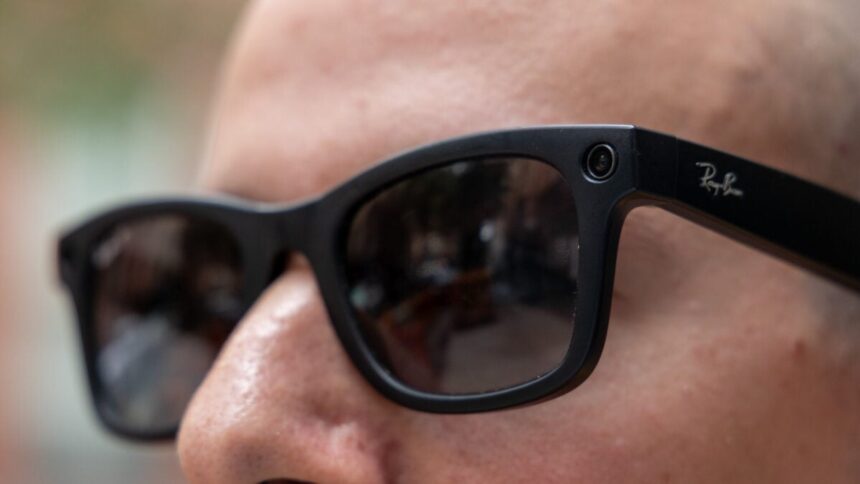
If there was one surprise hit last year in the consumer tech world, it was smart glasses, and Meta was one of the biggest winners. Meta, with the help of EssilorLuxottica, managed to sell 7 million units of its Ray-Ban-branded AI glasses, about 6 million more than it sold the year prior—a smashing success by all metrics. A smashing success that Mark Zuckerberg and company appear determined to follow up on by utterly fumbling the bag.
If you’ve been paying attention to the news recently, you may have noticed a little story about how Meta’s Ray-Ban smart glasses have been sending recorded footage to a third party, where those videos were then reviewed by human eyes. As it turns out, that footage contained some stuff that most people would probably have rather kept private, including videos of people watching porn, using the bathroom, and credit card and bank information.
Meta’s right to do this is, of course, buried in its terms of service that most people (myself included) often blindly agree to. But there’s a big problem with that part too: some of the videos sent to human reviewers (a contractor called Sama) seem to have been recorded accidentally, meaning even if you did actually read Meta’s ToS, you might not be able to avoid having some of your most private moments grace the eyeballs of a stranger. By most people’s metrics, that’s um… bad. And the worst part is, it’s not just bad for the people who own the smart glasses or the people who encounter them unknowingly; it’s bad for Meta.
Smart glasses, as many of us in the millennial+ age demographic know, have a history encapsulated by one very iconic pejorative: “glasshole.” When Google released its now-infamous pair of smart glasses, Google Glass, all the way back in 2013, things did not go as planned. The rise and fall was rapid, and the entire form factor was almost categorically rejected by consumers who felt wearing a discreet camera on your face was an incursion on everyone’s privacy. Bars and restaurants banned the device, critics dubbed anyone who wore a pair a “glasshole,” and while the whole experiment wasn’t officially put to rest until 2023, Google Glass was pulled from the market in 2015, just two years after its release.
The short version is: Google Glass was a disaster, and it made the category of smart glasses almost radioactive for fear of backlash over privacy. Fast forward to today, and things have changed a bit. Smart glasses, which were once immediately dismissed as a privacy nightmare, have actually proven marketable to some. A part of that is that Meta managed to make a pair that doesn’t look out of place on your head, and the other part is that our expectation of digital privacy has eroded over the past decade due to, I don’t know, a lot of sh*t.
Either way, Meta had a chance to reset expectations of smart glasses and do things differently. It was never going to solve the privacy issues that are inherent with wearing a discreet camera on your face (issues that I’ve already unpacked at length on Gizmodo many times), but it could have at least attempted not to amplify them by using your nude videos to train AI. Instead, however, it’s careening toward the same fate as Google Glass, and the pushback is palpable.
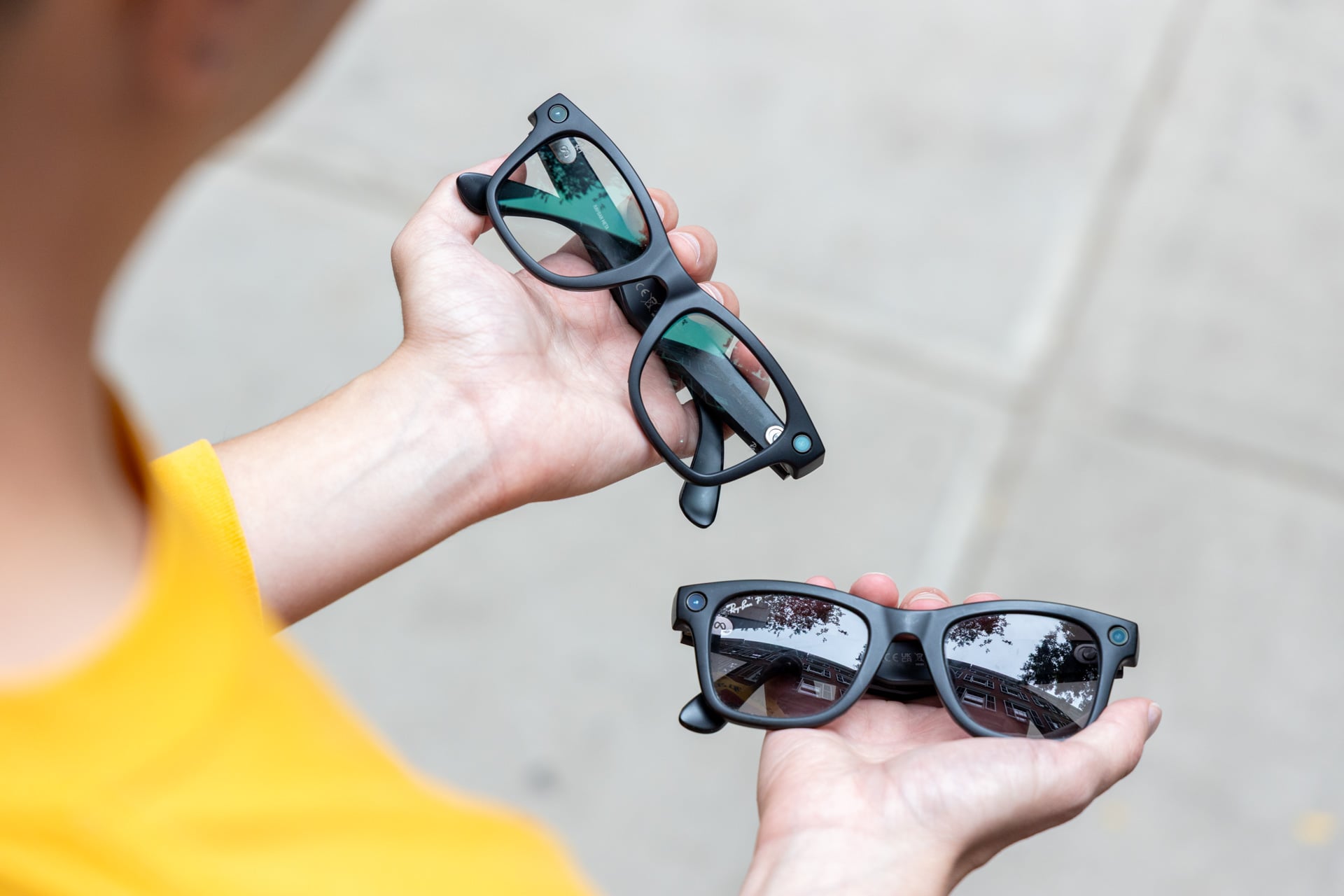
Just this week, the Electronic Frontier Foundation (EFF) released a statement regarding smart glasses, essentially warning anyone with even the tiniest respect for digital privacy not to buy a pair. And it’s not just advocacy groups; there’s also an ongoing class action lawsuit against Meta claiming the company misleads its customers with deceptive advertising, giving them the expectation of privacy to some degree. That’s not even counting the outright bans that have been brewing in the background, including one by a popular cruise liner and one by the College Board, which categorizes smart glasses (rightfully, by the way) as a cheating tool.
If backlash against the category hasn’t reached a boiling point, it’s certainly trending in that direction, and Meta, for its part, hasn’t even acknowledged the concerns, let alone made any attempt to address them in a meaningful way. On one hand, it’s not surprising. Meta is a company that made its mark by usurping user data, oftentimes to the detriment of people who made its services valuable in the first place. On the other hand, though, it feels somehow even more disrespectful than usual.
I guess Meta is betting that its smart glasses’ reputation being a hazard to digital privacy will blow over, and people will go about their business using its products as usual—it worked largely with Facebook and Instagram; why would smart glasses be any different? But Ray-Bans aren’t social media, and the fact is that (as someone who’s used quite a few pairs of smart glasses), they are still something that very few people even own and even fewer people feel like they need. In a consumer sense, smart glasses are vulnerable and easy to rule out. If people decided tomorrow that they didn’t want to buy a pair made by Meta or any other brand, the choice would be simple. And the richest part is this: if Meta’s gadget does get torpedoed, it’ll be by a missile designed and built by the company itself and autographed personally by Mark Zuckerberg.
Read the full article here