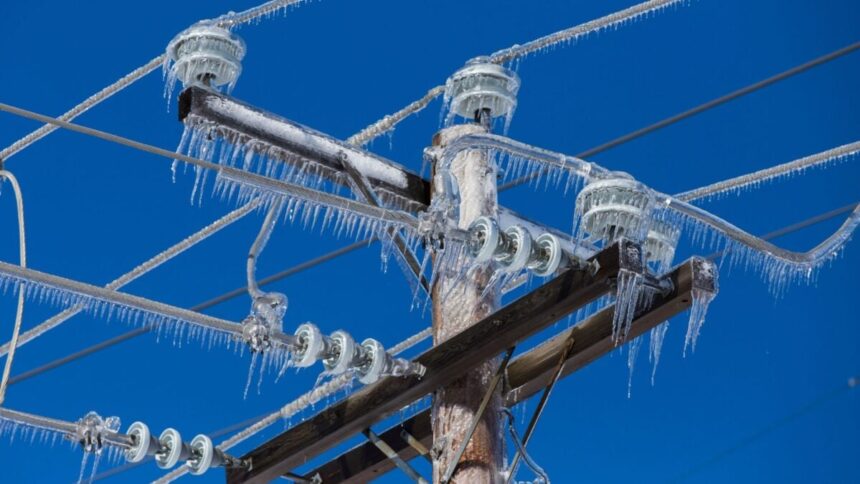
More than 170 million Americans were under winter weather alerts Friday morning as the Eastern U.S. braces for a potentially catastrophic storm. Meteorologists expect widespread power outages as the storm spreads heavy snow and ice across a 2,000-mile (3,200-kilometer) stretch of the country over the weekend.
According to the latest National Weather Service update, significant to locally catastrophic ice accumulations will substantially increase the risk of outages across the Southern Plains, the Lower Mississippi Valley, the Tennessee Valley, and the Southeast. In the wake of the storm, communities from the Southern Plains to the Northeast will contend with extremely cold wind chills, creating a dangerous situation for anyone suddenly unable to heat their home.
The South is particularly vulnerable to this type of threat. U.S. Census Bureau data indicates that most homes in Alabama, Arkansas, Georgia, Kentucky, Louisiana, Mississippi, Tennessee, Texas, Virginia, and the Carolinas are heated by electricity, according to the Associated Press.
Here’s everything you need to know about staying safe during prolonged power outages and dangerously cold conditions.
Why forecasters are anticipating outages
Concerningly, the risk of power outages is concentrated within the region most reliant on electric heat. That’s because the warmer southern climate will cause this storm to produce more freezing rain and sleet than snow, leading to heavy ice accumulation on trees and power lines.
“Long-duration power outages, extensive tree damage, and extremely dangerous or impassable travel conditions are likely,” the NWS stated early Friday. “Catastrophic impacts are expected where freezing rain amounts exceed a half inch [1.27 centimeters], with over one inch [2.54 cm] totals possible in parts of northern Louisiana, southern Arkansas, and Mississippi, as well as the southern Appalachians.”
Utilities across the Southeast have already warned customers to prepare for outages. Duke Energy said its more than 4.6 million customers in North and South Carolina may experience “multi-day outages.”
Even in areas where ice accumulation won’t be as much of a threat, frigid cold and heavy snow will strain the power grid and infrastructure, raising the risk of outages. Grid operators have urged utilities across the East to prepare for spikes in energy demand as residents struggle to heat their homes and businesses. The Department of Energy has also requested that grid operators prepare to make backup generation resources available as needed.
What to do if you lose power and heat
The storm’s impact will stretch from the Southern Rockies to New England from Friday through Monday, with widespread heavy snow, sleet, and freezing rain reaching the East Coast by Sunday morning, according to the NWS.
As dangerously cold Arctic air and gusty winds track eastward behind the storm, wind chill temperatures could dip below -30 degrees F (-34.4 degrees C) across the Midwest, Great Lakes, and New England over the weekend. Farther south, meteorologists expect temperatures to plummet below freezing with wind chills in the single digits.
Residents in the path of this storm should take steps now to protect themselves, their pets, and their pipes. Forecasters have urged people to stock up on essential supplies such as groceries, batteries, and medications now, as traveling will become dangerous as road conditions deteriorate.
Homeowners should insulate exposed pipes, allow faucets to drip during the coldest periods, and ensure heating systems are in good working order. If you lose power and heat this weekend, immediately seal off unused rooms, close curtains and blinds, and gather in a single, well-insulated interior room. Make sure there are plenty of blankets and winter clothing to go around.
Take the time now to locate warming shelters, community centers, or other safe indoor locations in your area that you can go to if the temperature of your home drops dangerously low. For more information about how to prepare for a winter power outage, you can visit Ready.gov.
Read the full article here