
Whenever a new sci-fi work drops—especially in animation—it’s almost guaranteed to get stacked against the canon. Whether that’s mapping it onto Akira, Ghost in the Shell, Blade Runner, or whatever other giants loom overhead, the new is reduced to a collage of influences by fans in the know rather than letting it wholly stand on its own. But Mars Express belongs in the same breath as those films, not because it vibes hard with them, but because it delivers something startlingly novel and fully realized that every sci-fi work should be measured against it as a quietly phenomenal film that got slept on when it released.
Set in the year 2200, Mars Express follows Aline and Carlos, a cyber-enhanced private eye and her synthetic android partner, as they hunt down a hacker tied to illegal jailbreaking of helper robots across Earth and Mars. What starts out as a cut-and-dry case of stopping one of many rogue coders unleashing self-actualized machines with extreme prejudice quickly unravels as the tip of the iceberg to an even greater ordeal when their case cross-hatches with the mysterious disappearance of a young woman, a conspiracy tied to cutting-edge organic tech, and a Pandora’s box of robot autonomy threatening to tip an already fragile society into collapse.
As the first feature film by animator Jérémie Périn, 2023’s Mars Express feels like an albatross of an animated sci-fi movie that reminds you how potent the genre can be when clarity and craft lead the charge. Across a tight 88 minutes, it almost immediately earns that “They don’t make ’em like this anymore” feeling, not by chasing nostalgia, but by using its genre tools with precision rather than flash. Those tools being the overly familiar fixings of cyberpunk anxieties, speculative tech, and the precarious relationship humans have with technology, sure.
But here, those ideas don’t feel derivative; they feel freshly charged, as if they were pulled from a bygone era of animation when ambition mattered more than trend-chasing. Mars Express moves with the confidence of a story that knows atmosphere only hits when the engine underneath is actually built on a road worth driving down. And Mars Express has that engine in spades, delivering a timeless, resonant story that weasels its way into your head, daring you to find another work that scratches the same neon-drenched itch that it does.
What unfolds is a slow‑burn mystery pieced together from a textured spread of ideas—robot autonomy, human fragility, corporate overreach, and all the uneasy seams stitching them together. Each piece locks in without ever dulling the premise by overexplaining itself, giving the world that rare lived-in feel that seems discovered rather than constructed. It’s the kind of storytelling that feels “dated” only in the sense that nobody makes it like this anymore.
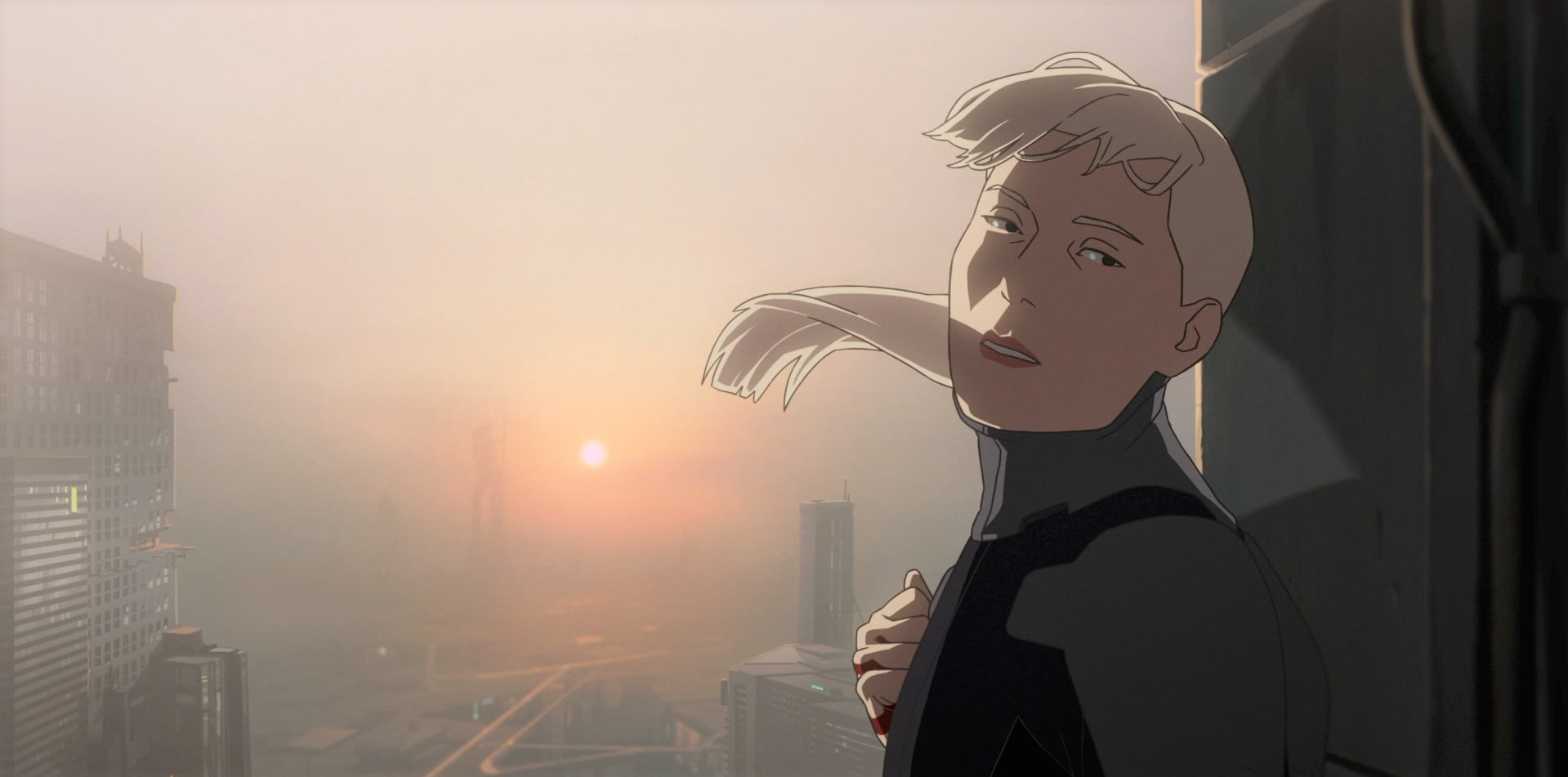
While any and all things cyberpunk already earn a blanket level of intrigue from their visual presence alone, crucially, Mars Express remembers something genre creator Mike Pondsmith spent decades preaching to deaf ears: cyberpunk isn’t an aspiration—it’s a warning. The film’s far-flung future is an exemplary example of how that meaning has been frustratingly sanded down in pop culture, where neural implants and augmented bodies sold at a premium by corporate oligarchies glitter like toys to the masses until they’re confronted with the reality that every system hiccups. In Mars Express, technological progress is less remarkable than the invention of the wheel; it’s Windows demanding yet another update that inexplicably makes your PC run worse.
That ethos manifests everywhere in the film’s worldbuilding. Surgical machines require mid-procedure firmware updates while doctors absentmindedly scroll on their phones. Inside jokes from colleagues become even more existentially isolating because they unfold over group calls inside their heads—calls you need an invite to learn why everyone chuckled at a crime scene. Self-driving cars reroute around nearby crashes without their passengers ever rubbernecking to see if anyone’s okay. Mars Express is a world where convenience numbs humanity, glitches alienate rather than connect, and jailbreaking the machines is a crime worthy of reprimand with extreme prejudice. In essence, all the fixings of a cyberpunk world where human-machine coexistence frays in ways too banal to notice until it’s too late. So, a perfect world for a cyber-noir film for our private investigators to fight from the back foot to pull at the yarn that’ll unravel the world into further disrepair.
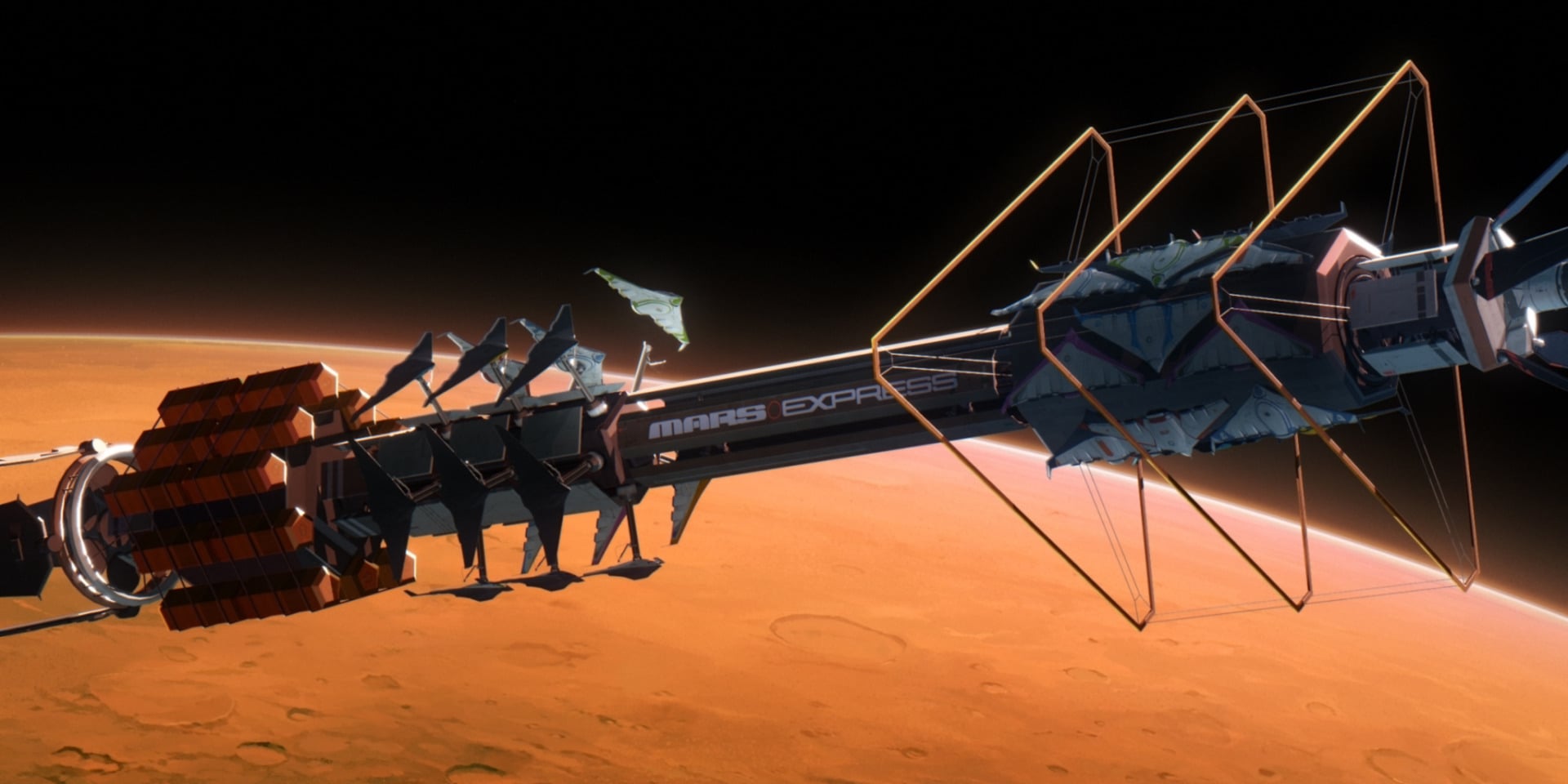
Of course, the film is a helluva looker that’s unceremoniously brutal when it needs to be, fleet when it wants to be, and animated with a tactile sense of weight and motion that keeps its camera shifting between first-person jolts, over-the-shoulder tension, and sweeping dynamic compositions. What’s more, none of it ever feels flat or ornamental; every visual flourish from the macro of the establishing shots of its sweaty, dense, neon-drenched clubs to the micro expressions of its ensemble deepens the grooves of a story that never loses its momentum and only tightens its grip on you as its murder mystery unspools.
What’s most impressive, though, is how much the film communicates without ever stopping to overexplain itself. Its world, rules, and emotional stakes arrive through the old-school discipline of showing rather than telling. And the film trusts its audience to pick up on the rhythms of its society, the friction of its denizens and automatons, and the quiet tragedies embedded in the everyday occurrences of its characters’ lives, all while keeping its central investigation humming at every turn. It’s a balancing act that, on paper, should feel like spinning plates, yet somehow is finessed by production studio Everybody on Deck with ease.
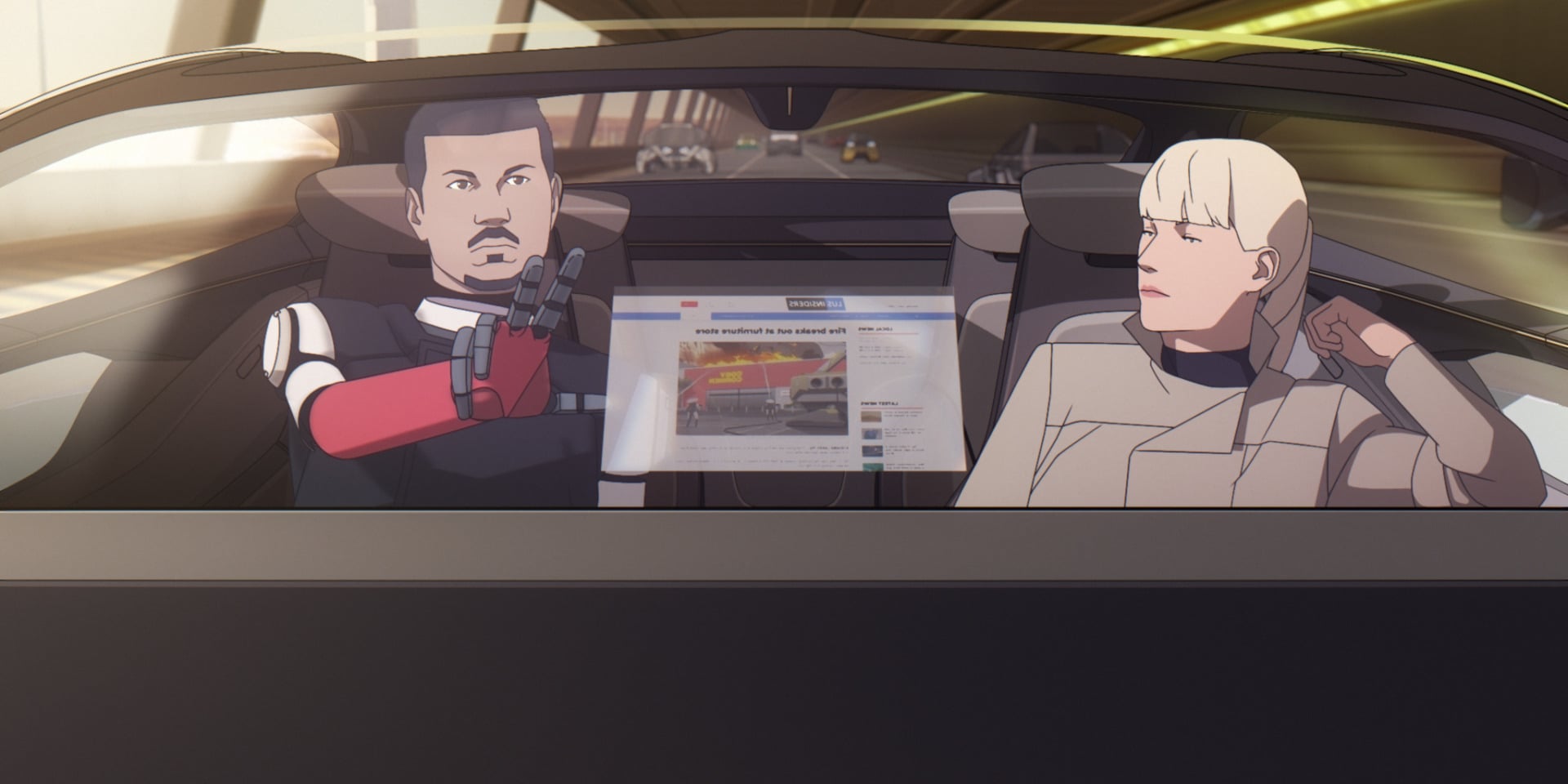
At the center of that balancing act is the duo carrying the whole thing. Aline is your typical gumshoe remade for a future that’s worn her down: sardonic, battle-scarred, sharp-tongued, and projecting a hard exterior that barely conceals how starved she is for genuine human connection. The film never underscores this; it just lets you watch the cracks form in quiet, deeply human moments as she attempts to soldier on. Carlos, a synthetic man whose baggage is the underside of the iceberg that Netflix’s Altered Carbon only hints at, is, ironically, her closest tether. Together, they’re the force the film’s emotional gravity pulls toward, grounding a sci-fi world that could easily have collapsed under the weight of its own ideas into a single masterwork that you’re not walked through so much as allowed to stumble into, as the film trusts you to pick up what matters in its nuance without ever guiding your hand.
What’s left in Mars Express‘ wake is a sharp, criminally underappreciated gem that’s far truer to cyberpunk’s spirit than most stories that flaunt the label. And it does so with a steady hand, never letting the cool factor of its lush aesthetics outrun the story it serves.
You can rent or buy Mars Express on Prime Video, Apple TV, Fandango at Home, Google Play, or YouTube.
Want more io9 news? Check out when to expect the latest Marvel, Star Wars, and Star Trek releases, what’s next for the DC Universe on film and TV, and everything you need to know about the future of Doctor Who.
Read the full article here