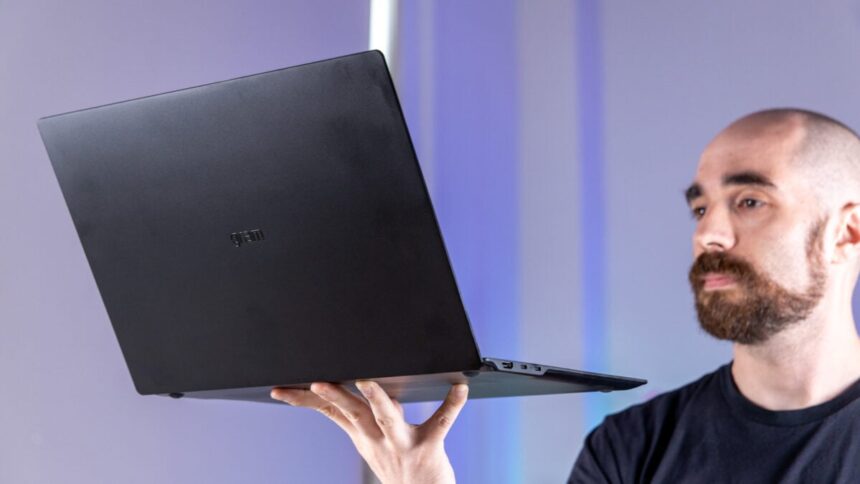
LG’s Gram series has impressed over the years, often packing premium features into a remarkably light and thin chassis. It’s quite the feat that the 2026 LG Gram Pro 16-inch undercuts both of Apple’s MacBook Air models on weight—the 13-inch Air by a tenth of a pound and the 15-inch by more than half a pound. Its chassis is also as sleek as ever. But how does this sleek lightweight hold up performance-wise?
Before I dive into that and all the other juicy details about the LG Gram Pro, you need to know how much this product costs.
LG Gram Pro 16-Inch (2026)
The LG Gram Pro is an absurdly expensive laptop that doesn’t offer enough performance or battery life to justify its price.
- Thin and light
- Bright, colorful display
- Solid array of ports
- Disgustingly expensive
- Anti-glare ruins the OLED
- No discrete graphics
- Middling battery life
- Poor price-to-performance ratio
LG sent us the LG Gram Pro 16, packed with an Intel Core Ultra X7-358H processor, 32GB of RAM, and a 1TB SSD. That configuration costs an obscene $3,499—and it doesn’t even come with discrete graphics.
I’ll get into how this price point impacts the LG Gram Pro further down, but on paper, those specs are a rip-off. That doesn’t mean there’s nothing to like about this machine. But LG is clearly targeting only one group here: folks with enough disposable income not to bother looking at price tags.
If you are in that category, you should still be aware of the downsides that come with prioritizing a premium look and feel above all else, particularly performance and battery life. Let’s jump in.
Lighter than the 13-inch MacBook Air
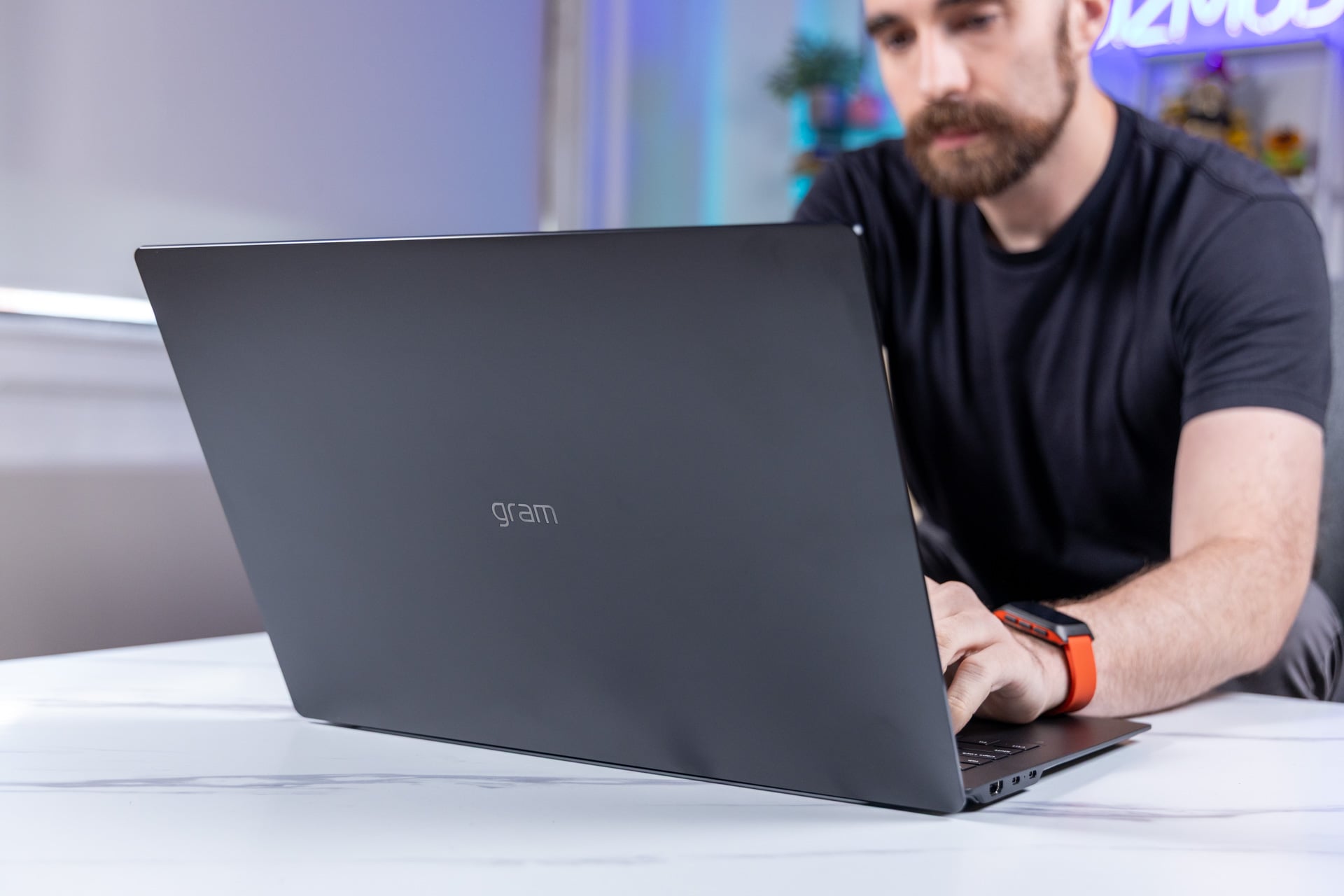
What’s special about the LG Gram line has always been its compact chassis. At 2.64 pounds, the Gram Pro is a slightly lighter load than the significantly smaller, 2.7-pound MacBook Air 13. The Gram’s profile also stacks up to 0.5 inches tall. It’s so petite I’d worry about completely forgetting it’s in my bag. You shouldn’t have to worry about durability, however; according to its manufacturer, the LG Gram has passed seven military durability tests that subjected it to drops, dust, and extreme temperatures.
As for the interior, the keyboard is a bit of a mixed bag. The keys are on the smaller side, squeezed together enough to fit a full-sized numpad on the right. I am, in particular, not a fan of how tiny the backspace button is. I caught myself making a few more typos than usual and occasionally had to fumble about to correct them. It took some time to get used to all the positioning, though I eventually managed 78 words per minute, which is only a bit slower than my usual speed.
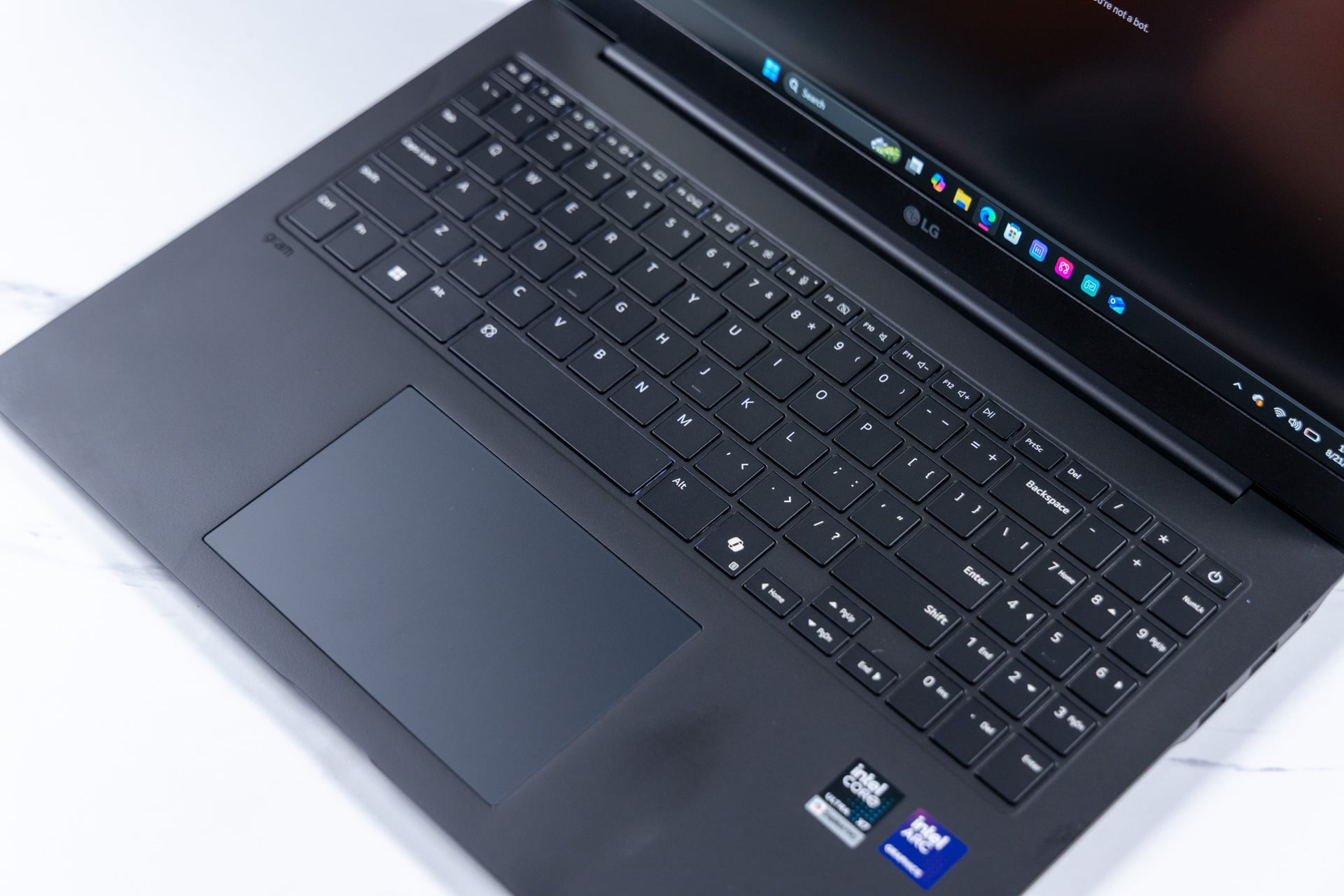
Another problem with the keys is that their travel is low. This is often the price of thinness, unfortunately. They still manage some bounce, so I could get from key to key without feeling like I was dragging my fingers. But overall, it does not feel like a $3,500 keyboard—I found myself thinking of the Lenovo ThinkPad X1 Carbon‘s elite example, which offers a punchy feel and much larger keys. (You can currently buy a similarly specced X1 Carbon for around $3,000.)
What you do get at this price point, at the very least, is a glass trackpad. These offer less resistance than plastic or Mylar, so my fingers glide across them like a figure skater. It also features a mechanical clicker that provides a sharp and bassy click, a satisfying combo for navigation. As much as I like the haptic trackpads found on premium laptops like the Dell XPS 16, this is a strong classic alternative.
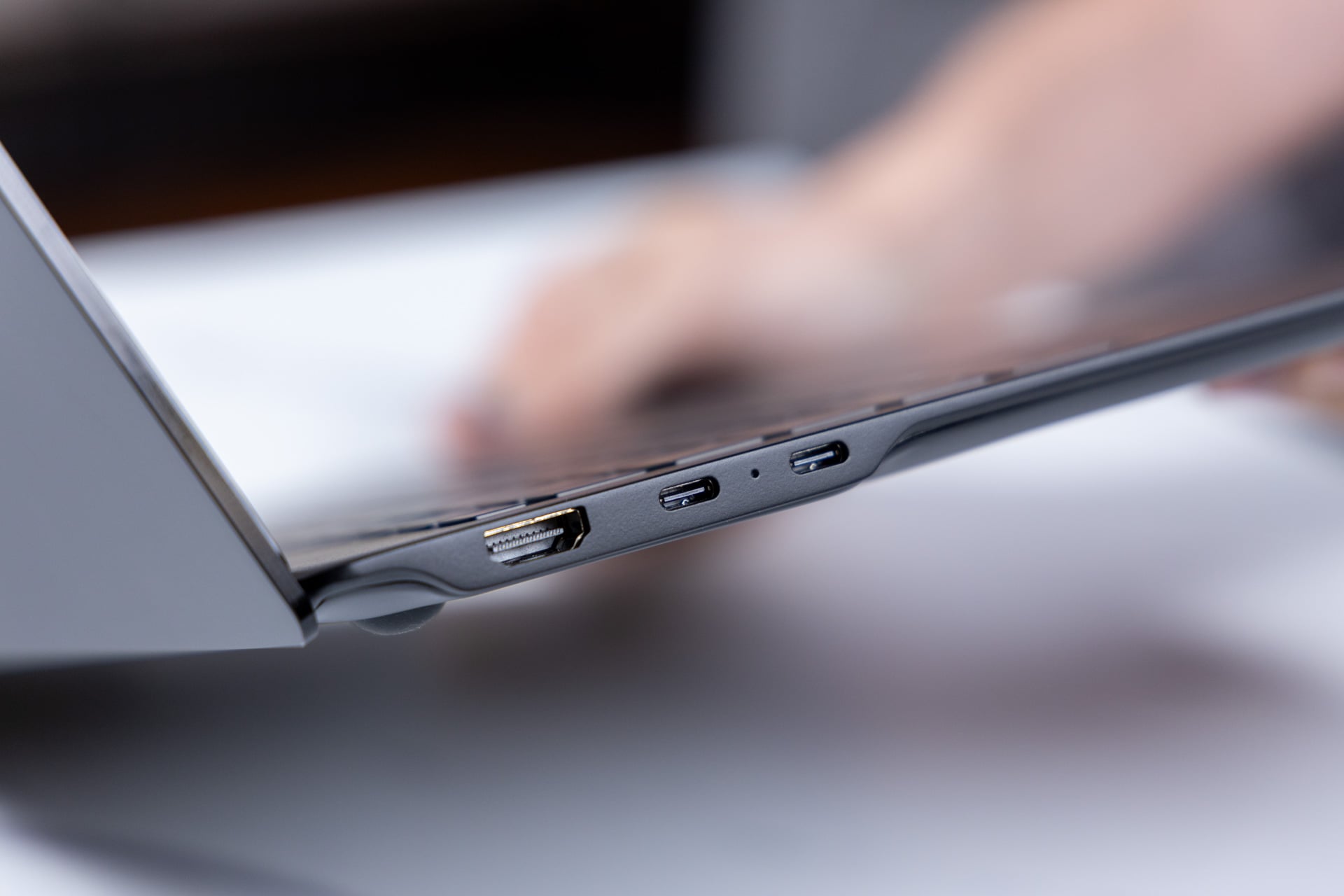
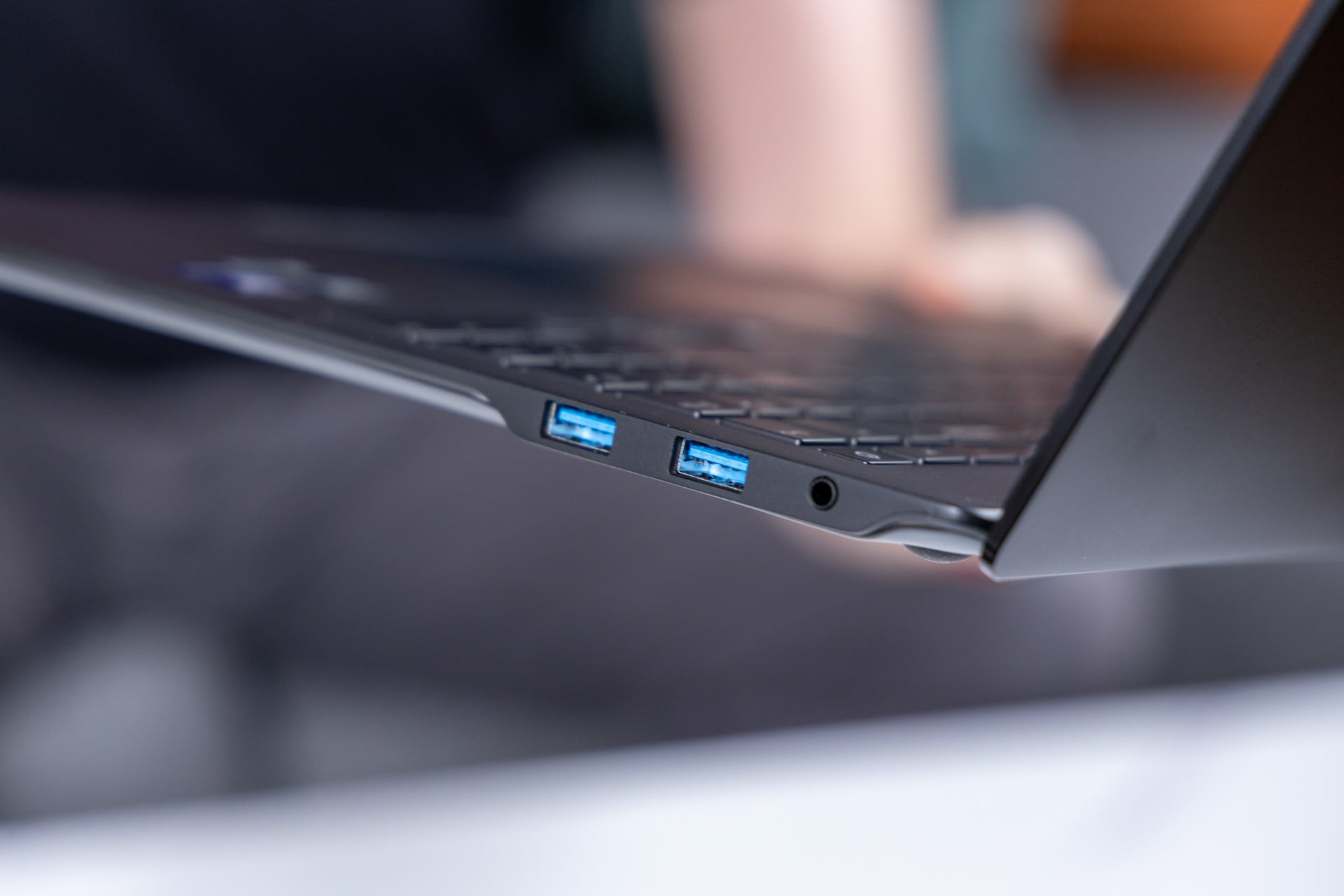
Despite its incredibly thin chassis, the LG Gram Pro also offers plenty of ports to go around. You’ve got two Thunderbolt 4 slots for speedy connectivity to modern peripherals, as well as two USB Type-A ports for legacy devices. There’s also HDMI 2.1, which is a major win for a device this size. And of course, you’ve also got a headphone jack to play with. Compared to the MacBook Air 15 (0.45 inches thick), which skimps on many connectors, the LG Gram delivers a full array of ports for just an extra 0.05 inches of height.
But you’re paying a heck of a lot of money to get these benefits. What you need to ask yourself if you’re considering this laptop is whether they’re worth the money—and the performance trade-off.
Pretty OLED ruined by anti-glare

If you’re getting ready for a movie marathon, the LG Gram Pro will serve you well for the most part—unless you’re easily distracted by its display’s one flaw.
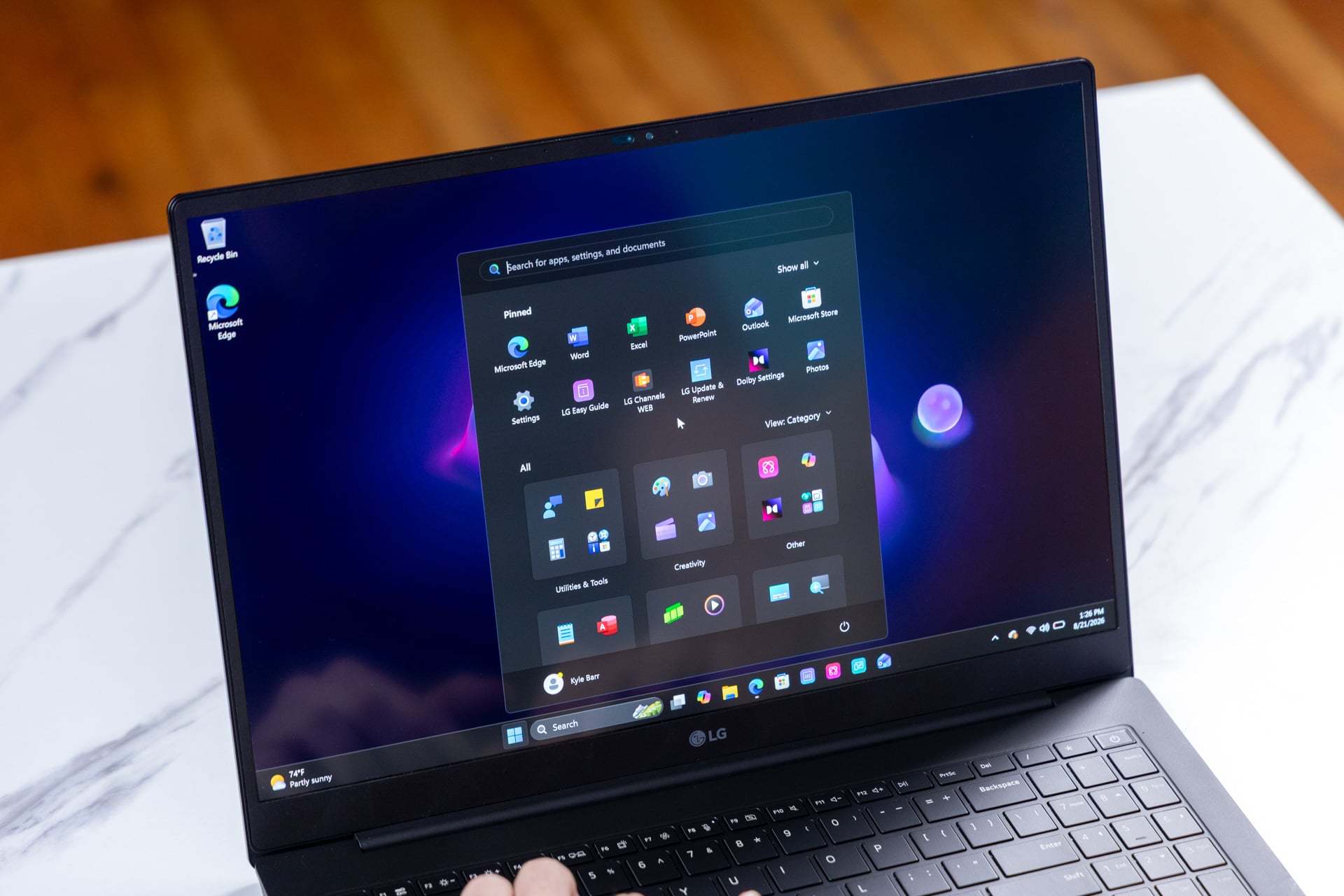
For $3,500, I would expect nothing less than an OLED display, or at the very least, mini-LED. The LG Gram Pro delivers that: a 16-inch OLED panel with 2,880 x 1,800 resolution and a 120Hz refresh rate. Unfortunately, it also features an anti-glare coating that is quite distracting.
I love a good OLED display, but one of the biggest problems is the glare from its glossy finish. The LG Gram Pro doesn’t have that issue, but it comes at a cost I am not willing to bear: More often than not, you can see very pronounced visible fuzz. The ostensibly crisp edge of Megumi’s hair in Jujutsu Kaisen, for example, looked soft. It basically adds visual noise to everything on the screen. It also doesn’t allow the image to feel as present. The best visuals in Frieren: Beyond Journey’s End are its great landscapes, but when looking out over wide fields and cityscapes, all I could focus on was how noisy the screen was. I was hyper aware that I was watching it all on a screen, which broke the immersion. Despite that, the OLED panel is rated to cover 100% of the DCI-P3 color gamut, and that showed while I was watching Frieren. The purple lightning that Frieren fires literally bursts with color. The darker blacks also keep the shadows more intense. Unfortunately, that wasn’t enough to offset the anti-glare’s fuzziness, which detracts from the resolution’s sharpness.
The bottom-firing speakers reproduced the piano and vocals of Low Roar’s “Bones” with a wide, bright sound, but something was missing there, too. When the percussion kicked in, the drums came off low and muted. There’s also not enough bass to capture a full soundstage. Aside from that, the sound is still decent overall, and it filled my bedroom at full volume.
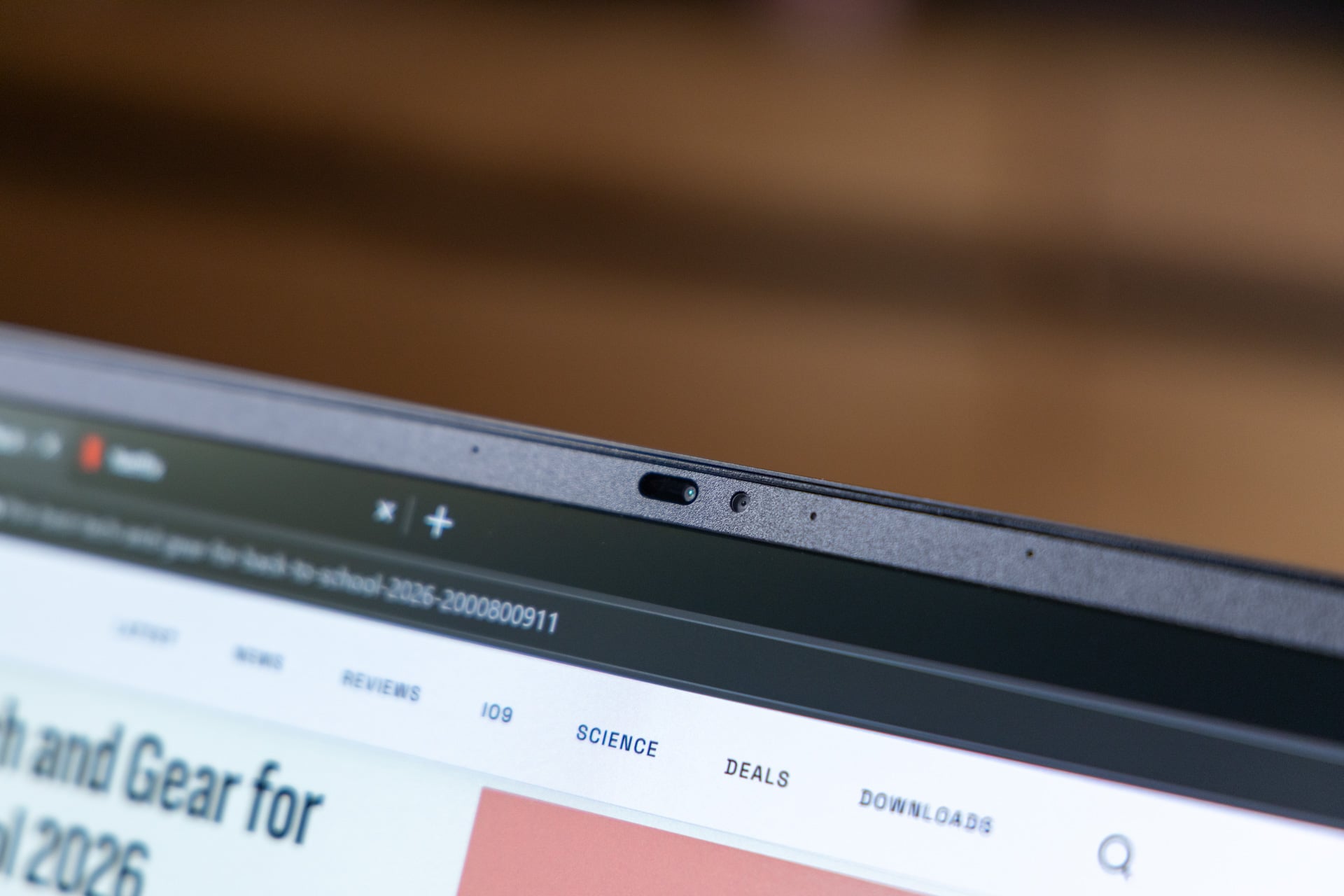
If you’re dressing to impress at your next job interview, the LG Gram Pro’s 1080p webcam shouldn’t be your first choice. It’s fine if you’re just chatting with friends, but the quality is grainy, and some of the image will get blown out if you’re around bright lights. The lack of a privacy shutter is also disconcerting, though you can at least turn off the webcam via the keyboard.
All of these things, again, do not add up to an experience worth the Gram Pro’s asking price. That’s especially true for the screen, whose fuzziness is just too intense to make for an enjoyable watch.
Price to performance is skewed

Given the Intel Core Ultra X7 358H chipset paired with 32GB of RAM, I expected solid performance from the LG Gram Pro. Unfortunately, the system didn’t really live up to its $3,500 price tag.
On Geekbench 6, the LG Gram’s Intel Core Ultra X7 358H underperformed all of its competitors. An XPS 16 with the same CPU scored 8.3% better in multicore performance and 10.2% better in single-core. Meanwhile, the significantly cheaper MSI Crosshair A16 HX, packed with an Intel Core i7-14650HX CPU, scored 2.8% better in multicore performance and 3.8% better in single-core. Granted, the Crosshair’s A16 HX’s CPU is built for high performance (2.2GHz base clock speed), while the LG Gram’s is made for better efficiency (1.5GHz base clock speed), but you’re really not getting that much for the trade-off (more on that below).
For $5,000, you could always go with the Razer Blade 16, which sports an Intel Core Ultra 9 386H CPU and boasts an 11.5% increase in multicore speed and an 11.3% increase in single-core performance.
This machine is designed to be not only a super-portable device but also a productive workhorse, but it’s incredibly important to note that the LG Gram, which costs well over $3K, faltered against the $1,300 MSI Crosshair on Geekbench. Yes, the LG Gram Pro features a more premium build than these other models, but its internals do not impress.
The results were similar when completing the Cinebench 2026 rendering benchmarks. The Core i7-14650HX CPU led the pack, 69.3% and 30.3% faster in multicore and single-core, respectively, compared to the LG Gram Pro. The Razer’s Ultra 9 386H CPU was 51.9% and 9.4% ahead, and the XPS 16’s Ultra X7 358H came in 19.3% and 11.8% faster.
When you’re number-crunching like this, the gaps in performance are wide. When I’m casually surfing the web, blasting music, and chatting with friends, I didn’t necessarily notice any slowdown. That said, folks who are paying more than $3,000 tend to be looking for a machine that can handle professional and creative work will, and these slower speeds are hard to justify at that price point.
Battery life also ain’t it. I spent a full day writing, chatting with friends, planning D&D, and catching up on Marvel movies, but I had to reach for my charger sooner than I would’ve liked. At 50% brightness with the battery profile set to “Best Power Efficiency” (energy saver disabled), the laptop lasted just under 11 hours. That may be fine for some folks who are juggling standard eight-hour jobs or class schedules. However, it doesn’t compare to premium laptops like the Dell XPS 16 (2026), which lasted me roughly 16 hours total.
No discrete graphics
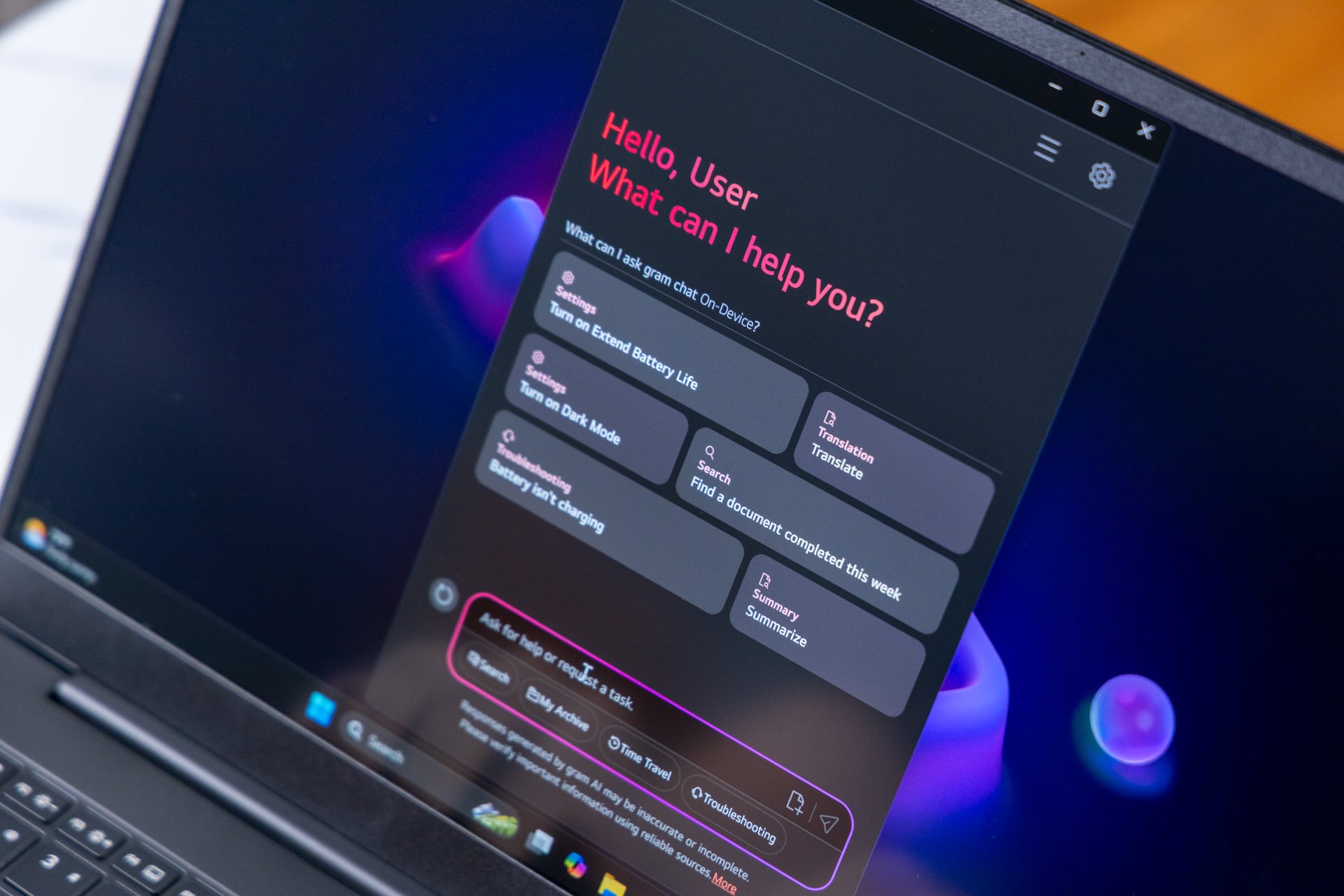
Integrated graphics are getting significantly better as the years go on, and the Intel ARC B390 pulls its weight on lightweight, demanding tasks. But when a laptop costs $3,500, you deserve more.
On 3DMark’s “Steel Nomad” test, which measures the rendering performance of high-end PCs, the LG Gram Pro’s Intel ARC B390 ran at half the speed of the MSI Crosshair’s RTX 5060 GPU—a chip that should’ve shipped with the LG Gram Pro. The XPS 16 with the same GPU scored 2.7% better, and the Razer Blade 16’s RTX 5090 came to the test with nearly 3.5 times the speed. Granted, the Blade 16 costs $5K, but if you’re already considering shelling out $3.5K for the LG Gram Pro, you might as well go all out and get the laptop with more appropriate performance.
Again, the Intel ARC B390 is a strong chip in the right laptop, and it proves as much in a demanding game like Cyberpunk 2077. I did turn the settings down to Low and set Intel’s Super Resolution to Ultra Performance, but the LG Gram Pro delivers a solid 60 fps at its native resolution (2,880 x 1,800). With frame generation enabled, it scored 90 fps. It’s excellent that I can play demanding games (even at lower settings) on an integrated graphics chipset, but I would never settle for this performance at $3,500. For comparison, the MSI Crosshair scored 60 fps at high settings and 2,560 x 1,600 resolution.
Middling and overpriced
If you’re asking me to pay a car-sized down payment for a laptop, then you best believe I’m going to have high standards. For $3,500, the LG Gram Pro does very little to earn that price point. Yes, it’s pleasantly light and thin and offers a full array of ports for its size, but that’s not going to cut it. The OLED display would go a long way if it weren’t bogged down by the anti-glare coating. The keyboard is typo-central. But the biggest problems with the LG Gram Pro are its price-to-performance ratio and its battery life.
You’re paying a ludicrous price for specs that are lapped by laptops half the price of the Gram Pro. Its performance on high-end tasks disappoints. And it didn’t last nearly as long on battery as an XPS 16 with the exact same specs. Eleven hours of battery life just isn’t acceptable anymore, especially not at this price point for a build not toting around a discrete GPU.
The LG Gram Pro is designed to be a thin and light workhorse. It gets the first part of that right: the overall design is slick, and the touchpad is smooth. But everything else about it doesn’t impress, at least for its asking price. Plus, it’s far from a workhorse. Want a premium laptop that’s really worth $3,500? The 16-inch MacBook Pro is cheaper. Even the M5 14-inch MacBook Pro did 12.7% better on Geekbench than the LG Gram, and that costs $2,000. Look elsewhere.
Read the full article here