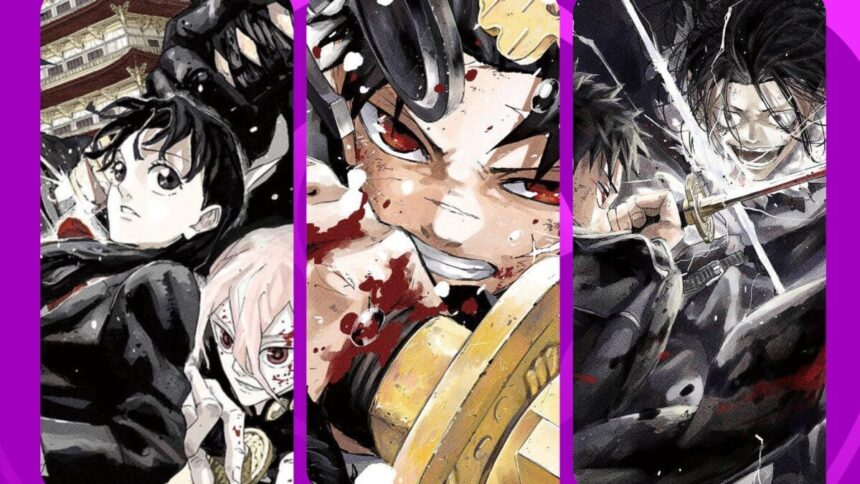
When Kagurabachi first hit the manga scene in 2023, it quickly became a meme. How could it not? At the time, it was propped up and advertised as the next big thing on Shonen Jump when Jujutsu Kaisen and My Hero Academia were marching toward their finales, leaving a chasm in their wake that plenty of cancelled series failed to fill.
As far as readers knew, the manga was so ubiquitous to the genre that its early goings felt like a parody of it. However, over time, fans quickly shifted from reading the series ironically to buying into the hype. After catching up with it once I saw it had recently finished its first major arc, I gave it a read, and I can definitely say it has the juice.
Kagurabachi, created by Takeru Hokazono, follows Chihiro, a teenager whose life is upended by a troupe of sorcerers who murdered his legendary swordsmith father and stole his six enchanted blades, each kitted out with supernatural abilities. Naturally, Chihiro’s father secretly made a seventh blade, which Chihiro wields in his vengeance quest to reclaim his father’s stolen blades and discover the truth behind their powers and why they’re so hotly sought after. What follows is a bloody, battle shonen-style story teeming with shocking double-crosses, political conspiracies, warring underground organizations, and plenty of cool-guy one-liners.
Yes, Kagurabachi‘s premise is admittedly McDonald’s dollar-menu basic for shonen plots. But I’d argue that what it’s got to show for it is less like Hokazono putting the fries in the bag and more like a Michelin-star chef elevating fast food, all the bargain-bin Shonen Jump junk food we’re used to, and turning it into gourmet.
If a series were to mix Sakamoto Days’ Jackie Chan-esque momentum, John Wick‘s cool factor, Demon Slayer’s flourish, and Akira Toriyama‘s legible, propulsive action, it’d be Kagurabachi. While its story is a slow burn that takes a minute to hook you, it comes out swinging with its remarkable panel work, which had me shove the very notion of the manga as a joke out of my mind palace.
What had me immediately smitten with the manga was that Kagurabachi’s paneling is genuinely next‑level. A fight that takes 10 real‑time seconds can stretch across an entire chapter, keeping you locked in for 20 pages of pure momentum and inner monologue. Other moments have characters casually breaking the laws of physics, teleporting around the battlefield, but never in a way that leaves you confused or waiting for an exposition dump to make sense of it. Truly, what Kagurabachi does, it does exceptionally well with trimmings like crisp impact frames, massive double spreads, and a visual flow so clean it makes every chapter some of the most awe-inspiring action you’ll find in Shonen Jump right now.
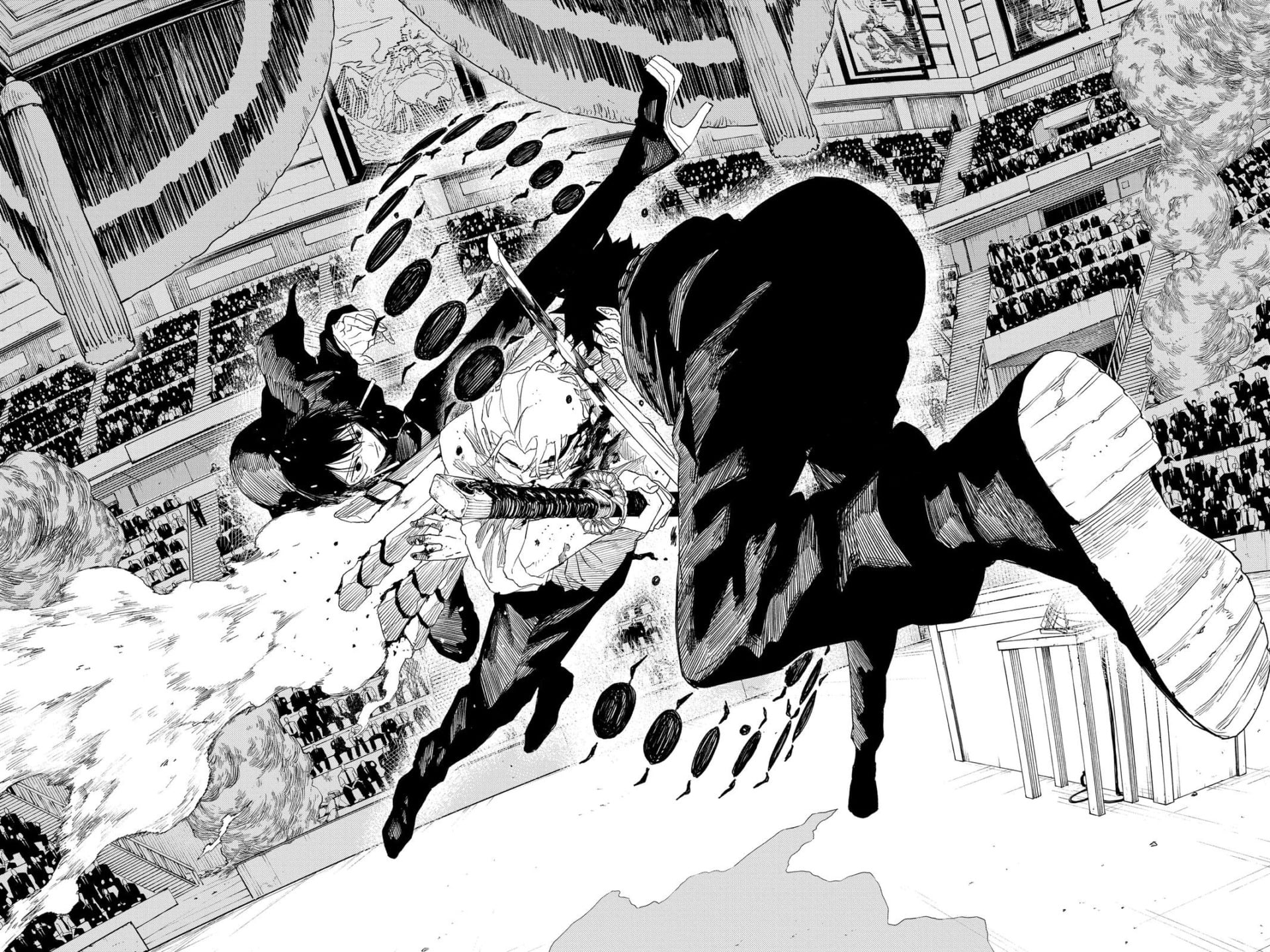
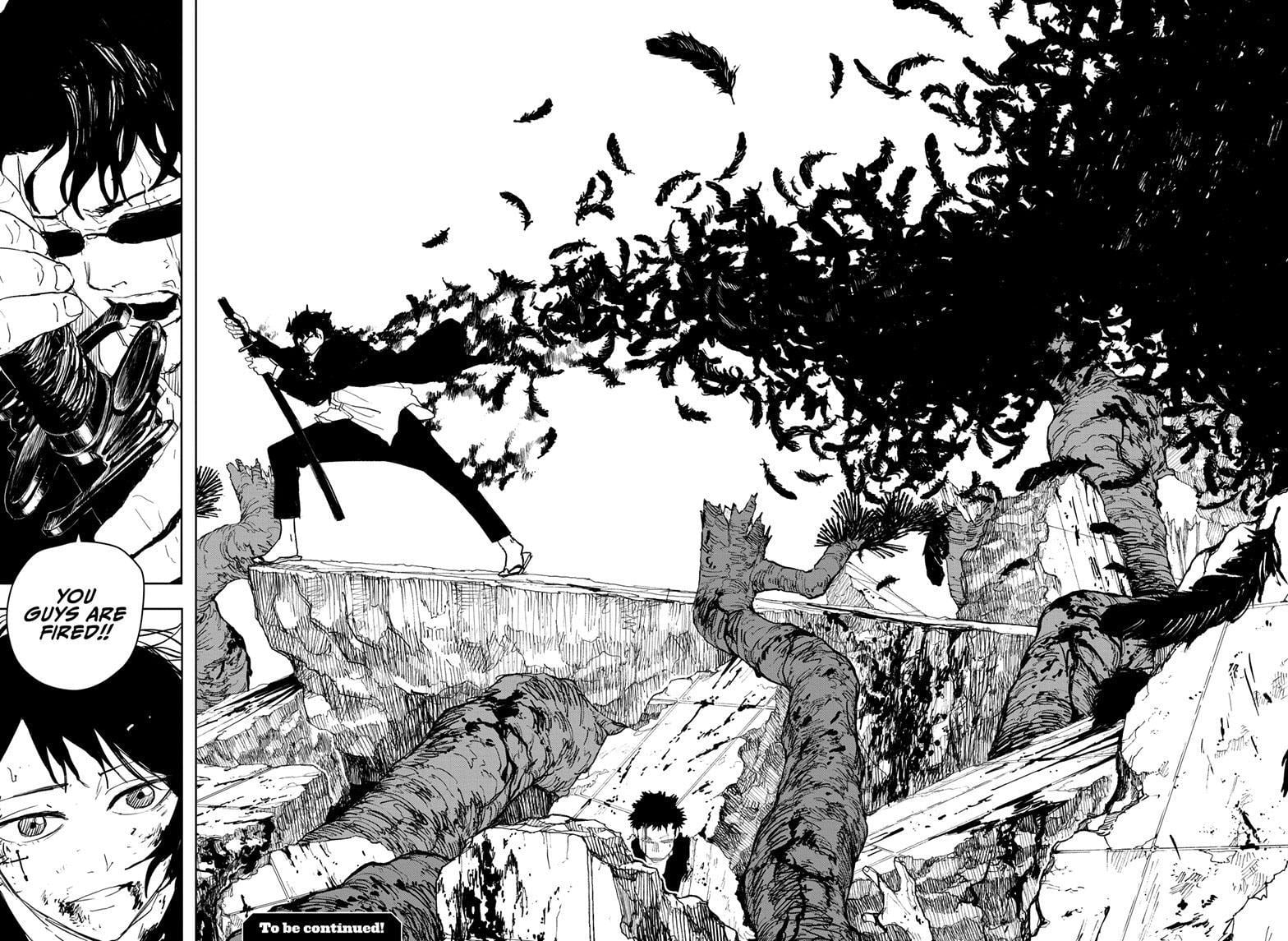
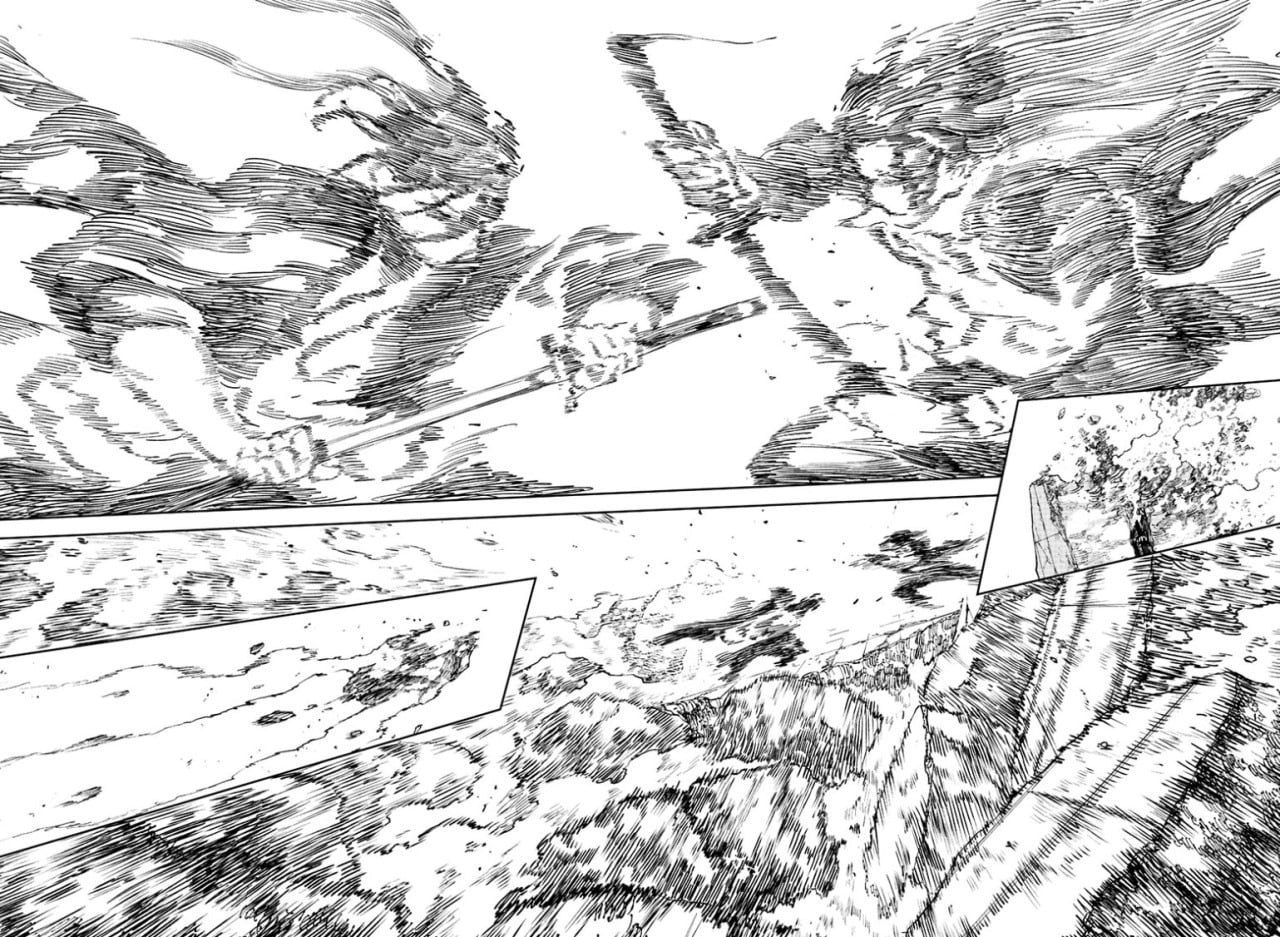
Kagurabachi being so nice with it is a testament to how effortlessly the manga guides readers’ eyes by staying lean and refusing to bog itself down with overly complicated power systems. If anything, its story being a bit basic only elevates how incredible its action sequences are. What’s more, I never had to throw my hands up and say, “Sure, whatever,” the way JJK sometimes demands to show me something cool. Instead, Kagurabachi confidently trusts its paneling, pacing, visual rhythm, and style to do all the heavy lifting, which it does with gusto.
And mercifully, despite how self-serious Chihiro and the crew look on the covers of its volumes, the series doesn’t take itself too seriously. Henchmen, grunts, and enemies jump in alongside Chihiro and his allies with genuinely funny bits of levity, poking fun at the mobster-revenge drama they find themselves in.
Of course, while this helps keep its tone light, it never undercuts the real stakes and heartache its ensemble endures in the lead-up, heat, and aftermath of their deadly clashes. It is no wonder, considering Hokazono consistently writes some of the funniest Shonen Jump author blurbs every week.
It’s only a matter of time before Kagurabachi mania lands an anime adaptation. Look no further than its volume cover, joining the likes of Akira and Chainsaw Man as Batman variant cover anime homages, as proof of the immense amount of motion it’s gained in pop culture in such a short period of time. Hell, the manga caught fire so hot that everyone’s favorite voice actor, Aleks Le, gave us a taste of what Chihiro might sound like for free. But for the time being, folks who’ve window-shopped the series can dive into its first story arc now—and get in on the ground floor of how a manga series quickly went from being a meme to being one of Shonen Jump’s must-reads.
Want more io9 news? Check out when to expect the latest Marvel, Star Wars, and Star Trek releases, what’s next for the DC Universe on film and TV, and everything you need to know about the future of Doctor Who.
Read the full article here