
A judge in London threw out a witness’s testimony after concluding he was being coached on his answers in real-time through smart glasses.
The incident happened in January during a trial before Insolvency and Companies Court Judge Raquel Agnello KC involving an ownership dispute over a property development company. The claimant, Lithuanian businessman Laimonas Jakstys, was asking the court to reinstate him as the company’s owner and director.
But the proceedings quickly went off the rails during Jakstys’s cross-examination.
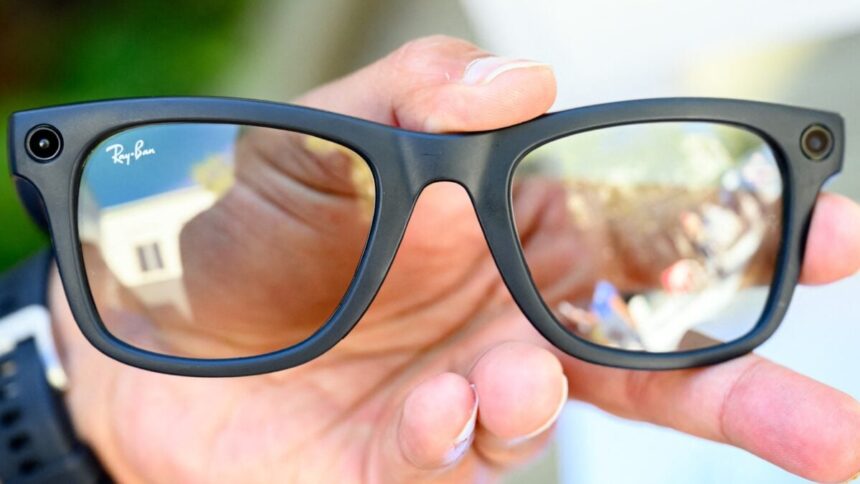
In a ruling published online earlier this month, and first reported by Legal Futures, Agnello said Jakstys had been wearing smart glasses connected to his phone and was being coached on his responses while testifying.
The judge wrote that right at the start of the cross-examination, Jakstys seemed to pause “quite a bit” before answering questions through an interpreter.
That’s when the defense lawyer told the judge she could hear interference coming from Jakstys’s direction and asked that he remove his glasses. His interpreter, who was sitting in the witness box with Jakstys, said she could also hear the interference.
According to the judge, it was later confirmed that Jakstys was indeed wearing smart glasses. She asked him to remove them before the cross-examination continued. As further questions were asked and the interpreter translated them, Jakstys’s phone suddenly began broadcasting a voice of someone talking out loud.
“There was clearly someone on the mobile phone talking to Mr Jakstys. He then removed his mobile phone from his inner jacket pocket. At my direction, the smart glasses and his mobile were placed into the hands of his solicitor,” the judge wrote.
Jakstys later claimed the voice being heard was ChatGPT. He agreed to have his phone examined. A photo of the phone screen showed that he had made numerous calls that morning to the same number, including one right before entering the witness box. Jakstys claimed those calls were to his taxi driver.
As the proceedings continued in the following days, Jakstys said his phone had been stolen, but he could not provide the court with a police report.
Judge Agnello did not buy any of these explanations and also determined that his written statements were “clearly prepared by others.”
Agnello ruled that she did not need to determine exactly who was coaching Jakstys, but accepted that he was being assisted with his replies.
She ultimately rejected his evidence in its entirety, writing that he had been “untruthful” about his use of the smart glasses.
News of the incident comes as smart glasses have grown more popular, raising serious privacy concerns. The company that manufactures Meta’s Ray-Ban smart glasses says it sold seven million units last year alone.
There’s even already an app designed to warn people when smart glasses may be nearby. The developer behind the app, called Nearby Glasses, told news outlets that his team began building it after reading reports about smart glasses owners using the technology to record people without their consent, including men filming inside massage parlors and reports of Customs and Border Protection (CBP) agents being seen wearing them on duty.
Additionally, a recent investigation found that videos captured through Meta’s smart glasses may be reviewed by outside contractors as part of the company’s efforts to improve its AI models.
Still, not even Meta itself is above the law when it comes to smart glasses in court.
When CEO Mark Zuckerberg testified last month in a Los Angeles trial over allegations that the company’s social media platforms are addictive, a judge reprimanded members of the Meta team for wearing smart glasses in the courtroom.
Los Angeles Superior Court Judge Carolyn Kuhl warned that anyone caught recording with AI-enabled glasses in the courtroom could be held in contempt of court.
Given how quickly the tech is spreading, the London case may be just the beginning of courts having to deal with the headache brought on by smart glasses.
Read the full article here