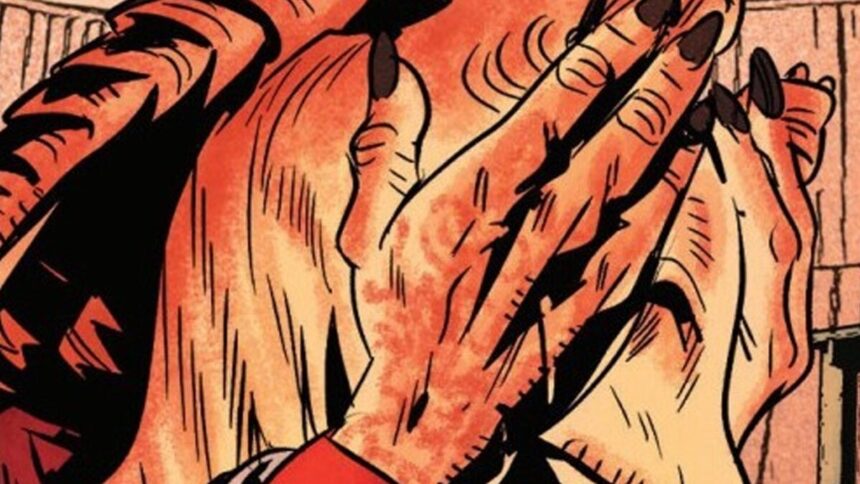
One of the many enduring memes about the Star Wars prequels is how Jar Jar Binks—as the senator who puts forward the motion to grant Palpatine extended executive authority with the outbreak of the Clone War—is kinda responsible for the whole “rise of interstellar fascism” thing. Although there’s been media in the contemporary Star Wars canon that has tried to touch on that before, to oddly mean-spirited effect, Jar Jar’s new comic offers a more hopeful response.
Today’s Jar Jar Binks one-shot from Marvel—co-written by the man himself, Ahmed Best, alongside comics scribe Marc Guggenheim, with art from Kieran McKeown, Laura Braga, and Mike Atiyeh—sees Jar Jar team up with Best’s other Star Wars character, Jedi Master Kelleran Beq (no Achk Med-Beq to be found, alas), in the early days of the Clone War to investigate a crisis on the planet Urubai. The planet, in the wake of the sudden demand of a Republic war machine, is rapidly being strip-mined for coaxium to fuel the war effort, even at odds with safety and labor standards that are meant to be safeguarded by Republic law.
Naturally, Jar Jar seeing this occur on the ground rocks his view of both the Republic and his reckoning of himself, as he realizes that his part in the political game that led to the formal declaration of the war, manipulated or otherwise, has advanced the rot at the heart of the Republic. But the investigation takes a turn when Beq reveals that the real reason he has brought Jar Jar to Urubai is not just to highlight the damage being done to the planet but a discovery caused by that damage: the excessive mining of coaxium has also led to the discovery of a new material called Cyphristal, a crystalline mineral capable of being fashioned into the core of a nigh-unbreakable communication network.
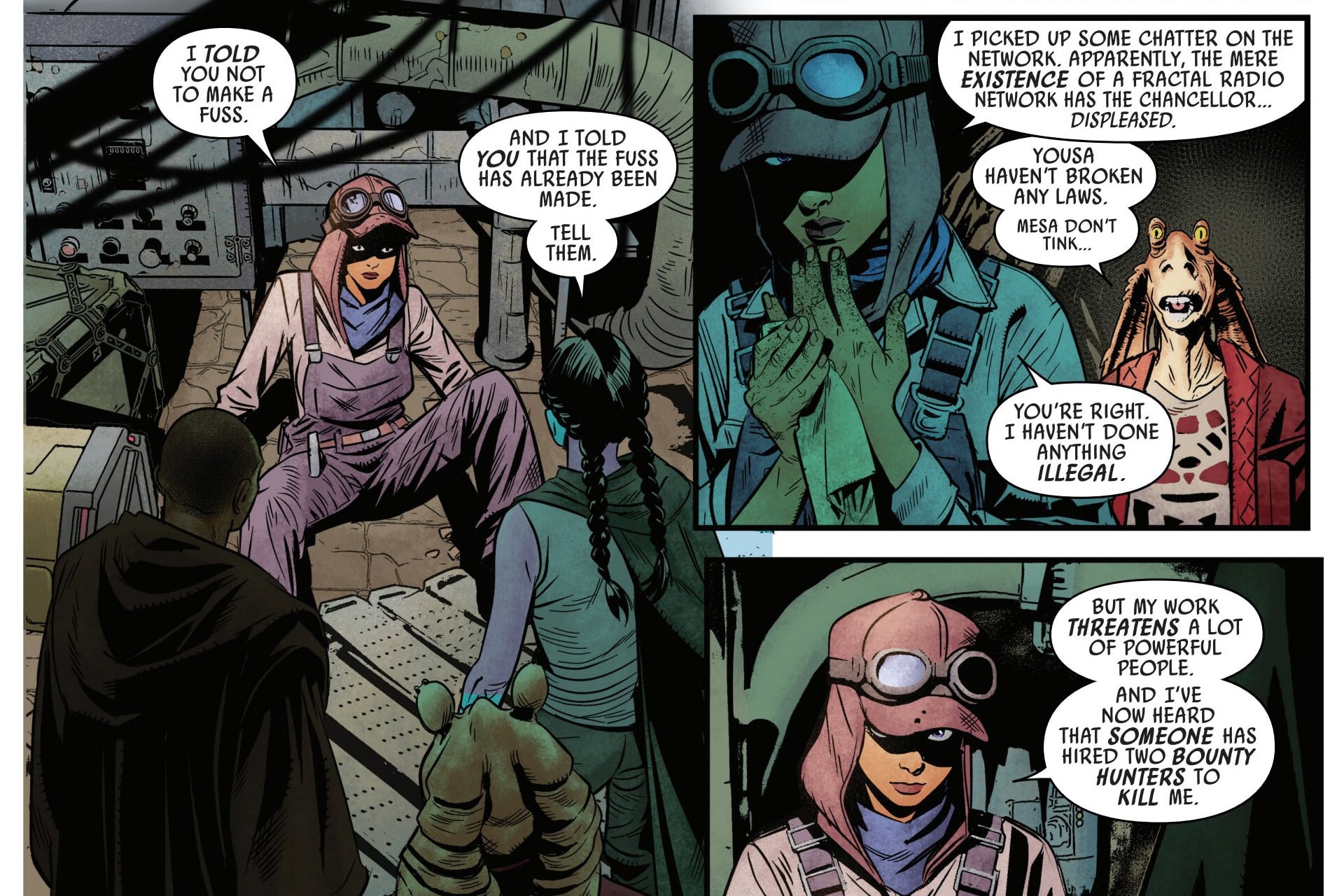
It’s an advancement that could either give the Republic a key intelligence win in the early stages of the conflict or, as a distrusting Beq pushes on Jar Jar, a secret asset that could be leveraged in case powerful forces—Separatist or otherwise—need to be resisted on a galactic scale. And so, of course, Jar Jar and Beq save the day, extracting a key inventor behind the Cyphristal’s “fractal network” back to Coruscant—but Jar Jar can’t shake the lingering regrets he has about Palpatine’s role in the fate of Urubai.
Thinking his status as the senator that elevated him to even greater powers as Supreme Chancellor has any kind of sway left, Jar Jar goes back to Palpatine to try and convince him that what is happening on Urubai is wrong. But Palpatine essentially fobs him off, promising noncommittal support to Urubai while admonishing Jar Jar for taking a narrow view of the nascent conflict: a single planet is worth sacrificing if it advances the war effort, and through it, Jar Jar now realizes, Palpatine’s personal power.
It’s an interesting challenge to see Palpatine so brazenly make it clear to Jar Jar that there’s something going on there, filled with the confidence that Jar Jar, having advanced his power to such an extent in the first place, could never stop it. But it also leads to the bizarre twist of the whole issue. Disillusioned by his meeting with Palpatine, Jar Jar reunites with Beq to tell him to begin developing the fractal network in secret alongside an intelligence network that can prepare for whatever comes next. Which presumably means they’ll need the aid of the woman they rescued from Urubai… Mira Bridger, Ezra’s mother.
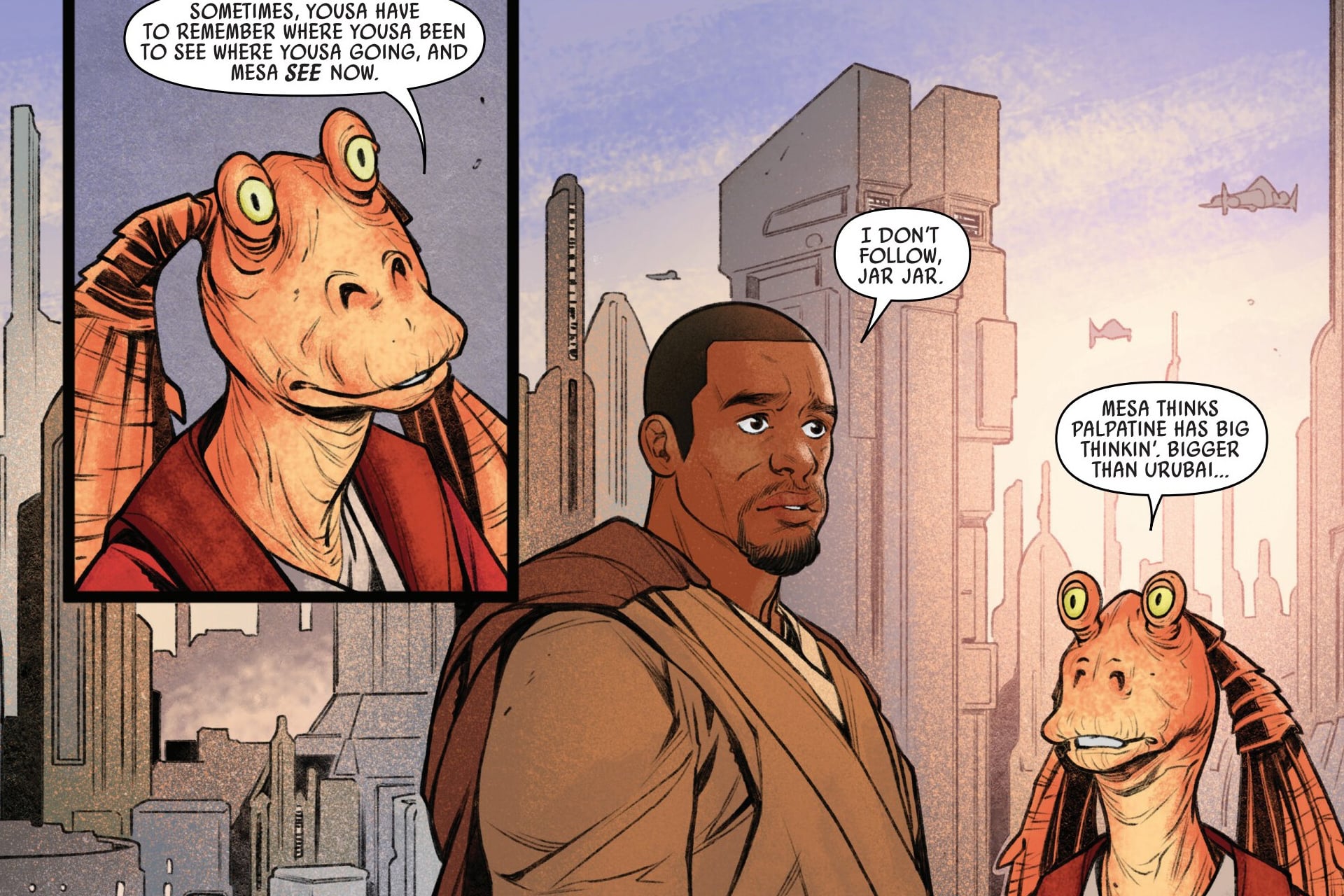
Star Wars Rebels fans already know that Ezra’s parents had a history with resistance broadcasts, having run an anti-Imperial radio network on Lothal before they were caught by the Empire. But the implication here is that Jar Jar, in realizing (albeit too late) that he got played, isn’t just responsible for helping to start that but is potentially helping to kickstart a series of rebel cells in the early days of the Empire. Working with Beq seems to lay the groundwork for the Hidden Path explored in the Obi-Wan show and the Jedi games; the broad nature of the fractal network as a concept could, ostensibly, make a tie between Jar Jar and the secret communications systems we see being used in Andor.
It’s a fun twist on years of gags at Jar Jar’s expense to twist his complicity in essentially laying out the political groundwork for the Empire by having him assist in the material groundwork for what ultimately blossomed into a plethora of rebel organizations to confront that Empire. Jar Jar remains the key to all this, but this time, as a force for good rather than an unwitting agent of evil—a fitting reclamation of the character by the man who brought him to life and endured years of harassment for doing so.
Want more io9 news? Check out when to expect the latest Marvel, Star Wars, and Star Trek releases, what’s next for the DC Universe on film and TV, and everything you need to know about the future of Doctor Who.
Read the full article here