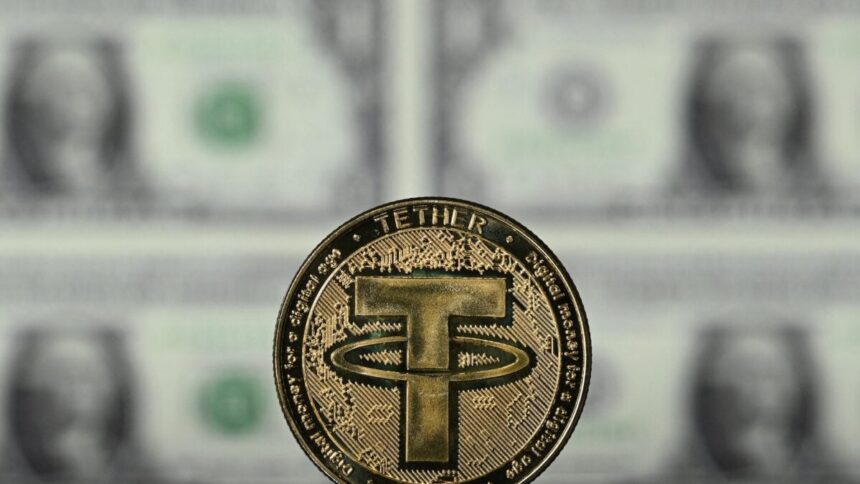
Last year, the United States embraced the stablecoin aspect of the crypto industry with the GENIUS Act, just as President Trump promised during his presidential campaign. As the admin intensifies its focus on sanctions, it’s running into a conflict.
From the perspective of the Trump administration, stablecoins offer the benefit of enhancing U.S. monetary and financial dominance globally by maintaining control over the supply of the world’s major reserve currency, enabling the enforcement of economic restrictions on sanctioned entities, and more. However, recent reports from Iran, Russia, Venezuela, and elsewhere indicate stablecoins are a double-edged sword in terms of retaining control over the global financial system.
Recent reporting projects that stablecoins could grow into a $3.7 trillion market by the end of the decade. That scenario becomes more likely with passage of the GENIUS Act.
A thriving stablecoin ecosystem will drive demand from the private sector for US Treasuries, which back…
— Treasury Secretary Scott Bessent (@SecScottBessent) June 17, 2025
On Wednesday, blockchain analytics firm Elliptic released a report regarding the use of Tether’s USDT stablecoin by the Central Bank of Iran (CBI). Specifically, the report indicates the CBI acquired $507 million worth of the stablecoin in an effort to protect the value of the Iranian rial, which plummeted 43% against the dollar over the past year. According to Elliptic, these USDT purchases were first made known by leaked documents, which the blockchain analysis company then used as the basis to track the CBI’s activities on the blockchain. In addition to protecting the rial, Elliptic also suggests that the stablecoin stash was likely used for international trade settlement. Sanctions had caused great difficulty in both of these activities, and USDT supplied the central bank with a workaround.
On top of the Iran-focused report, Elliptic released more research on Thursday regarding the use of a Russian ruble-denominated stablecoin, known as A7A5, by sanctioned entities as a gateway to USDT access. However, the report also notes that activity in the stablecoin has slowed since stricter sanctions were imposed on various entities related to the ruble-pegged token.
These recent reports from Elliptic are far from isolated. Another blockchain analytics firm, Chainalysis, recently reported that a large amount of 2025’s record $154 billion in illicit crypto transfers came from sanctioned nation states using stablecoins to conduct business. Additionally, Tether recently froze $182 million of its stablecoin in a single day, around the same time reports came out regarding extensive stablecoin use by the Maduro regime in Venezuela. Last week, the U.S. Department of Justice also charged a Venezuelan national for allegedly laundering around $1 billion for criminals by way of USDT.
The sort of stablecoin adoption outlined in these reports illustrates the key predicament for any powerful entity adopting crypto: The same technology that can reinforce the centralized power of that entity can also be used to disrupt it, whether it be entities avoiding U.S. sanctions or local populations avoiding authoritarian economic policies (oftentimes implemented by those same sanctioned entities).
There hasn’t been much discussion about these inherent tradeoffs by those pushing for crypto adoption in the U.S. federal government. And with the Trump family crypto fortune reportedly growing by $1.4 billion over the past year, there’s an obvious incentive for some to stay quiet on the matter. That said, some members of Congress have brought up various potential downsides of crypto, including disputed reports regarding use in terrorist financing and writing to the SEC regarding pay-to-play allegations.
For now, these tradeoffs of stablecoins are seemingly seen as acceptable, and further regulatory clarity for crypto may soon come in the form of the CLARITY Act, despite recent setbacks.
Of course, it’s not like this is anonymous money that is difficult to track. As the recent reports from Chainalysis and Elliptic show, blockchain networks are effectively financial panopticons where every transaction is viewable to anyone running a node, despite a real-world identity not being easily tied to every individual transaction. Additionally, when it comes to stablecoins specifically, the reality is that the crypto tokens are centrally issued and can be easily frozen or blacklisted.
In many ways, these centralized stablecoins are the direct opposite of how this technology was originally intended to be used. These competing ideologies have increasingly caused a split in the crypto userbase between stablecoin-centric use cases and ideologically focused cypherpunks.
Due to the U.S.’s current ability to easily control the stablecoin domain, more sanctioned or overly prosecuted (rightly or wrongly) entities may turn to bitcoin over time, where there is no central entity that can seize or freeze funds. Indeed, according to another recent Chainalysis report, there are already signs this is happening in Iran.
Read the full article here