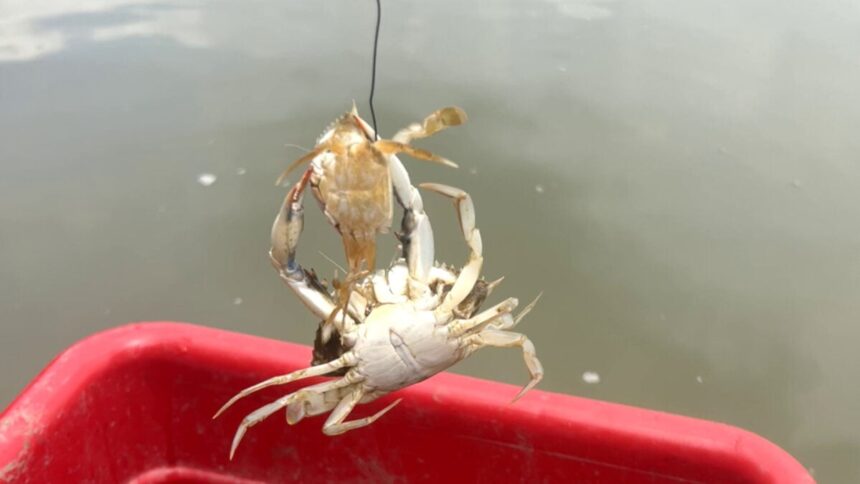
Here are two things you don’t often hear about. First, the primary cause of death for a coveted marine animal isn’t climate change. Second, scientists spent nearly four decades confirming the actual cause: cannibalism.
According to new research, adult blue crabs were responsible for roughly 97% of injuries—more than half being lethal—sustained by younger blue crabs in Chesapeake Bay. So instead of protecting their young, adults of the species are doing quite the opposite—they’re eating them. The study, published yesterday in the Proceedings of the National Academy of Sciences, tracked cannibalism in blue crabs for an impressive 37 years, confirming that this behavior was a pattern, not an anomaly.
“Cannibalism is common but poorly quantified in marine populations, including fish, crustaceans, cephalopods, and sea urchins,” Anson Hines, the study’s lead author and director emeritus at the Smithsonian Environmental Research Center, told Gizmodo in an email.
Are the crabs okay?
As a species, blue crabs are valuable both for fisheries and the natural environment, according to the U.S. National Oceanic and Atmospheric Administration. These crabs are both predator and prey in their geographic range, making them a central part of the local food web. This is especially true in Chesapeake Bay, the largest estuary in the United States.
But blue crabs are also “infamously aggressive and cannibalistic,” Hines added. For instance, Hines’s own team and other researchers had identified blue crab remains inside the stomachs of blue crabs. Documenting this behavior was one thing—understanding it was another. The goal of any species is to stay alive and propagate; cannibalism doesn’t sound like the smartest choice.
Tracking crab cannibalism
And so, Hines and his team set out to systematically study this odd behavior and determine how much of a threat cannibalism posed to young blue crab populations. The project, which started in 1989, lasted for 37 years. The challenge lay in maintaining consistent schedules and methods, Hines recalled, but these efforts allowed the team to gather some high-quality data to explain high-level weirdness.
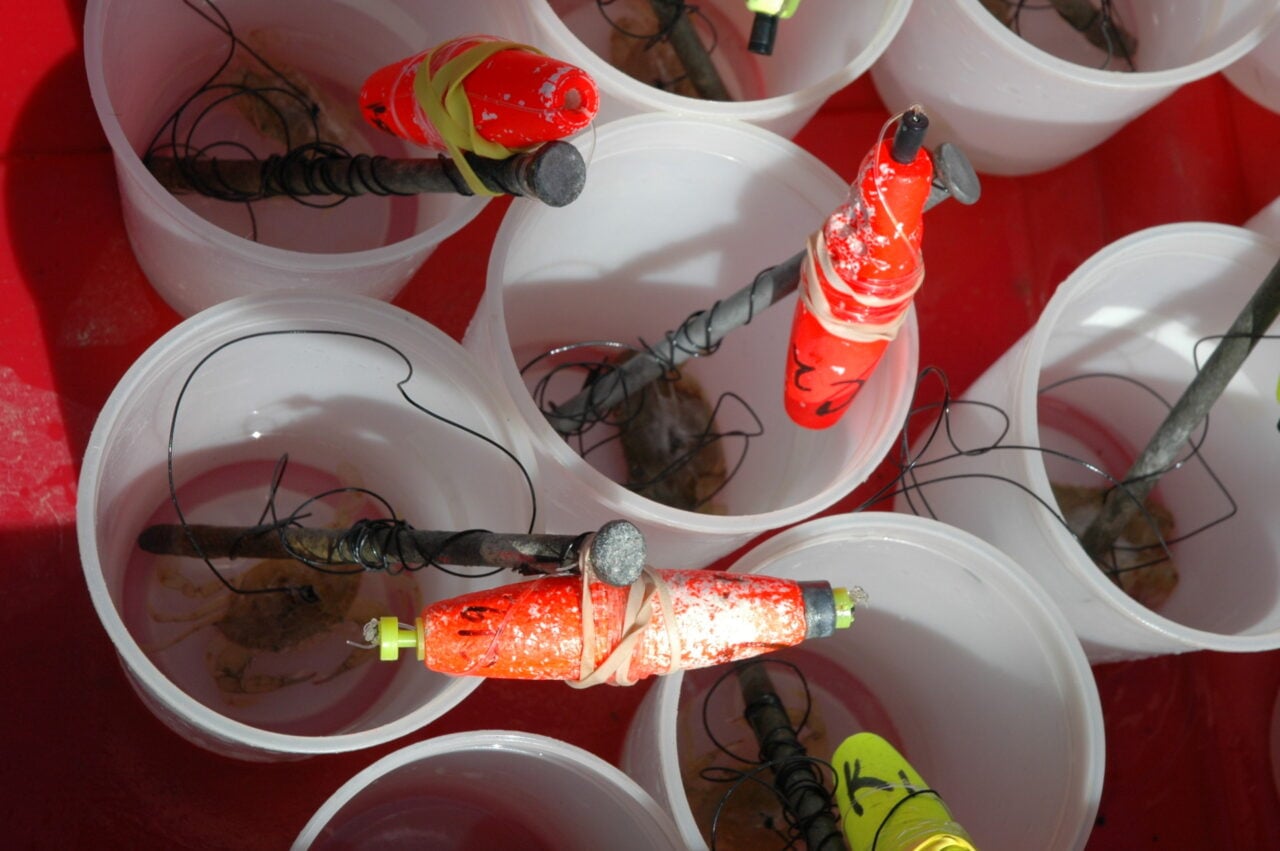
For the study, the team tethered juvenile crabs to small metallic spikes in the water, which in fisheries actually help the younger crabs hang around and hide from predators inside the sediment, according to a Smithsonian statement. That said, this trick doesn’t work on larger crabs, who can reportedly use “chemical and tactile cues” to track prey.
Repeated instances of this experiment revealed many fascinating insights into crab cannibalism. Overall, the intensity of cannibalistic behavior varied by the seasons, peaking in the warmest months when adult crabs were most active, the paper explained. Size also mattered, as smaller juvenile crabs were more likely to be eaten. On the other hand, crabs hiding in shallower waters (around half a foot) had better chances of survival.
Most surprisingly, the team “did not find any predation by fish on juvenile blue crabs over the 37 years,” Hines said. “All of the predation was attributed to cannibalistic attacks by blue crabs.”
Protecting the crabs
The team still isn’t fully sure what, if any, the evolutionary benefits are. However, the researchers note in the paper that cannibalism could be the crabs’ way of controlling the population. Still, the findings offer some tips for creating shelters for juvenile crabs.
This is especially important, as the shallow, mid-salinity zones where younger crabs were most likely to survive are the areas most affected by sea level rise, storm surges, and the introduction of invasive species, Hines explained. Based on the findings, the team is now at work developing a stock-assessment model for Chesapeake Bay’s blue crabs, which should help “improve a sustainable management strategy,” Hines said.
Read the full article here