
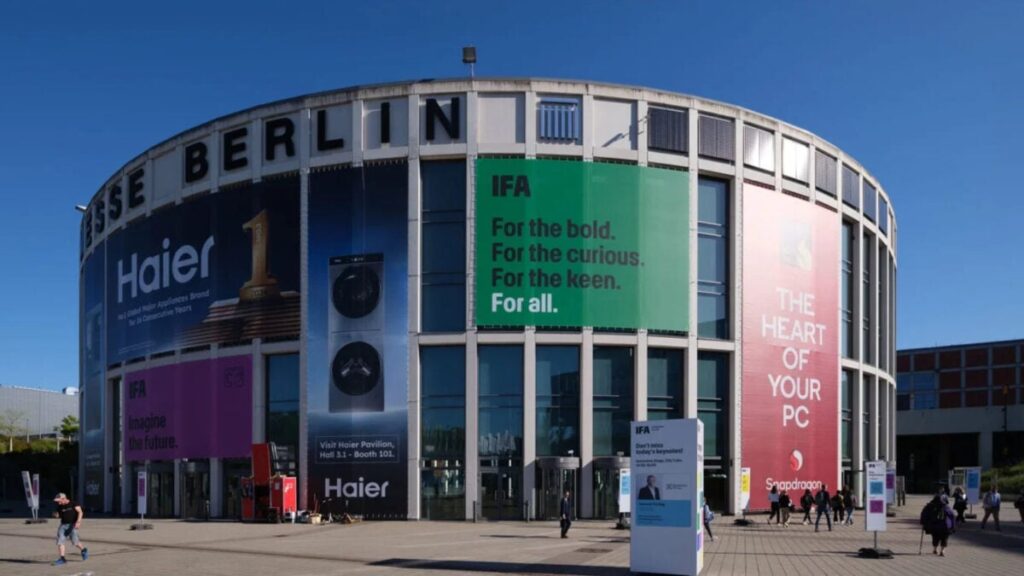
Beginning on September 4 in Berlin, IFA 2026 will focus on one central idea: the technologies said to represent “the future” of consumer electronics already reside in most consumers’ homes. Most smart home devices were purchased without being marketed or sold as artificial intelligence products. Although digital health has become an important part of daily life for millions of consumers, it was once considered a product category available to very few.
See IFA Website
The future of consumer tech is already here
“The future is not waiting somewhere five or ten years away,” says Leif Lindner, CEO of IFA Management. “It is already in our homes, in our pockets, in our cars, in our health routines.”
The greatest illustration of this trend has been in artificial intelligence. In the past, it had an entire exhibit area at a trade show made up entirely of companies and product categories that dealt with AI. Those days have gone. “AI is becoming the new infrastructure of consumer technology,” Lindner says. “It is not one category anymore. It is becoming part of almost every category.” For example, refrigerators, earbuds, and treadmills now have AI technology built right in. None of these devices were sold to consumers as being primarily AI products.
Digital health and beauty products will be one of the largest growing segments through 2026. A key factor for consumers is ease of use, as well as a product that adapts to how an individual integrates it into their daily routine, not just another item that gets discarded after a short period of time. IFA’s top growth categories include preventive health tools, connected fitness equipment, wellness devices, and beauty technology. Many of the reasons IFA works so well as an example of any one or all of them are due in large part to the event’s sheer scope. In fact, at last year’s exhibition, over 1,900 exhibitors from 49 countries were represented, along with more than 220,000 attendees from over 140 countries, and global media coverage for IFA topped 301 billion during the week.
The other reason IFA continues to expand beyond the trade fair complex and into the rest of the city is that Sommergarten, the outdoor concert area on the grounds, will feature evening shows across four nights. On September 3, the evening features electronic act BUNT. September 4 has rapper and hip-hop artist Luciano. September 5 sees Ikkimel & Friends perform their brand of trap, techno, and Berlin club music, while September 6 features live podcast recordings by Mord auf Ex and Wine Wednesday. The ICC Berlin also reopens as part of the show, a protected 1979 landmark that’s been closed to the public for more than ten years.
Lindner clearly explains his motivations for including these two things in the program. “Younger audiences, creators and lifestyle media experience technology differently,” he says. “They do not only want a specification sheet. They want context. They want emotion. They want something they can share, discuss and remember.” Lindner also describes why the ICC has mattered to so many Berliners, saying the building is nearly mythical for most people. When it comes back, it becomes a cultural playground for a full week.
IFA 2026 runs from September 4-8 at the Berlin ExpoCenter City; attendees can see how AI has influenced everyday products, where the industry is headed in digital health, and what each company plans to do over the next couple of years. The city itself will also be an active participant in that process. “Berlin is not a backdrop,” Lindner says. “It is part of the experience.”
See IFA Website
Read the full article here