The wait is finally over. NASA’s Artemis 2 mission is set to launch four astronauts on a trip around the Moon, bringing an end to America’s decades-long hiatus from crewed lunar spaceflight.
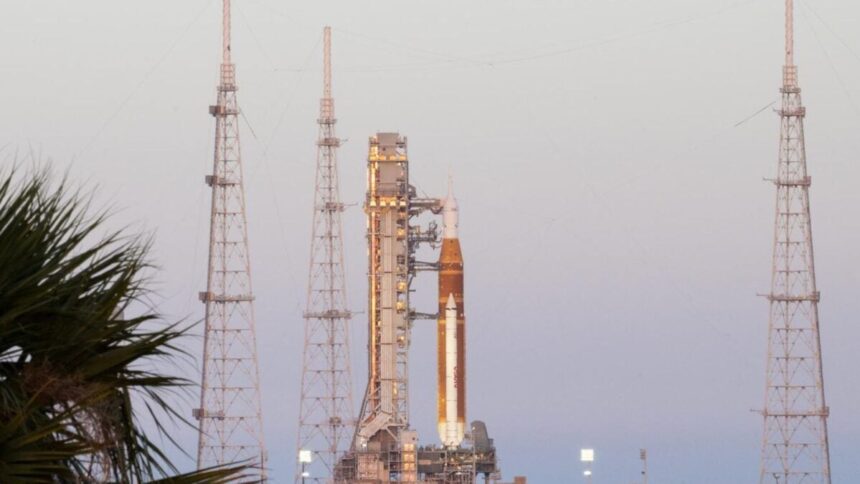
NASA initiated the two-day countdown at 4:44 p.m. ET on Monday after reporting no major technical or weather concerns ahead of lift-off. Ground teams are in the midst of final preparations, targeting a launch window that will open at 6:24 p.m. ET on Wednesday and remain open for two hours.
At T-0, Artemis 2 will launch from NASA’s Kennedy Space Center in Cape Canaveral, Florida. The Space Launch System (SLS) rocket will propel the Orion spacecraft and its crew—consisting of NASA’s Reid Wiseman, Victor Glover, Christina Koch, and the Canadian Space Agency’s Jeremy Hansen—to low-Earth orbit.
You can watch the launch right here via any of the livestreams below. NASA’s launch coverage will begin at 12:50 p.m. EDT on Wednesday. You can also find a minute-by-minute rundown of the countdown proceedings here.
Go for launch
Following a key meeting on Monday, NASA declared the mission go for launch on Wednesday. During a press briefing, Associate Administrator Amit Kshatriya told reporters that there were no issues preventing Artemis 2 from pressing ahead.
“We are in excellent, excellent shape as we get into count,” Charlie Blackwell-Thompson, Artemis launch director, said during the briefing.
This was welcome news. NASA initially hoped Artemis 2 would get off the ground during the February launch window, but SLS suffered hydrogen leaks during the wet dress rehearsal that derailed those plans. Then, a helium flow issue forced NASA to roll SLS back to the Vehicle Assembly Building for more repairs, ruling out the March launch window.
With these issues now fixed, engineers are confident SLS will perform as expected on Wednesday. However, there’s still a chance that unforeseen technical problems or weather conditions could delay the launch. If that happens, the next launch opportunity opens at 7:22 p.m. ET on Thursday.
Witnessing history in the making
When Artemis 2 lifts off, it will be the first time astronauts have departed for the Moon in over 50 years.
“If you were born after 19:45:58 UTC on December 19, 1972, you have not been alive during a time when a crewed lunar spaceflight was underway. This is approximately 75% of the global population,” John Kraus, special communications assistant to the administrator at NASA, wrote in an X post on Sunday.
“It is not often you have the opportunity to witness a historic moment in real time,” he added.
Once SLS and Orion are in LEO, Orion and the interim cryogenic propulsion stage (ICPS) will separate from the rest of the rocket. Roughly 49 minutes after launch, the ICPS engine will fire to raise the perigee—or the lowest point of Orion’s orbit—to an altitude of 100 miles (161 kilometers) above Earth. When the spacecraft reaches that perigee an hour later, the ICPS will fire again to raise Orion into a high-Earth orbit.
The crew will then spend the next 23 hours checking the spacecraft’s systems and preparing for their journey to the Moon. If everything goes according to plan, Orion will initiate a translunar injection burn about 25 hours after launch. This will send the spacecraft to the Moon.
Orion will enter the lunar sphere of influence on the fifth day of flight, then make its closest approach to the Moon on the sixth day. The Artemis 2 crew will observe parts of the Moon humans have never laid eyes on before swinging around the far side and heading back to Earth on a free-return trajectory.
The 10-day mission will be the first crewed test flight of SLS and Orion, paving the way for a lunar landing slated for 2028. NASA will provide plenty of updates over the course of the flight, and you can track the mission in real-time here.
Read the full article here