For two days in September, Afghanistan had no internet. No satellite failed; no cable was cut. This was a deliberate outage, mandated by the Taliban government. It followed a more localized shutdown two weeks prior, reportedly instituted “to prevent immoral activities.” No additional explanation was given. The timing couldn’t have been worse: communities still reeling from a major earthquake lost emergency communications, flights were grounded, and banking was interrupted.
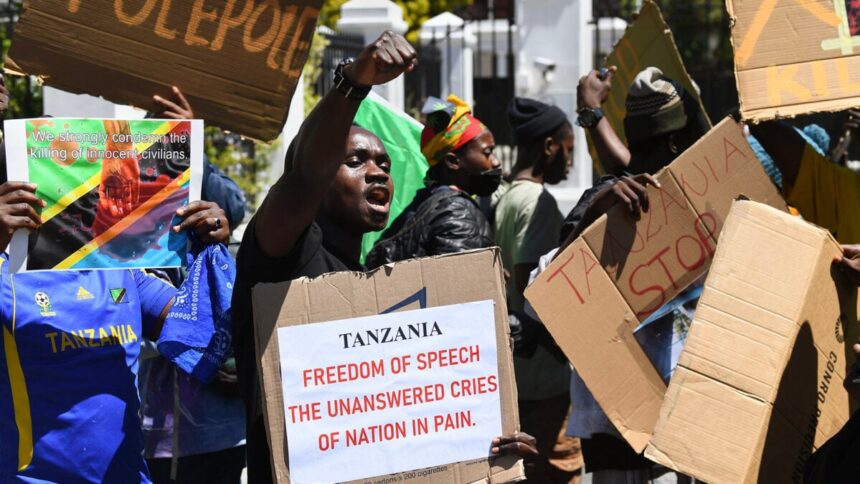
Afghanistan’s blackout is part of a wider pattern. Just since the end of September, there were also major nationwide internet shutdowns in Tanzania and Cameroon, and significant regional shutdowns in Pakistan and Nigeria. In all cases but one, authorities offered no official justification or acknowledgment, leaving millions unable to access information, contact loved ones, or express themselves through moments of crisis, elections, and protests.
The frequency of deliberate internet shutdowns has skyrocketed since the first notable example in Egypt in 2011. Together with our colleagues at the digital rights organisation Access Now and the #KeepItOn coalition, we’ve tracked 296 deliberate internet shutdowns in 54 countries in 2024, and at least 244 more in 2025 so far.
This is more than an inconvenience. The internet has become an essential piece of infrastructure, affecting how we live, work, and get our information. It’s also a major enabler of human rights, and turning off the internet can worsen or conceal a spectrum of abuses. These shutdowns silence societies, and they’re getting more and more common.
Shutdowns can be local or national, partial or total. In total blackouts, like Afghanistan or Tanzania, nothing works. But shutdowns are often targeted more granularly. Cellphone internet could be blocked, but not broadband. Specific news sites, social media platforms, and messaging systems could be blocked, leaving overall network access unaffected—as when Brazil shut off X (formerly Twitter) in 2024. Sometimes bandwidth is just throttled, making everything slower and unreliable.
Sometimes, internet shutdowns are used in political or military operations. In recent years, Russia and Ukraine have shut off parts of each other’s internet, and Israel has repeatedly shut off Palestinians’ internet in Gaza. Shutdowns of this type happened 25 times in 2024, affecting people in 13 countries.
Reasons for the shutdowns are as varied as the countries that perpetrate them. General information control is just one. Shutdowns often come in response to political unrest, as governments try to prevent people from organizing and getting information; Panama had a regional shutdown this summer in response to protests. Or during elections, as opposition parties utilize the internet to mobilize supporters and communicate strategy. Belarusian president Alyaksandr Lukashenko, who has ruled since 1994, reportedly disabled the internet during elections earlier this year, following a similar move in 2020. But they can also be more banal. Access Now documented countries disabling parts of the internet during student exam periods at least 16 times in 2024, including Algeria, Iraq, Jordan, Kenya, and India.
Iran’s shutdowns in 2022 and June of this year are good examples of a highly sophisticated effort, with layers of shutdowns that end up forcing people off the global internet and onto Iran’s surveilled, censored national intranet. India, meanwhile, has been the world shutdown leader for many years, with 855 distinct incidents. Myanmar is second with 149, followed by Pakistan and then Iran. All of this information is available on Access Now’s digital dashboard, where you can see breakdowns by region, country, type, geographic extent, and time.
There was a slight decline in shutdowns during the early years of the pandemic, but they have increased sharply since then. The reasons are varied, but a lot can be attributed to the rise in protest movements related to economic hardship and corruption, and general democratic backsliding and instability. In many countries today, shutdowns are a knee-jerk response to any form of unrest or protest, no matter how small.
A country’s ability to shut down the internet depends a lot on its infrastructure. In the US, for example, shutdowns would be hard to enforce. As we saw when discussions about a potential TikTok ban ramped up two years ago, the complex and multifaceted nature of our internet makes it very difficult to achieve. However, as we’ve seen with total nationwide shutdowns around the world, the ripple effects in all aspects of life are immense. (Remember the effects of just a small outage—CrowdStrike in 2024—which crippled 8.5 million computers and cancelled 2,200 flights in the US alone?)
The more centralized the internet infrastructure, the easier it is to implement a shutdown. If a country has just one cellphone provider, or only two fiber optic cables connecting the nation to the rest of the world, shutting them down is easy.
Shutdowns are not only more common, but they’ve also become more harmful. Unlike in years past, when the internet was a nice option to have, or perhaps when internet penetration rates were significantly lower across the Global South, today the internet is an essential piece of societal infrastructure for the majority of the world’s population.
Access Now has long maintained that denying people access to the internet is a human rights violation, and has collected harrowing stories from places like Tigray in Ethiopia, Uganda, Annobon in Equatorial Guinea, and Iran. The internet is an essential tool for a spectrum of rights, including freedom of expression and assembly. Shutdowns make documenting ongoing human rights abuses and atrocities more difficult or impossible. They are also impactful on people’s daily lives, business, healthcare, education, finances, security, and safety, depending on the context. Shutdowns in conflict zones are particularly damaging, as they impact the ability of humanitarian actors to deliver aid and make it harder for people to find safe evacuation routes and civilian corridors.
Defenses on the ground are slim. Depending on the country and the type of shutdown, there can be workarounds. Everything, from VPNs to mesh networks to Starlink terminals to foreign SIM cards near borders, has been used with varying degrees of success. The tech-savvy sometimes have other options. But for most everyone in society, no internet means no internet—and all the effects of that loss.
The international community plays an important role in shaping how internet shutdowns are understood and addressed. World bodies have recognized that reliable internet access is an essential service, and could put more pressure on governments to keep the internet on in conflict-affected areas. But while international condemnation has worked in some cases (Mauritius and South Sudan are two recent examples), countries seem to be learning from each other, resulting in both more shutdowns and new countries perpetrating them.
There’s still time to reverse the trend, if that’s what we want to do. Ultimately, the question comes down to whether or not governments will enshrine both a right to access information and freedom of expression in law and in practice. Keeping the internet on is a norm, but the trajectory from a single internet shutdown in 2011 to 2,000 blackouts 15 years later demonstrates how embedded the practice has become. The implications of that shift are still unfolding, but they reach far beyond the moment the screen goes dark.
Bruce Schneier is a cybersecurity lecturer at the Harvard Kennedy School and a board member of the digital rights group Access Now. Zach Rosson is the #KeepItOn global data and research lead at Access Now.
Read the full article here