YouTuber Jeremy Fielding generally makes videos about engineering, which are definitely worth checking out in their own right if titles like “The Ultimate Guide to Linear Actuators” sound like a good time to you. (No shade, that particular video is great.) But Fielding’s latest video is something quite different: A detailed interview with his friend Anand Varma, a science photographer whose photo of a just-hatched chick was one of National Geographic’s photos of the year for 2025.
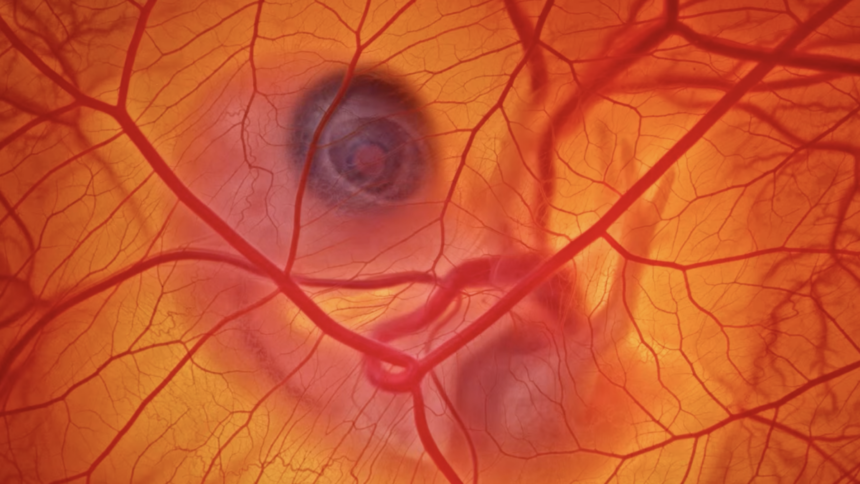
And while the award-winning photo is striking, it’s not even the most interesting chicken-related work Varma has produced. That particular title goes to a time-lapse of a chick developing from an embryo inside an egg. Fielding found himself wondering how on earth Varma managed to get this footage—and, for that matter, how he approached some of his other memorable projects, which include capturing bees developing from larvae into drones; super high-speed footage of a hummingbird cleaning itself; and the terrifying fungus that turns ants into zombies and inspired The Last of Us.
Fielding’s curiosity has proved a boon for everyone else, because his visit to Berklee to see Varma makes for genuinely fascinating viewing. We watch as Varma gives an impromptu tour of his studio and answers hitherto-unasked questions like “How does one artificially inseminate a queen bee?” (With a very steady hand, if you’re wondering.) As an engineer, Fielding’s questions focus largely on the technical aspects of Varma’s work processes, although there is one very amusing exchange about the mysteries of art that went like this:
Fielding: “You can execute everything exactly right, but still look at the end photograph and feel, ‘That’s not it.’”
Varma: “Yeah. There’s a taste element you can’t just solve for.”
Fielding: “It’s not like you can just plug it into an equation.”
Varma (ruefully): “That’s the holy grail, you know. To have the Equation for Wonder.”
Art: How it do?
Anyway, despite his lack of access to the Equation for Wonder, Varma’s work does elicit genuine moments of, well, wonder. The egg project, in particular, is startlingly beautiful, so much so that it might put non-vegans off tomorrow’s breakfast. It also proves as much a triumph of engineering as it does a work of art.
We see Varma carefully halving an eggshell with a die grinder and using the piece he’s cut as a template for a 3D-printed equivalent. He then quite literally cracks an egg into this shell, covers it with a glass sheet, and places this “egg” into an incubator that’s been fitted out with a downward-facing camera. The resultant footage is sent to a computer that compiles time-lapse videos.
Some of Varma’s other work is equally fascinating: a hummingbird shaking water off itself in the same way that a dog might doesn’t necessarily sound like a recipe for a compelling photograph, but the result—shot at an extremely high shutter speed to capture the tiny bird in flight—is proof that Varma knew what he was talking about when he pushed back against his editor’s contention that every interesting photo of a hummingbird had already been taken. On that note, there’s also some interesting discussion about how the sausage is made—Varma explains how he collaborates (and sometimes argues) with his editors to formulate and refine concepts for projects, a process that’ll be familiar to anyone who’s ever worked in any sort of journalistic endeavor.
The entire video is well worth checking out—Fielding is a quiet and considerate interviewer, letting Varma expand on his history and his work, and sharing his own perspectives on the engineering challenges involved.
Read the full article here