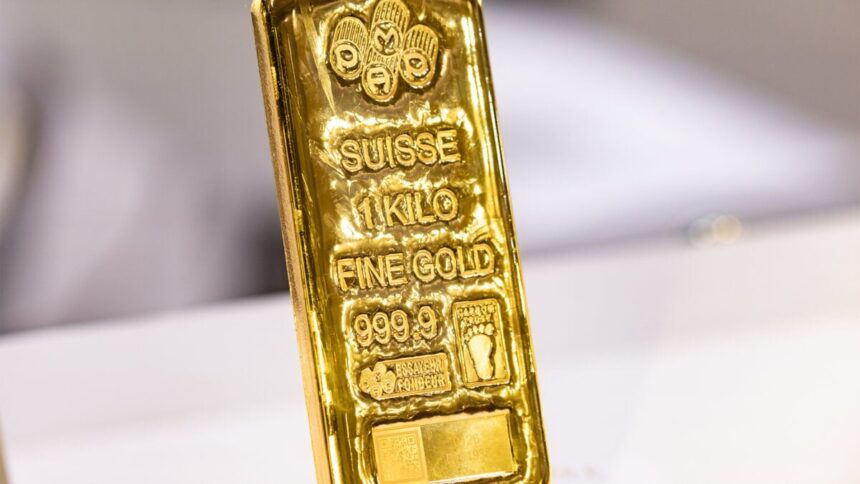
Comparisons between bitcoin and gold have been made since the earliest days of the crypto asset’s existence. Satoshi Nakamoto once likened his creation to a base metal like gold that could be instantly transported anywhere in the world, and fellow cypherpunk Nick Szabo’s precursor to Bitcoin was literally called Bit Gold.
The “digital gold” narrative around bitcoin became stronger in 2017, as the resolution of the Bitcoin network’s block size war brought bitcoin’s store of value use case into focus, and payments-focused use cases eventually moved mostly towards the stablecoin model, which is now a key area of contention in crypto due to its high degree of centralization. While there have been pushes to develop bitcoin-denominated payments on secondary protocol layers like the Lightning Network and Ark, the reality is that most people are only interested in bitcoin as a sort of long-term digital savings account, at least for now.
As the new upstart competitor in the market of safe-haven assets, it has been assumed that bitcoin would be the “fastest horse in the race” of a potential move out of government bonds and towards various hedges against inflation. However, that has not been the case, as gold massively outperformed bitcoin last year. In fact, gold has now outperformed bitcoin over the past five years, which has never happened before.
gold and silver have together tacked on the equivalent of 15 entire bitcoins’ worth of market cap in the last 12 months. flawless boomer victory. pic.twitter.com/UFszL7uny1
— nic carter (@nic_carter) January 29, 2026
The past few days have been particularly crazy, as gold was able to add more than double Bitcoin’s entire market cap to its total market valuation in a matter of 72 hours. Gold added $3.5 trillion to its market cap during that time, while bitcoin’s market cap currently sits at around $1.67 trillion.
Gold also experienced a nearly 10% sharp crash on Thursday before recovering back to around the $5,350 level, sparking comparisons to how bitcoin can swing wildly on a day-to-day basis. This could have been due to the curse of crypto exchanges getting involved in the hyped-up asset class of the moment. Sometimes an embrace from the likes of Coinbase can be a major top signal, as was the case when the crypto exchange launched its own NFT market back in 2022.
Stablecoin issuer Tether also made headlines this week for the reveal of its $24 billion gold stash, making it the largest-known holder of the precious metal outside of central banks and traditional financial institutions. Despite these massive holdings, Tether is still finding it difficult to gain the respect of traditional finance, receiving the lowest possible score from S&P Global’s stablecoin rating framework late last year.
In terms of the reasoning behind gold’s outperformance when compared to bitcoin, theories range from concerns related to quantum computers to larger relative interest in gold over bitcoin from central banks (not that interest in bitcoin from nation states is completely nonexistent). Notably, China has been a major buyer of gold, while the U.S. is more interested in using bitcoin and crypto to reinforce its economic dominance.
In 2017, at its peak of nearly $20k, Bitcoin was worth 14.25 ounces of gold. Today it’s worth 16 ounces. That’s a 12% gain in nine years. Was it worth the risk to beat gold by just 1.3% per year? HODLers will find out the hard way as Bitcoin crashes and gold continues to soar.
— Peter Schiff (@PeterSchiff) January 29, 2026
Despite the long-touted theory that bitcoin can act as a safe-haven asset in times of global economic turmoil, it hasn’t acted like that up to this point, as was most recently shown during the tensions around Greenland.
While it’s unclear whether bitcoin is currently at the end of yet another four-year cycle, this recent outperformance from gold has given some bitcoin holders the idea that it’s still early days for the crypto asset and gold is simply increasing the size of bitcoin’s total addressable market. Of course, others say recent price movements are simply proof that the future of apolitical value storage still belongs to the precious metal that has been viewed as money for thousands of years.
Read the full article here