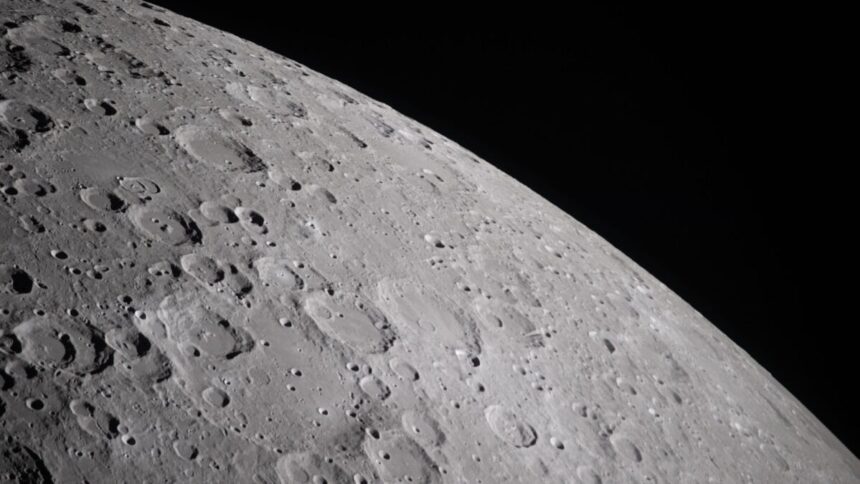
Watching NASA’s Artemis 2 astronauts fly around the Moon and make spaceflight history brought up a lot of emotions—but mostly, it gave me serious FOMO. Sadly, this Gizmodo science reporter won’t be leaving Earth anytime soon. But the crew’s incredible photos make me feel like I was along for the ride.
The Artemis 2 crew ventured deeper into space than any humans have ever gone and observed parts of the lunar far side never before seen with the naked eye. Along the way, they took tons of photos that will help scientists better understand our home planet and our closest celestial neighbor. Here’s a look at some of my favorite shots so far.
Artemis 2 captures the terminator line
At 7:57 p.m. ET on April 2, the Orion spacecraft completed a translunar injection burn, making it the first crewed vehicle to depart low-Earth orbit since the Apollo era. This roughly six-minute burn put Orion on its lunar flyby trajectory and the free-return trajectory that will bring the spacecraft home on Friday.
With that maneuver complete, Artemis 2 Mission Commander Reid Wiseman looked out one of Orion’s four windows and snapped this gorgeous portrait of all of us. I think we look pretty good. The image beautifully captures the terminator line—the moving boundary between the night and day sides of Earth. The contrast emphasizes the fine details of our planet’s dynamic atmosphere, showing off swirling clouds that pop against the deep-blue surface.
The edge of two worlds
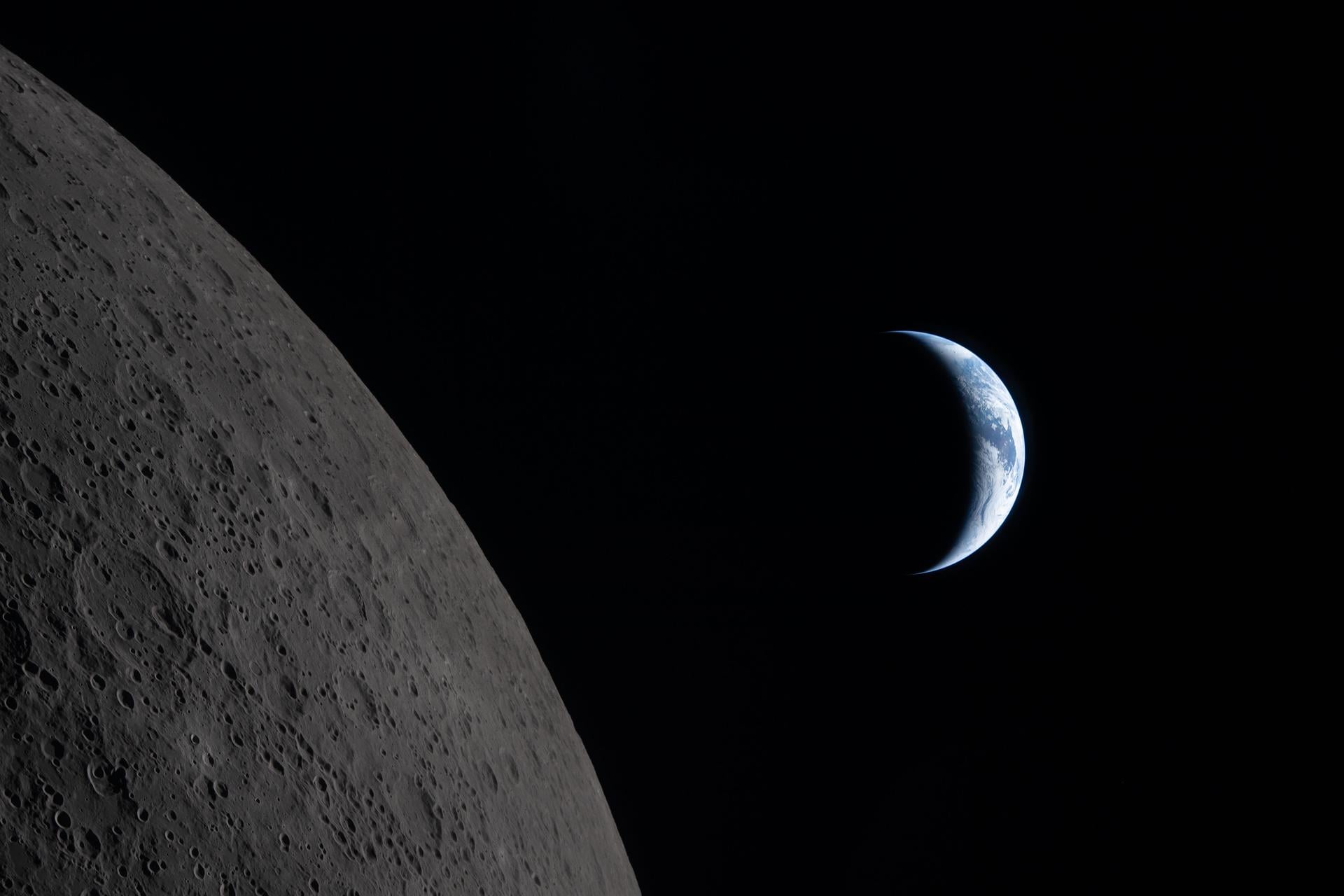
Orion slingshotted around the far side of the Moon on Monday, giving the crew seven hours to observe the lunar surface and even get some photos of the Earth and the Moon in the same field of view. The astronauts took this one about six minutes before “Earthset,” when our planet dipped below the lunar horizon.
It is mind-boggling to see Earth in a crescent phase—a shape we typically associate with the Moon. The dark side of the planet is experiencing night, while the sunlit side is experiencing day. On the day side, clouds churn over the Australia and Oceania region. And if you look closely at the Moon’s rugged surface in the foreground, you can see lines of small indentations called “secondary crater chains” that formed from material ejected during a violent asteroid impact.
Orion, the Moon, and Earth
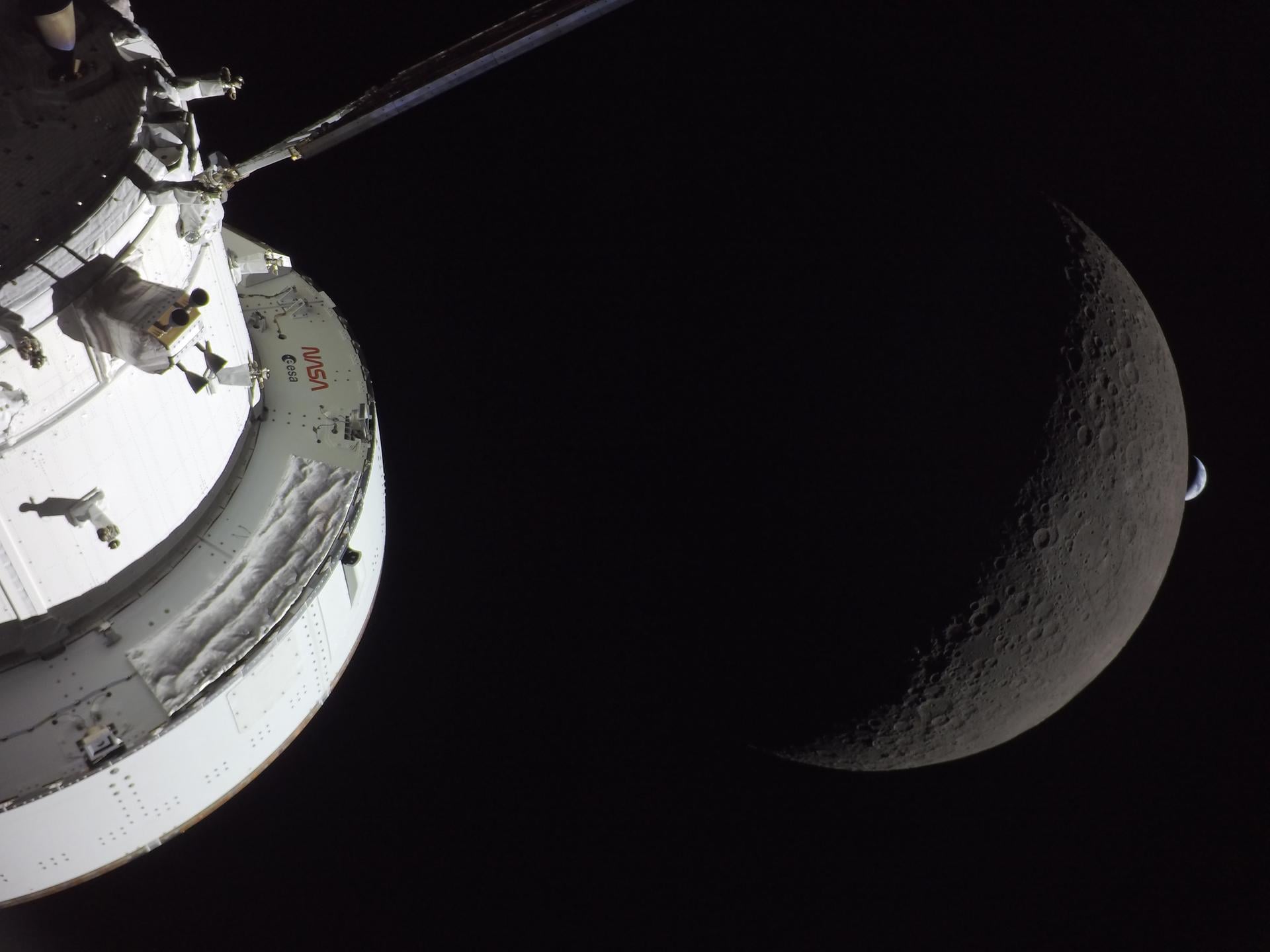
Now, this picture seriously blew my mind. During the lunar flyby, one of the cameras mounted on Orion’s solar array wings managed to capture the spacecraft, the Moon, and Earth in a single shot. The Sun’s illumination provided a crystal-clear view of Orion, with a waxing crescent Moon and crescent Earth in the distance.
To me, this image beautifully conveys the scale of Artemis 2’s accomplishment. During the lunar flyby, the astronauts broke the record for the farthest distance humans have ever traveled from Earth. That record was set by the Apollo 13 crew in 1970 at 248,655 miles (400,171 kilometers) from our home planet. Seeing Earth as just a tiny sliver underscores just how far Artemis 2 traveled from home.
The Orientale basin
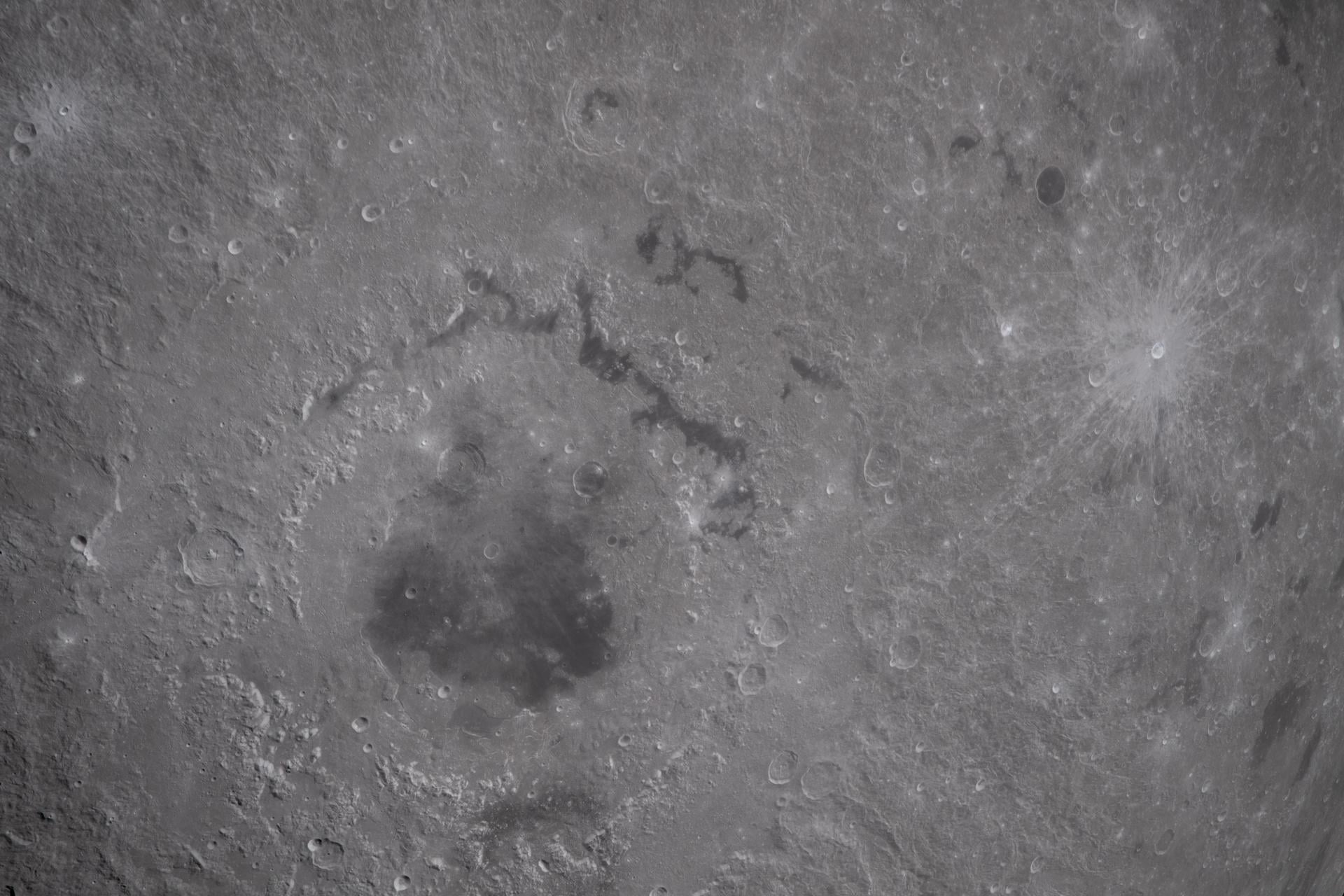
Let’s take a closer look at the lunar surface. One of the far side features I was most excited for Artemis 2 to observe was the Orientale basin. At 3.8 billion years old, Orientale is actually one of the Moon’s youngest and best-preserved large impact craters. The Artemis 2 astronauts were the first humans to see the entire basin with their own eyes.
In this high-resolution image, you can clearly make out Orientale’s three concentric rings, the largest of which is three times the width of Massachusetts. According to NASA, one study suggests that these rings formed when roughly 816,000 cubic miles (3,201,236 cubic kilometers) of ejecta—about 135 times the combined volume of the Great Lakes—was blasted into the sky by a 40-mile-wide (64-km-wide) impactor and then fell back to the Moon’s surface.
Artemis 2 in eclipse
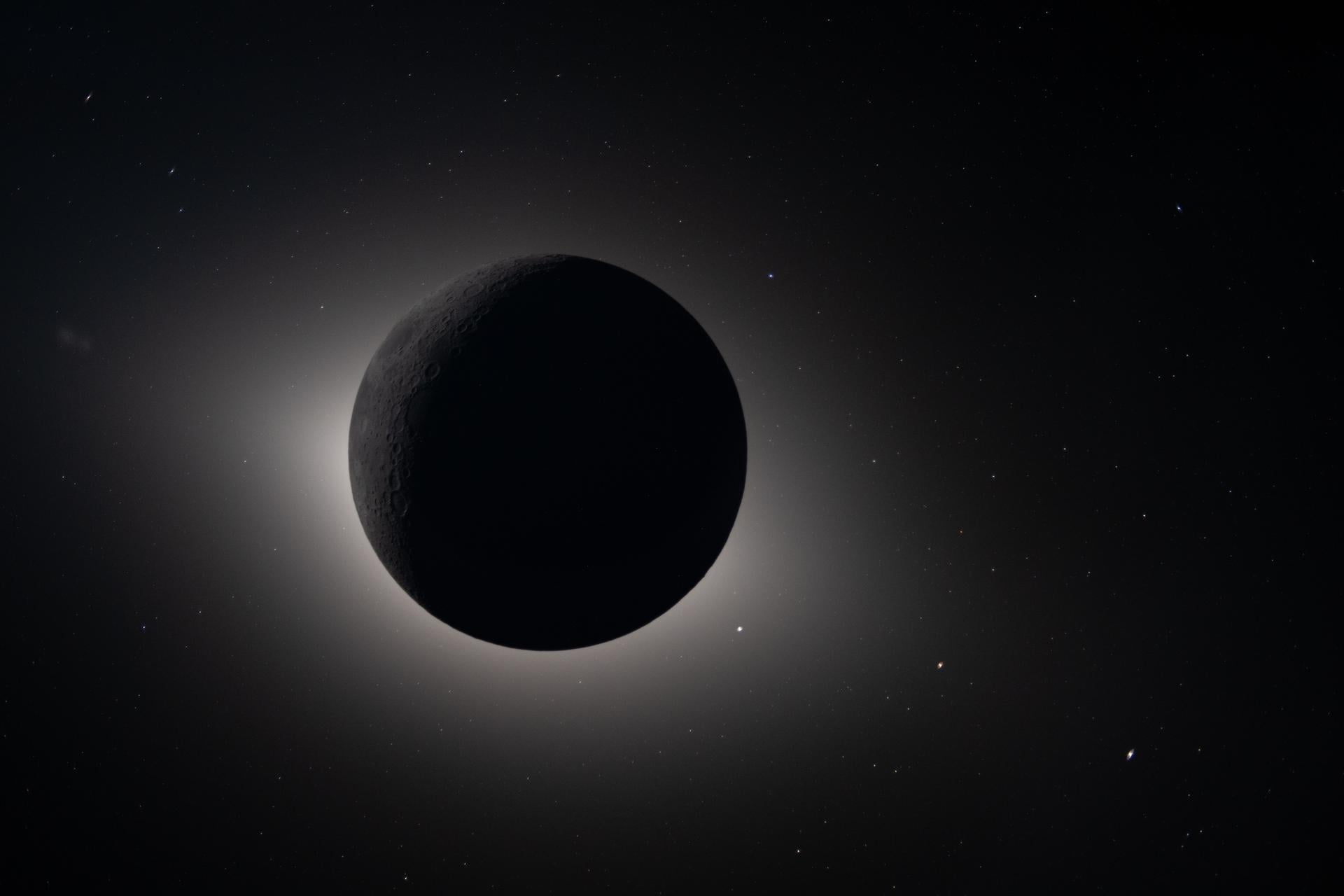
During the lunar flyby, Orion eventually reached a point where the Moon was completely blocking the Sun from its view. This allowed the crew to experience a 54-minute total solar eclipse that revealed a glowing halo around the dark lunar disk. NASA’s lunar science team is investigating whether this effect is due to the Sun’s corona, sunlight scattering off distant particles, or a combination of the two.
The shadow of the eclipse allowed the Artemis 2 crew to capture some stars in this image, which are typically too faint to see when observing the Moon. Those three particularly bright specs in the bottom left are actually planets. The reddish one in the middle is Mars, the next stop on humanity’s exploration of the solar system. Seeing both the Moon and the Red Planet in this photo underscores just how far we’ve come and how far we still have to go.
Read the full article here